Welcome to a new issue of the Ahrefs' Digest.
Here's our meme of the week:

—
Quick search marketing news
-
Google reports that Search hit an all-time usage record during the World Cup final match.
-
OpenAI launches GPT-Live, a new voice model series capable of simultaneous speaking and listening with reduced latency.
-
Google introduces platform properties in Search Console to track how content from TikTok, Instagram, X, and YouTube performs in search results.
-
Meta rolls out its Muse Image AI model, allowing users to generate images by referencing public Instagram accounts and reels.
-
SpaceXAI releases Grok 4.5, a new "Opus-class" model designed to compete with frontier LLMs.
-
Google tests a new "google.com/goto" tracking URL format within organic search results.
—
Best of the week
Self-Promotional Content Works—Until It Backfires (AI SEO Experiment): Self-promotional listicles can help new brands break into AI recommendations, but they rarely move the needle for established ones. Even when AI cites your content, it may still skip your brand to recommend a competitor. Most of these AI citations are temporary, so don't expect a permanent win.
Retrieval Augmented Generation (RAG) Explained: How AI Decides Which Pages to Search & Cite: RAG is the framework AI uses to fetch live data from the web instead of relying on old training memory. By optimizing for retrieval, you can influence which pages ChatGPT and other search engines cite as sources. It is essentially an extension of SEO for the AI era.
Please Stop the AI Confidence Theater: Everyone is acting like they’ve cracked the AI code, but most "life-changing" workflows are just basic task automation. This "Confidence Theater" creates toxic FOMO and makes it impossible to hire for real expertise. Don't fall for the hype—focus on business outcomes rather than how many tokens you're burning.
How We're Spending Our Marketing Budget in 2026 (with Actual $ Figures): PostHog is breaking the silence on scale-up spending by revealing their $1.2 million monthly marketing budget. Their strategy is simple: test new channels as side projects, hire specialists once they show promise, and then aggressively scale the budget. Surprisingly, they spend $0 on PR, favoring in-house content and "weird" experiments instead.
NYT Editor Joe Kahn Explains Why Push for Video is 'Race Against Time': The New York Times is betting on video as its next major digital transformation. As reader habits shift toward short-form feeds, the goal isn't immediate revenue—it's a race to saturate platforms with expert reporting before they are completely overwhelmed by AI-generated slop.
[Video] We Just Figured Out How AI Actually Works: We finally have a glimpse inside the AI black box. Researchers have identified "J-Space," a specific geometric structure where LLMs organize concepts. Understanding how these models represent data is the first step toward making AI more predictable and controllable.
—
Latest from our podcast
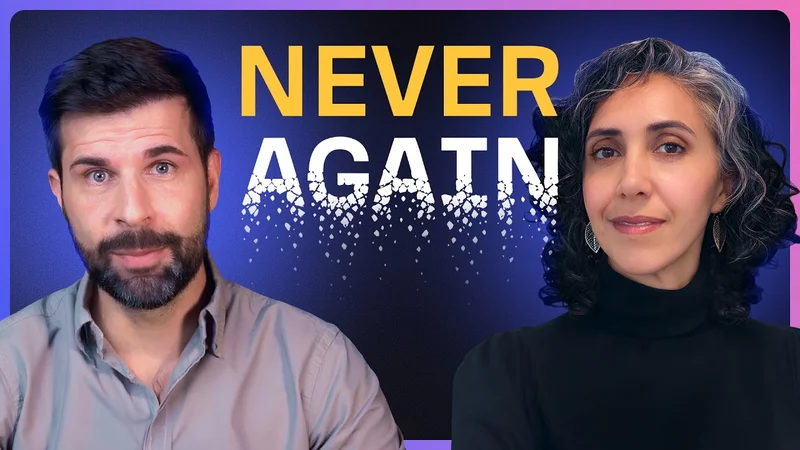
This week’s podcast guest is Jacque Aboubakr, Head of Global Events at Ahrefs. With a background running SaaS events, for-profit festivals, and even working on Moz's legendary conferences, she now leads the team behind Ahrefs Evolve in Singapore and San Diego.
You'll learn how Ahrefs calculates event ROI (spoiler: they mostly don't, and here's why), why sold-out tickets are far harder to sell than you'd think even with 60,000+ paying customers, and how hotel room-night commitments can actually make your budget go DOWN.
Listen to the full episode on YouTube, Spotify, or Apple Podcasts.
—
Latest from our YouTube
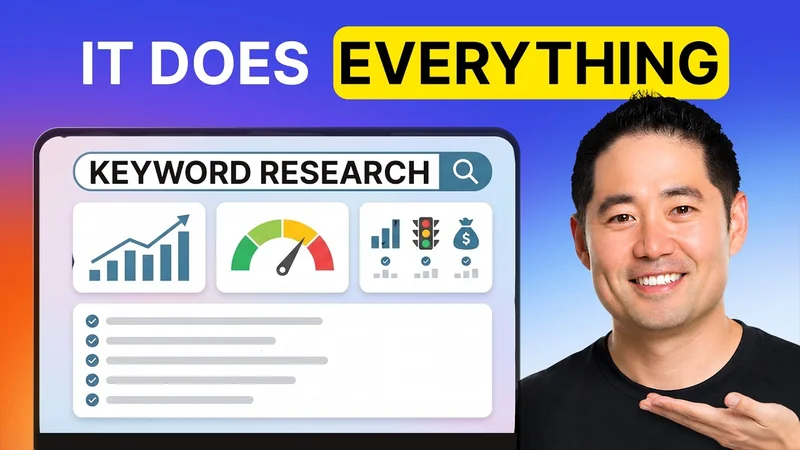
This AI Tool Does Keyword Research For You
Stop hand-filtering millions of keywords and build a system that does the heavy lifting. This tool turns one seed word into a full SEO roadmap, complete with intent classification and internal linking maps. It’s a massive time-saver for anyone tired of manual clustering.
See you next week,
Si Quan
P.S. Liked this week’s Digest? Forward it to a friend or tell them to subscribe here.