Last Thursday, I was in a familiar situation: juggling three projects, checking email constantly, and feeling busy without being productive.
Then I tried something radical: I set a timer for 15 minutes and focused on one task. No phone, no email, no switching—just pure, undivided attention.
The result? I accomplished more in those 15 minutes than in the previous hour of multitasking.
This isn't just my experience—it's science. Recent Stanford University research shows the human brain isn't designed to multitask. What feels like doing multiple things simultaneously is rapid task-switching, which depletes our mental resources and can reduce productivity by up to 40%.
Even more striking, a University of California study found that after switching tasks, it takes an average of 23 minutes and 15 seconds to return to the original task. Even a "quick" email check creates nearly half an hour of mental fragmentation.
The Science of Focus
(Especially for ADHD Brains)
Neuroscience has identified why we struggle with attention, especially those with ADHD tendencies. Our brains pay attention based on four key factors—what I call the INCU framework:
-
Interest: Our brains engage easily with things we find appealing.
-
Novelty: We're drawn to what's new or different.
-
Challenge: The right difficulty keeps us engaged.
-
Urgency: Deadlines and time pressure can activate focus.
This explains why you might struggle to focus on a work report but hyperfocus for hours on a hobby. The key isn't fighting your brain—it's working with it by adding these elements to important tasks. For example, I make cleaning (normally boring) more interesting by pairing it with my favorite podcast, creating that crucial "Interest" factor.
The Attention Revolution Framework
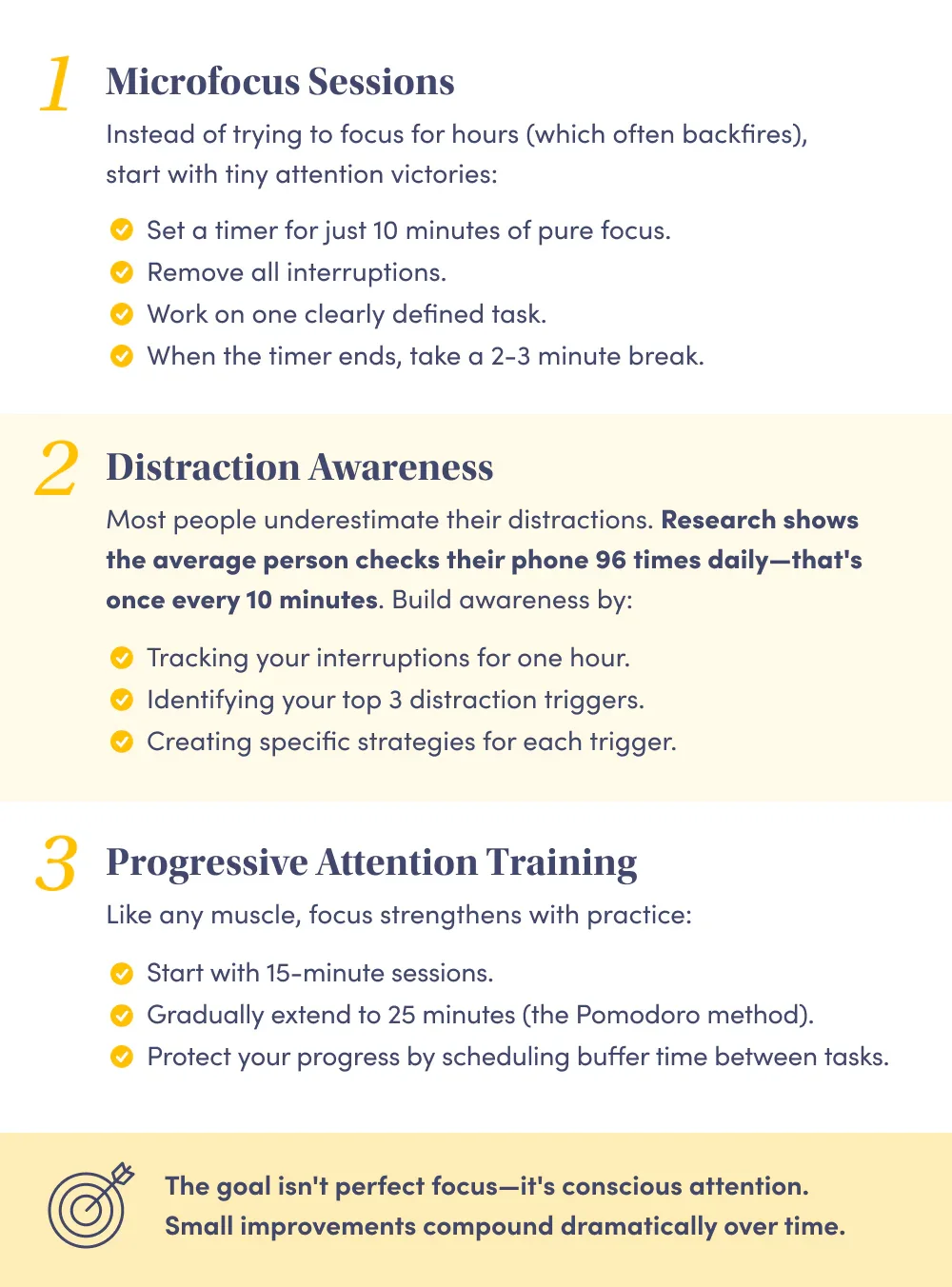
In a world designed to scatter our focus, the ability to direct and maintain attention isn't just helpful—it's revolutionary. Here's how to cultivate this superpower:
![[Winning Wednesday] The 15-minute hack that tripled my productivity (+ free tool)](https://n5su3bze2ea.b-cdn.net/brands/du0v7br027v.jpg?width=40&height=40&aspect_ratio=40%3A40)