

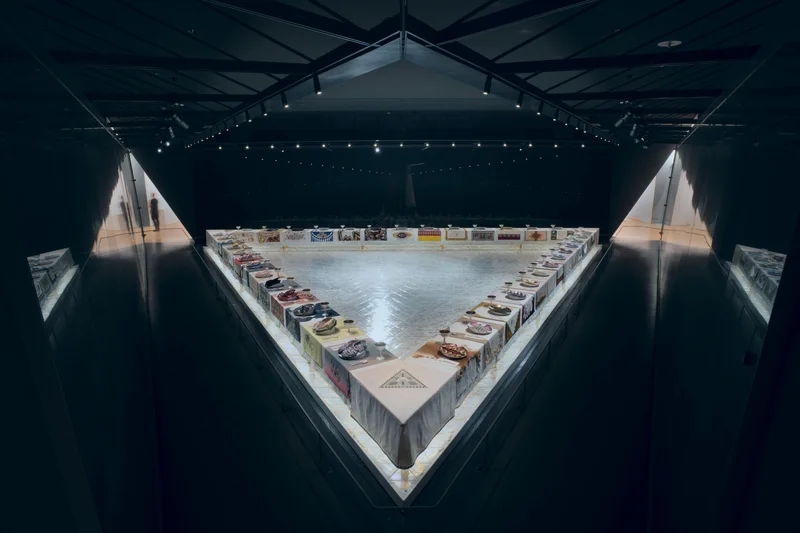
The Brooklyn Museum has been the official home of Judy Chicago’s foundational feminist artwork The Dinner Party since 2002. The work was first shown here in 1980; it has been on permanent display in our first-of-its-kind Center for Feminist Art since 2007.
Chicago coined the term “feminist art.” She uses it to define the practice of artists who draw on gendered experiences and histories. A forerunner in identifying this kind of expression in an academic context, Chicago calls The Dinner Party a “symbolic history of women in Western civilization.” The guests represented by the 39 place settings around the massive triangular table are women whose accomplishments have been overlooked, from primordial goddesses to Georgia O’Keeffe.
Some say that no trip to the Brooklyn Museum is complete without a stop at The Dinner Party. Check out our audio guide for contemporary perspectives on the work while you’re there! After that, visit the other artworks in the guide—all by, for, or about women—to continue your feminist visit. They’re included with general admission.
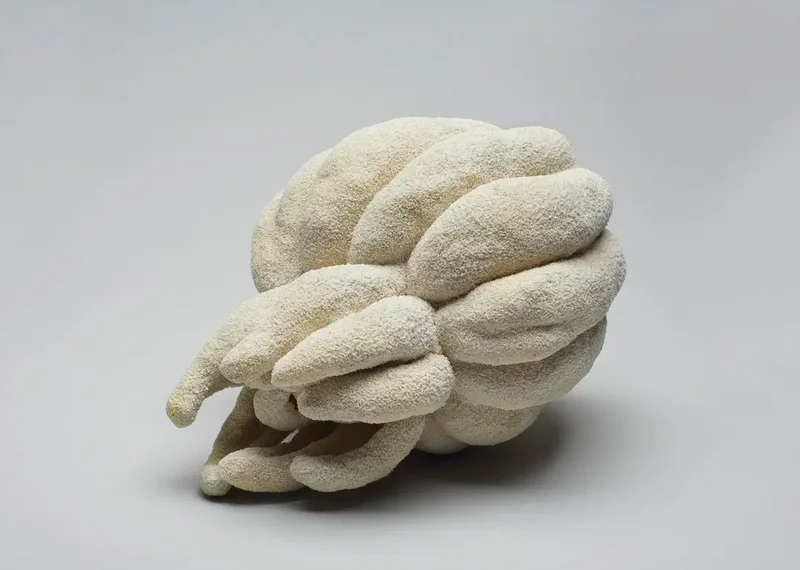
Biomorphic Sculpture, Arts of Asia
Katsumata Chieko’s Biomorphic Sculpture is one of five works in the Arts of Asia galleries that exemplify radical innovations introduced by Japanese women ceramicists. Though ceramic arts have a centuries-long history in Japan, women had long been forbidden at traditional kiln sites. In the 20th century, art colleges and electric kilns provided a way into the medium for many women. Katsumata is known for taking inspiration from sea creatures and vegetables; in this unusual example, her signature, brightly colored glaze is concealed under a layer of crushed porcelain, creating a unique texture.
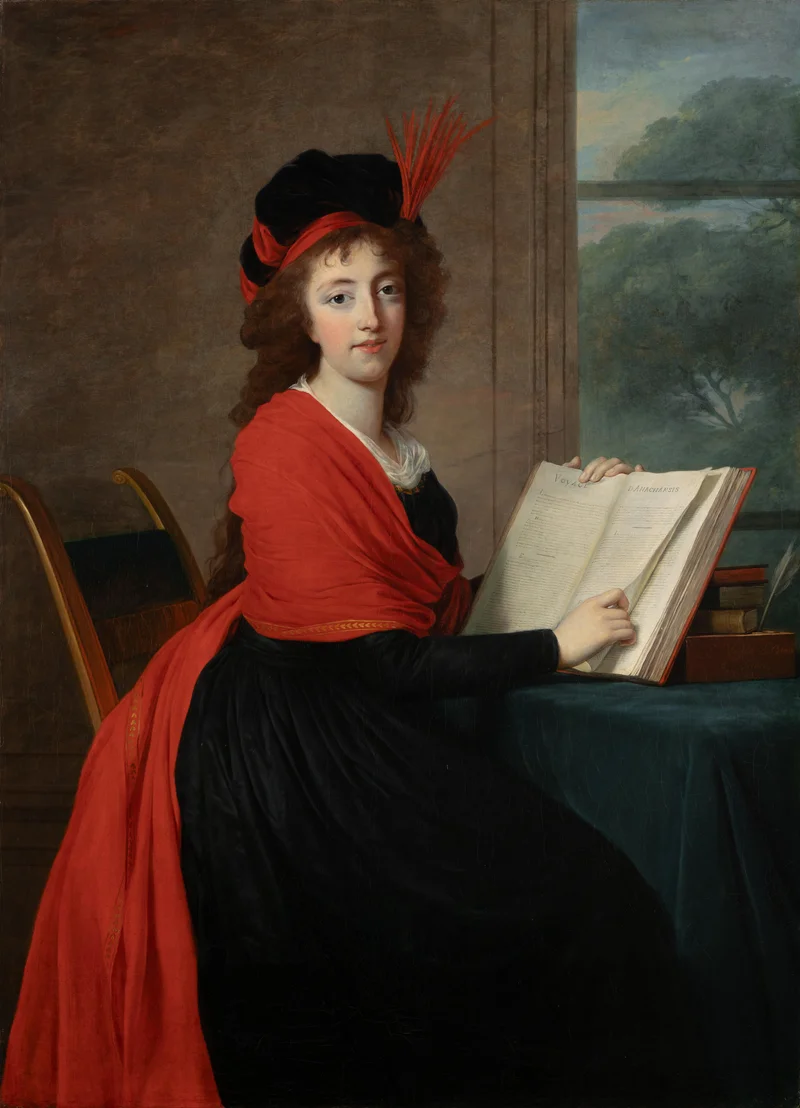
Portrait of Countess Maria Theresia Czernin, European Art
Included in The Dinner Party’s Heritage Floor, Élisabeth Louise Vigée Le Brun was one of the most successful and prolific portrait artists in 18th-century France. She fled the French Revolution, but her prestigious reputation meant there was no shortage of European nobles eager to sit for her. In this portrait’s composition, we see many of the artist’s signature elements: a copy of Voyage of Anacharsis, a red shawl, a relaxed, unpowdered hairstyle, and even a few teeth revealed by a smile. See it in Breaking the Mold: Brooklyn Museum at 200 through February 22, 2026.
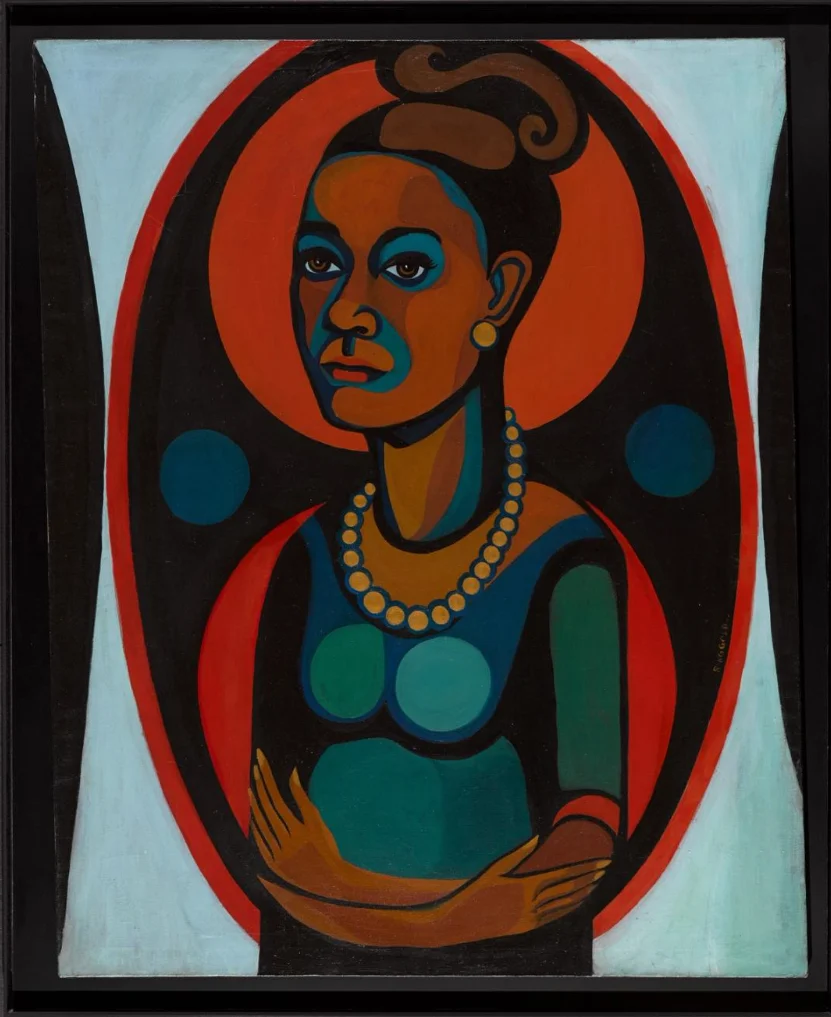
Early Works #25: Self-Portrait, Feminist Art
This 1965 painting reflects a political and artistic awakening in Faith Ringgold. She said, “I wanted my painting to express this moment I knew was history. I wanted to give my women’s point of view to this period.” This self-portrait is unique within Ringgold’s series of Civil Rights–era works; many depicted racially charged events. Of this work, she also said, “I was trying to find my voice, talking to myself through my art.”
From the top: Judy Chicago. The Dinner Party, 1974–79. Ceramic, porcelain, textile. Brooklyn Museum, Gift of the Elizabeth A. Sackler Foundation, 2002.10. © Judy Chicago. (Photo: Donald Woodman); Katsumata Chieko. Biomorphic Sculpture, 2011. Glazed stoneware encrusted with chamotte (crushed fired porcelain). Brooklyn Museum, Bertram H. Schaffner Asian Art Fund, 2012.6. © artist or artist’s estate. (Photo: Brooklyn Museum); Elisabeth Louise Vigée Le Brun. Portrait of Countess Maria Theresia Czernin, 1793. Oil on canvas. Brooklyn Museum, Gift of Lilla Brown in memory of her husband, John W. Brown, Mrs. Watson B. Dickerman, A. Augustus Healy, Helen Babbott MacDonald, Charles H. Schieren, and L.L. Themal, by exchange, 2018.53. (Photo: Brooklyn Museum); Faith Ringgold. Early Works #25: Self-Portrait, 1965. Oil on canvas. Brooklyn Museum, Gift of Elizabeth A. Sackler, 2013.96. © Faith Ringgold, 1965. (Photo: Brooklyn Museum)


