


This month, Hiroshige’s 100 Famous Views of Edo (feat. Takashi Murakami) opened at the Brooklyn Museum. The exhibition marks the first time in 24 years that this treasured set of prints is on public display.
Can’t come to the Museum? You can still explore the marvelous prints and get lost in the beauty of Edo (present-day Tokyo).
And because so many of you enjoyed our astrology lover’s guide, just for fun, we give you: Which view of Edo are you based on your sign?
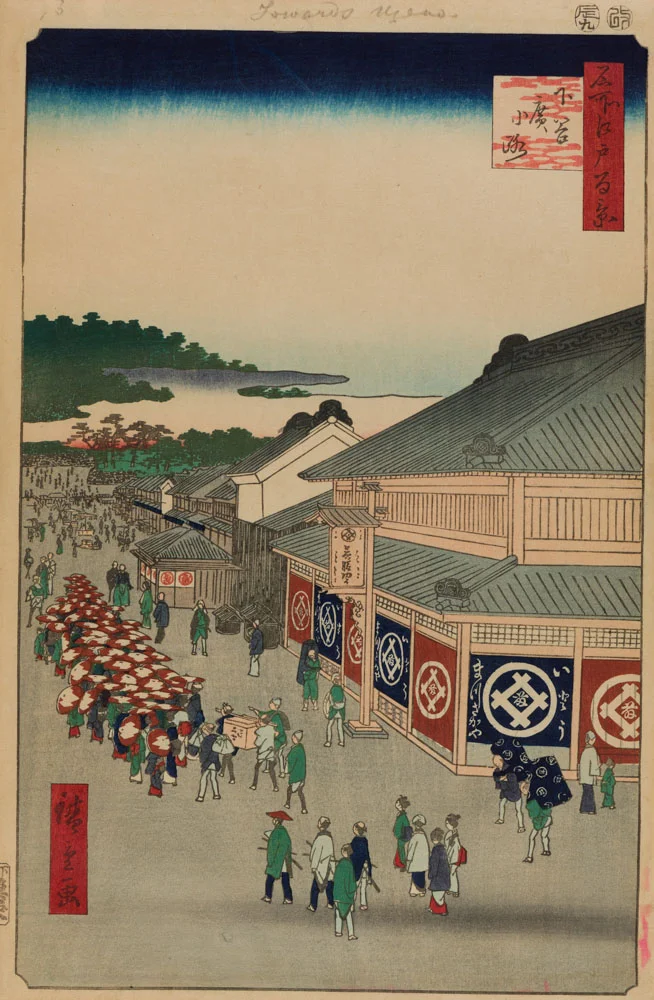
→ ARIES
Aries people are motivated and action-oriented. They’ll appreciate the movement in this print. In the foreground, you can see three samurai, identifiable by their double swords. Their pants are slightly looser than traditional Japanese leggings, hinting at a fusion with Western fashion—an uncommon trend that gained popularity among younger samurai. Trendsetters, just like the Aries!
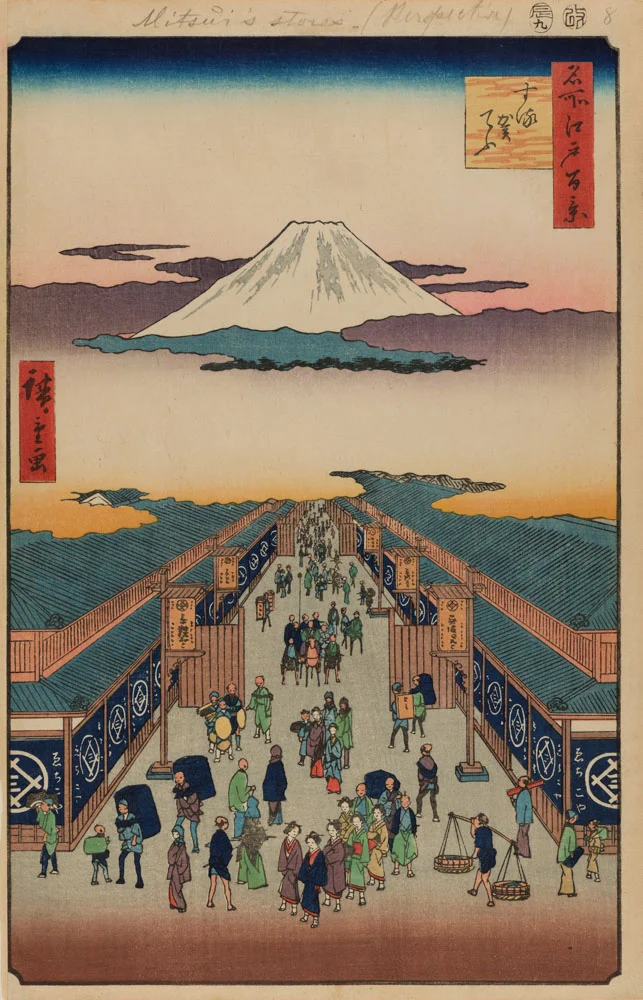
→ TAURUS
The Taurus is known for being stubborn . . . You could say they’re as immovable as a mountain. In this print, Mount Fuji looms large over a bustling street. One store stands out, Echigoya—today known as Mitsukoshi Department Store, which continues to be a successful establishment in Japan. It’s a perfect stand-in for the Taurus, whose other traits include their penchant for hard work and drive for success.
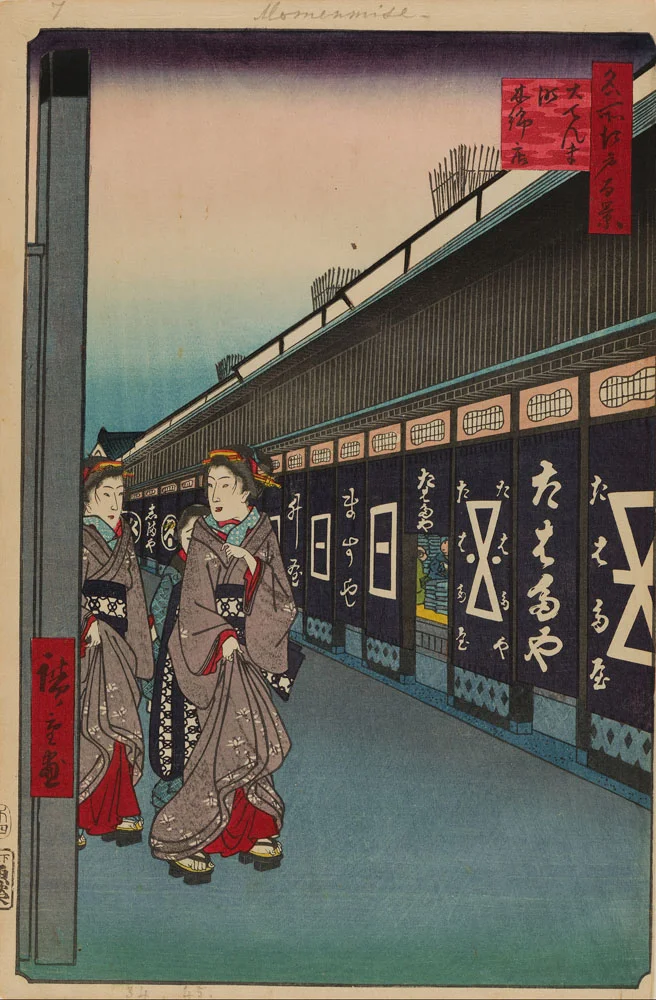
→ GEMINI
Two women are returning home from an evening out. The streets are quiet. They’ve piqued the interest of the people opening their shops. This print is playful, like the Gemini. There’s a hint of drama and intrigue. Where have these women been? Where are they going?
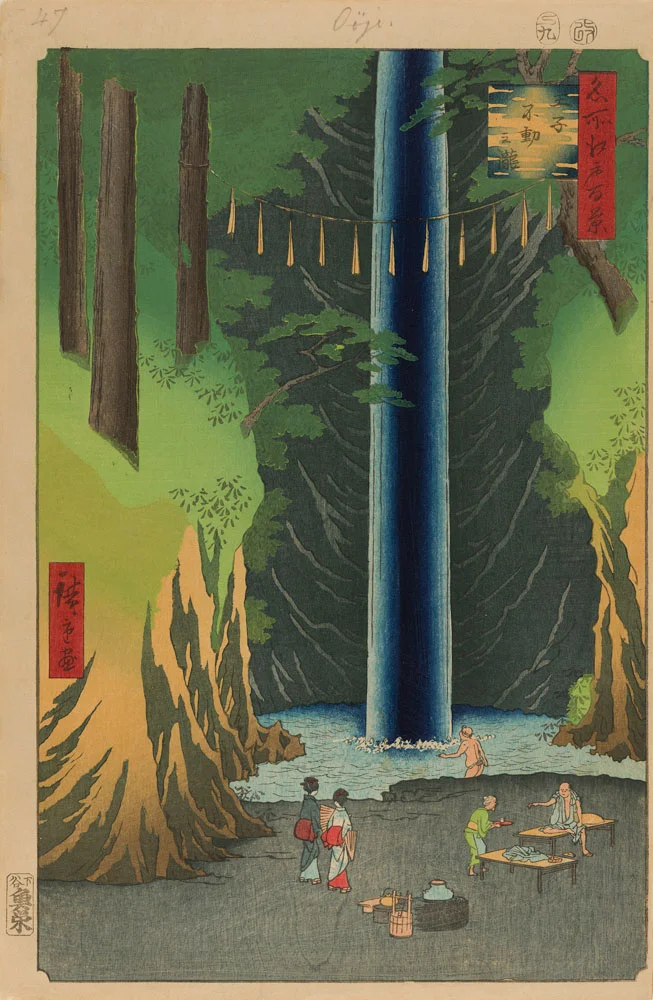
→ CANCER
Edo was home to several waterfalls, which were especially impressive during the rainy summer months. Dramatic natural features were considered powerful locations, so shrines and temples were often built nearby. Pictured here is Fūdo Falls, revered for its curative powers—much like Cancers! Those born under this sun sign are nurturing and protective.
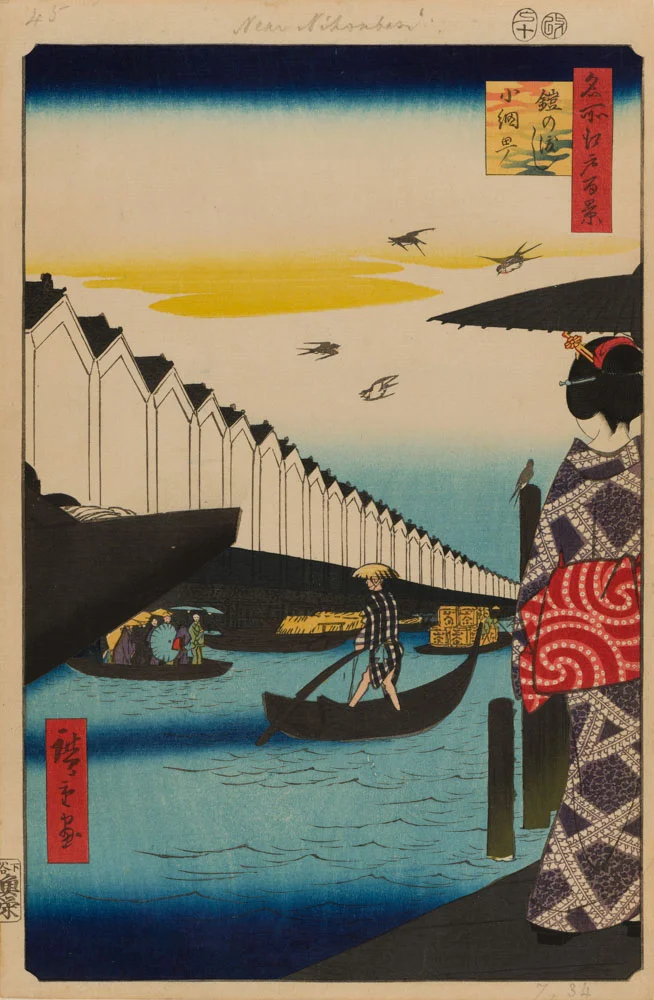
→ LEO
The Yoroi Ferry, seen in the distance, was named after the story of Minamoto Yoshiie, a medieval warrior. He calmed the waves of a mighty storm by sacrificing his armor (yoroi) to the angry Dragon King of the Sea at the very site shown here. This print speaks to the spirit of Leos, big-hearted, natural leaders who exude confidence.
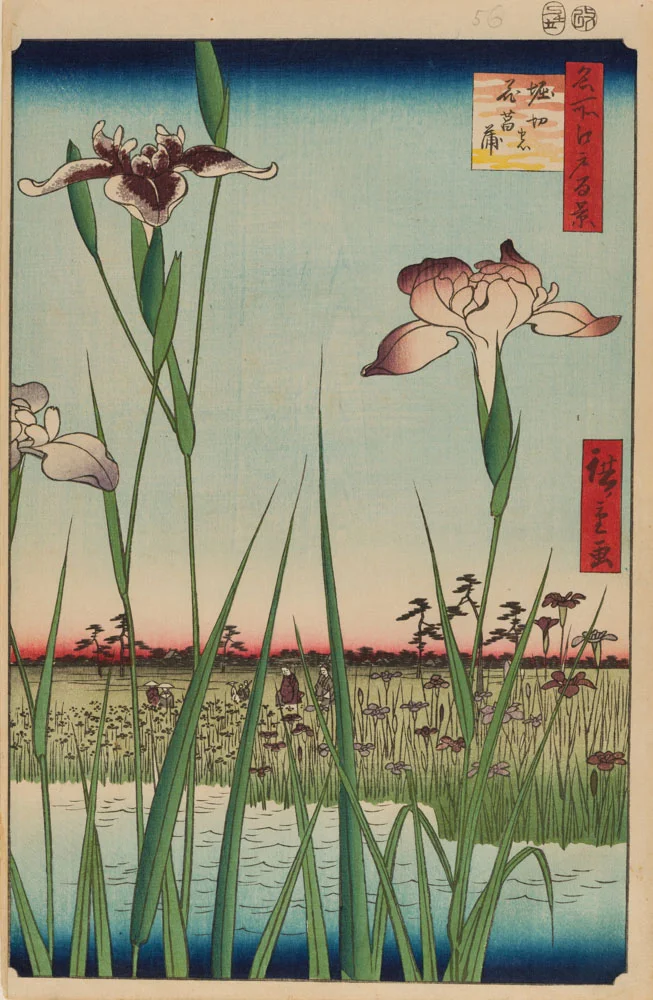
→ VIRGO
Virgos gravitate toward perfection and beauty—both exemplified by this print. Gardeners in the district of Horikiri are known for their flowers, but one bloom in particular stands out. Pictured here are the stunning irises known as hanashobu, which thrive in the area’s swampy environment. If you look into the distance, you can see women who have come to admire the lovely sight.
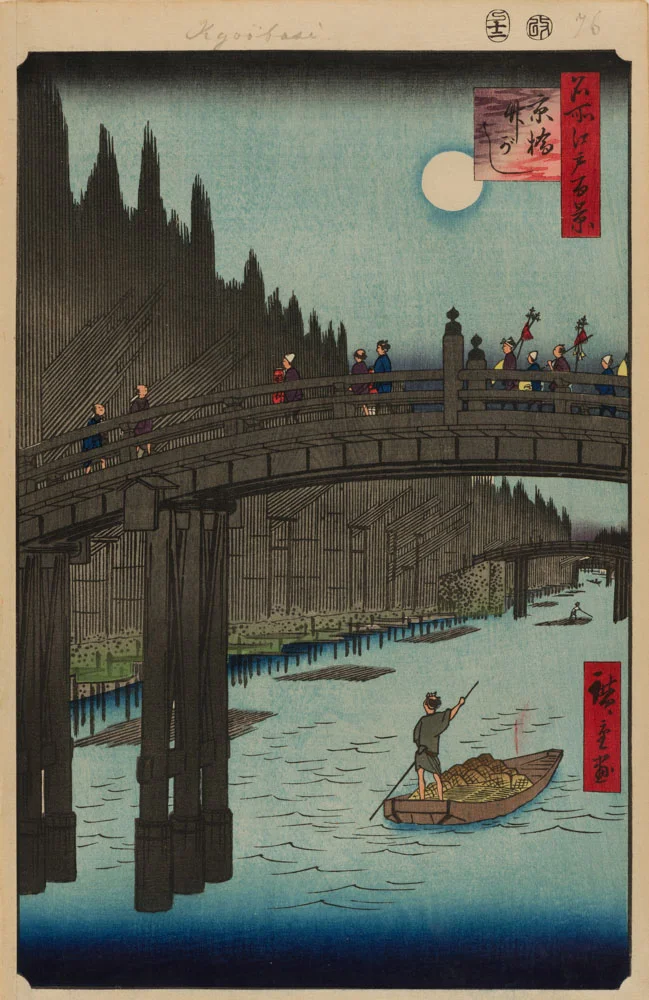
→ LIBRA
Libras are the peacekeepers. They often function as a bridge between people. They’re also lovers of beauty—and will likely appreciate this print’s nod to Yokogawa Hori-Take, the revered artisan and carver who engraved many of Hiroshige’s designs in the 1850s. The characters for “Horitake” are located on the lantern held by the figure just left of center on the bridge.
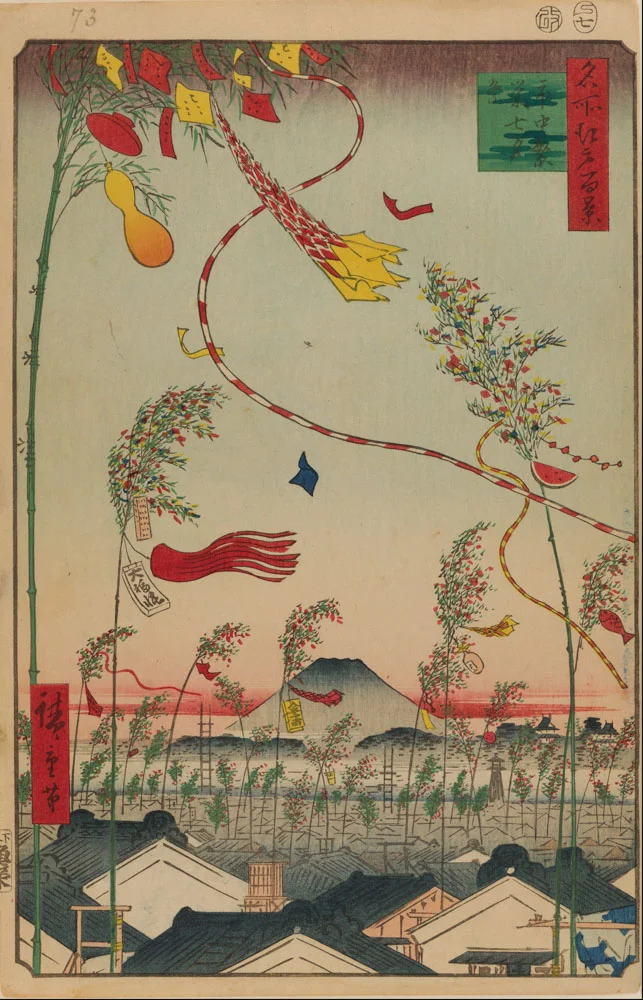
→ SCORPIO
Japan’s Tanabata festival celebrates a Chinese legend about two lovers who cross the Milky Way to meet. Like the Scorpio, the story is full of passion and loyalty. Though we know it represents the festival, this is the only print in Hiroshige’s series that does not list a specific location. But here’s an insider secret (very Scorpio): The view is from a place deeply personal to the artist—his own house.
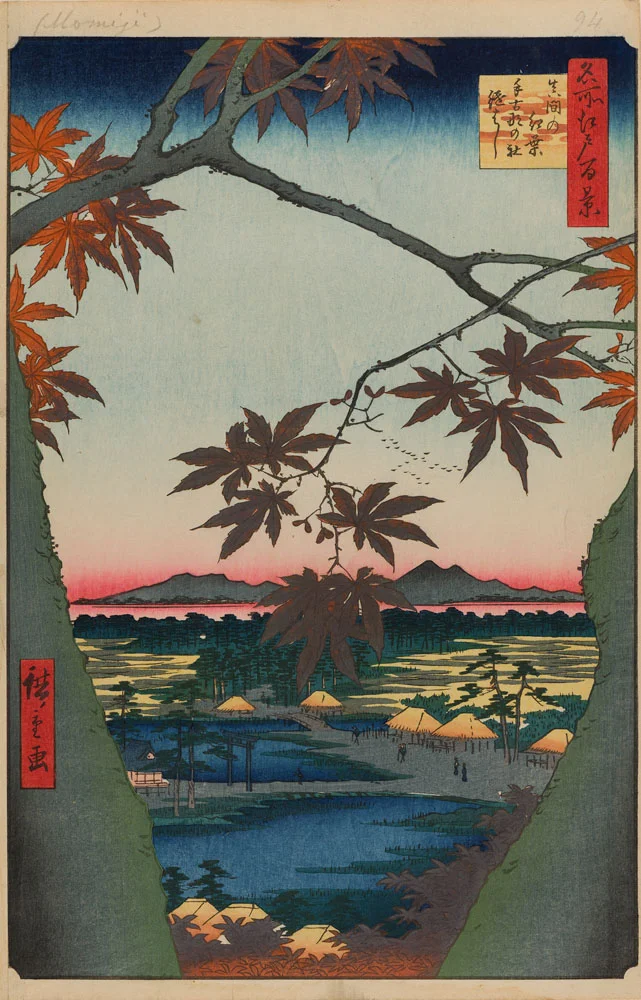
→ SAGITTARIUS
This print captures the maple trees of Mama, an area 10 miles east of central Edo. The site was home to one tree that was particularly famous for its tremendous height, which feels very Sagittarian: an optimistic desire to reach toward the sky. The autumn maple leaves were so captivating that many Edo residents made the voyage to see them. A Sagittarius knows that life is all about the journey.
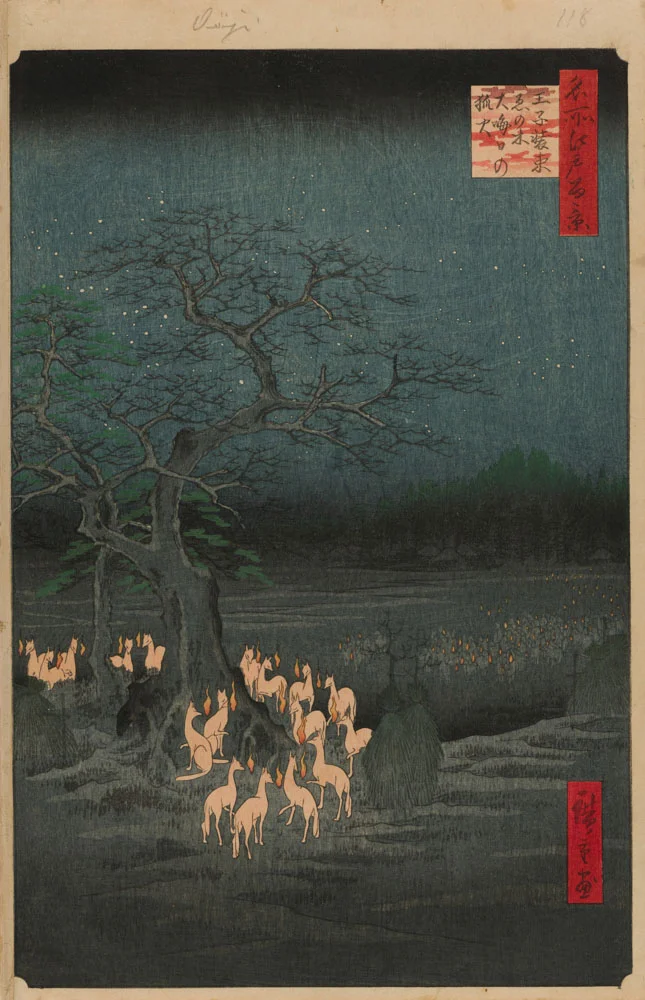
→ CAPRICORN
In this print, Hiroshige ventures into the world of the fantastical and spiritual. (Whoa, whoa, whoa, that is the opposite of Capricorn energy, you might be thinking. Bear with us!) It was believed that on New Year’s Eve, foxes would gather at a particular tree near the Oji Inari Shrine, which is devoted to the god of success, agriculture, and industry. (All very practical, Capricorn things to ask a god for!) The foxes would be given orders for the following year. They’d then emit distinctive flames that allowed farmers to predict the future of their crops. Dependable! Like a Capricorn!
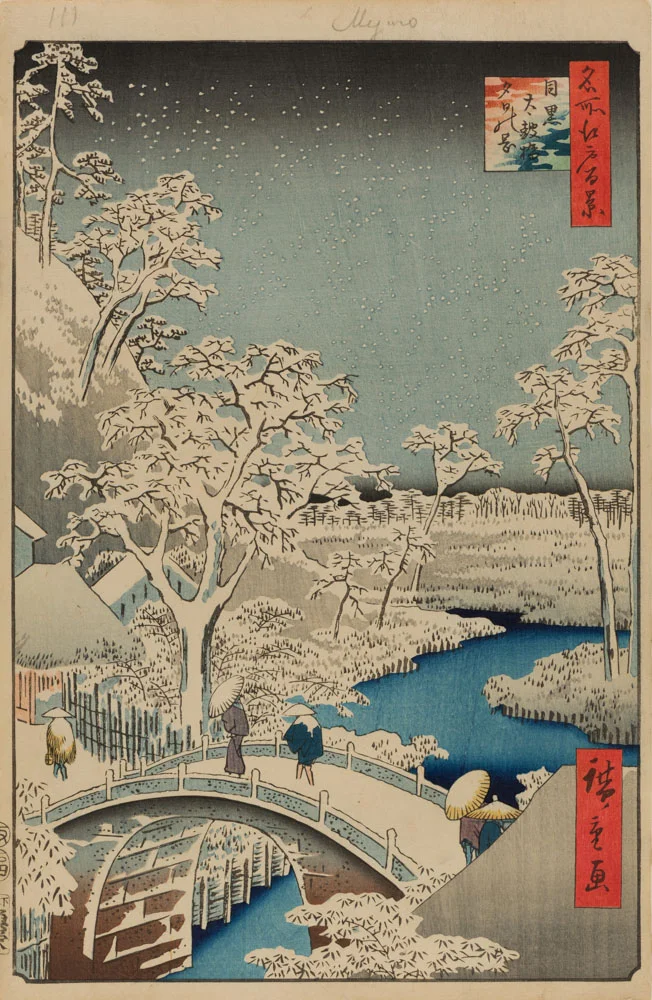
→ AQUARIUS
This is the Meguro Drum Bridge, a rare sight. In Edo, there were only a handful of drum bridges, defined by their semicircular shape. Bridges made of stone were also pretty unusual. This special construction will probably speak to the heart of the Aquarius—one who likes to do things their own way. Legend has it that this bridge was designed in the 1740s by a wandering priest. (Very Aquarius!)
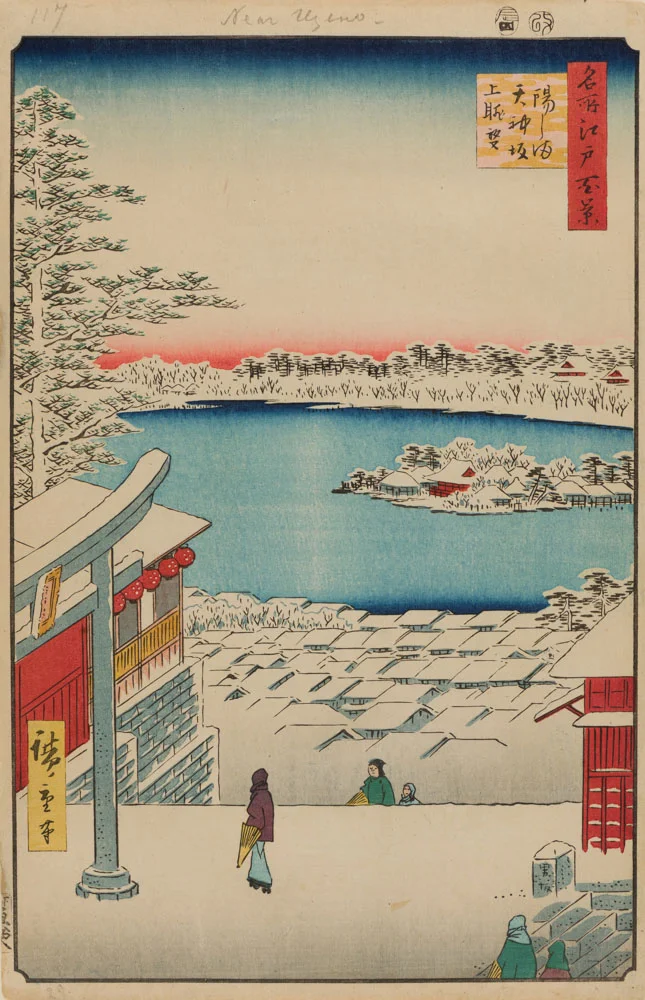
→ PISCES
Yushima Tenjin is one of the oldest shrines in Edo. It is dedicated to Sugawara Michizane, the patron saint of learning and the arts. Pisces are compassionate, artistic people who care deeply for others. This site of worship will speak to their empathic souls.
Brooklyn Museum
200 Eastern Parkway
Brooklyn, NY 11238


From top: Utagawa Hiroshige. Shitaya Hirokoji, no. 13 in 100 Famous Views of Edo, 9th month of 1856. Woodblock print. Brooklyn Museum, Gift of Anna Ferris, 30.1478.13. (Photo: Brooklyn Museum); Utagawa Hiroshige. Suruga-cho, no. 8 in 100 Famous Views of Edo, 9th month of 1856. Woodblock print. Brooklyn Museum, Gift of Anna Ferris, 30.1478.8. (Photo: Brooklyn Museum); Utagawa Hiroshige. Cotton-Goods Lane, Odenma-cho, no. 7 in 100 Famous Views of Edo, 4th month of 1858. Woodblock print. Brooklyn Museum, Gift of Anna Ferris, 30.1478.7. (Photo: Brooklyn Museum); Utagawa Hiroshige. Fudo Falls, Oji, no. 49 in 100 Famous Views of Edo, 9th month of 1857. Woodblock print. Brooklyn Museum, Gift of Anna Ferris, 30.1478.49. (Photo: Brooklyn Museum); Utagawa Hiroshige. Yoroi Ferry, Koami-cho, no. 46 in 100 Famous Views of Edo, 10th month of 1857. Woodblock print. Brooklyn Museum, Gift of Anna Ferris, 30.1478.46. (Photo: Brooklyn Museum); Utagawa Hiroshige. Horikiri Iris Garden, no. 64 in 100 Famous Views of Edo, 5th month of 1857. Woodblock print. Brooklyn Museum, Gift of Anna Ferris, 30.1478.64. (Photo: Brooklyn Museum); Utagawa Hiroshige. Bamboo Yards, Kyobashi Bridge, no. 76 in 100 Famous Views of Edo, 12th month of 1857. Woodblock print. Brooklyn Museum, Gift of Anna Ferris, 30.1478.76. (Photo: Brooklyn Museum); Utagawa Hiroshige. The City Flourishing, Tanabata Festival, no. 73 in 100 Famous Views of Edo, 7th month of 1857. Woodblock print. Brooklyn Museum, Gift of Anna Ferris, 30.1478.73. (Photo: Brooklyn Museum); Utagawa Hiroshige. Maple Trees at Mama, Tekona Shrine and Linked Bridge, no. 94 in 100 Famous Views of Edo, 1st month of 1857. Woodblock print. Brooklyn Museum, Gift of Anna Ferris, 30.1478.94. (Photo: Brooklyn Museum); Utagawa Hiroshige. New Year's Eve Foxfires at the Changing Tree, Oji, no. 118 in 100 Famous Views of Edo, 9th month of 1857. Woodblock print. Brooklyn Museum, Gift of Anna Ferris, 30.1478.118. (Photo: Brooklyn Museum); Utagawa Hiroshige. Meguro Drum Bridge and Sunset Hill, no. 111 in 100 Famous Views of Edo, 4th month of 1857. Woodblock print. Brooklyn Museum, Gift of Anna Ferris, 30.1478.111. (Photo: Brooklyn Museum); Utagawa Hiroshige. Hilltop View, Yushima Tenjin Shrine, no. 117 in 100 Famous Views of Edo, 4th month of 1856. Woodblock print. Brooklyn Museum, Gift of Anna Ferris, 30.1478.117. (Photo: Brooklyn Museum)
Hiroshige’s 100 Famous Views of Edo (feat. Takashi Murakami) is organized by Joan Cummins, Lisa and Bernard Selz Senior Curator, Asian Art, Brooklyn Museum.


