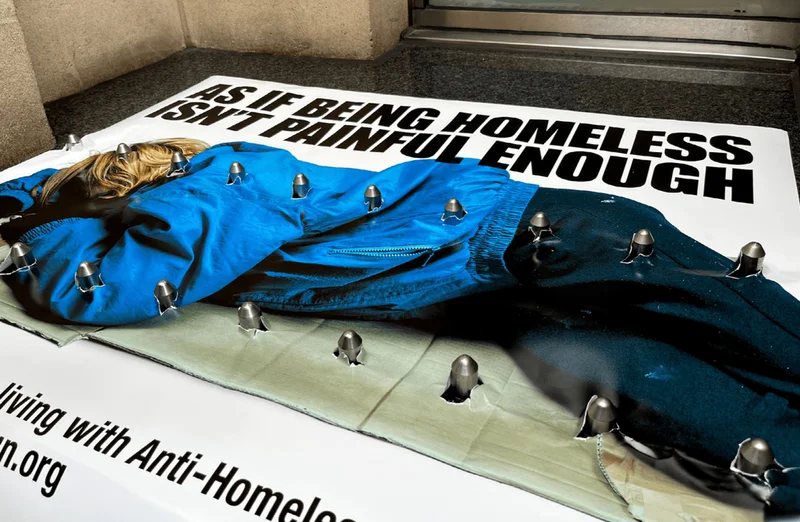
Stuart Semple's artistic intervention against hostile architecture reimagines how public spaces can foster community and inclusivity rather than exclusion. Hostile designs, such as spikes and sloped benches, are often implemented to deter individuals experiencing homelessness from resting in public areas, raising ethical and social concerns. Semple confronts these practices by creatively modifying such spaces to make them more welcoming, advocating for a compassionate approach to urban design.
His projects challenge the intent behind these architectural choices and serve as a call to action for designers and city planners to prioritize humanity over control. By leveraging art as a tool for social change, Semple emphasizes the importance of empathy in design processes and encourages a reevaluation of how public spaces serve diverse community needs. Through his work, Semple inspires a dialogue on redefining the aesthetics and functions of urban environments to enhance the quality of life for all people living in cities.
Read full story