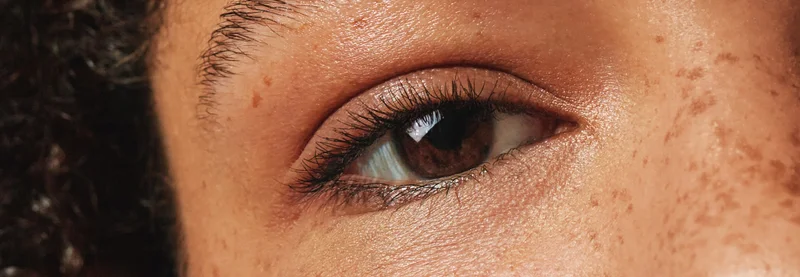
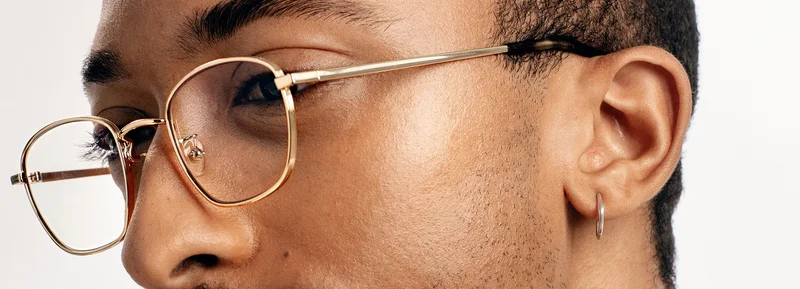
Think about the last time you made eye contact with someone you care about,
not while multitasking, not while glancing down at a screen, but fully, for a few uninterrupted seconds.
It’s surprisingly rare.
Screens have changed the way we look at the world and at each other. Conversations now happen beside glowing rectangles. Faces appear in boxes. Our eyes learn to flick away, down, elsewhere.
Eye contact is more than politeness. It’s how humans signal attention, empathy, and trust. Our brains are wired to read tiny shifts in expression, movement, and gaze. When those cues disappear, the connection quietly thins.
This doesn’t mean technology is the villain. Screens keep us informed, connected, and close across distance. But they also ask our eyes to work differently, focusing at a fixed distance, processing constant motion, and adapting to light that was never part of human interaction before.
Over time, that visual strain doesn’t just show up as tired eyes. It shows up as shorter attention spans, more distractions, and moments where presence feels harder than it used to.
The goal isn’t to abandon screens.
It’s to be more intentional about how we use them and when we look beyond them.
Creating visual comfort throughout the day makes it easier to stay engaged when it matters most. When your eyes aren’t fighting fatigue, it’s easier to stay with a moment. To hold a gaze. To really see someone.
Because connection starts with attention.
And attention starts with how we see.
This week, notice when your eyes drift away and when they stay. Both are telling you something.
As the week unfolds, it’s worth asking:
Are the screens in your life helping you connect, or quietly pulling your focus elsewhere?
Here’s to clearer sightlines, fewer distractions, and seeing each other a little more fully.
— Felix Gray