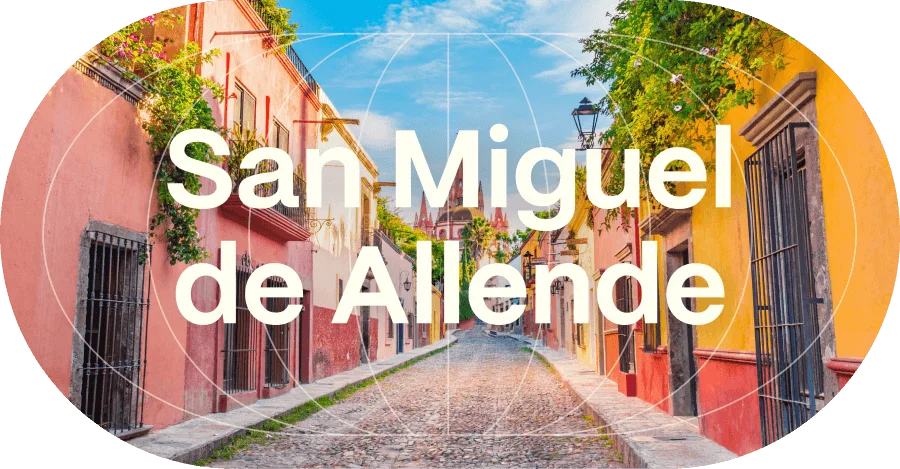
Where you’ll find parading mojigangas, dining and drinking is best enjoyed in the sunshine, and an ancient pyramid tells time..
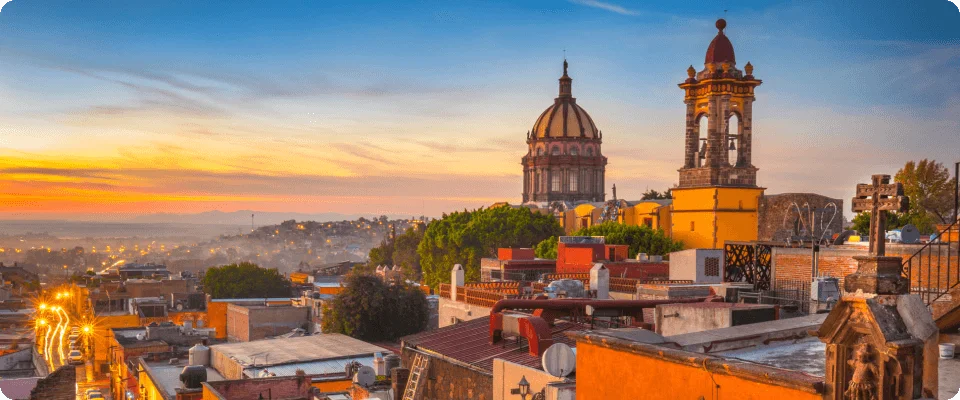
San Miguel de Allende—the historic city in the state of Guanajuato in the mountains of central Mexico—has certainly won the hearts of many visitors. With its colorful houses, cobblestone streets, frequent fiestas, and buildings that went up before the US was even a country, there’s an enchanting atmosphere that makes visitors fall in love.
The UNESCO World Heritage city continually places near the top of travel magazine reader’s polls as one of the top cities in the world. Many who visit are so smitten that they start making plans to move. In fact, of a population of about 175,000, it’s estimated that 10% of people in San Miguel de Allende are international expats.
|
|
From independence to artistic revival
San Miguel de Allende was officially founded in 1542 by Franciscan monk Juan de San Miguel, whom the city was originally named for. Allende was added to the name thanks to the heroics of a resident nearly 300 years later.
When the Mexicans started making plans to break free of Spain’s rule in the early 1800s, San Miguel played a role in the planning and the action. A local named Ignacio Allende marched troops to the state capital of Guanajuato for the first battle of the revolution. After he became a martyr in the 11-year struggle for independence, Allende’s name was added to that of the city’s.
While it’s now easy to call San Miguel de Allende Mexico’s most picturesque city, nobody was saying that a century ago. Much of the population emptied out after a flu epidemic, and many of the buildings sat abandoned for decades.
It wasn’t until the 1960s, when San Miguel de Allende became a favored artists’ destination for foreigners, that the path to reconstruction started. Lured by attractive prices and year-round nice weather, the trickle of immigrants eventually became a flood and helped turn the city into a showpiece.
Aspiring artists still come to study at Instituto Allende and Zenteno Bellas Artes. Many eventually find a place where they can live and work long-term. The art scene is more vibrant now than ever, with the added bonus that there are enough people with money to sell to, so the painters, sculptors, and jewelry makers don’t have to be starving artists. Fábrica La Aurora, a former textile factory converted to a space for dozens of quality galleries and workshops, is a great place to start for a peek at the city’s artistic side.
|
|
History lives on
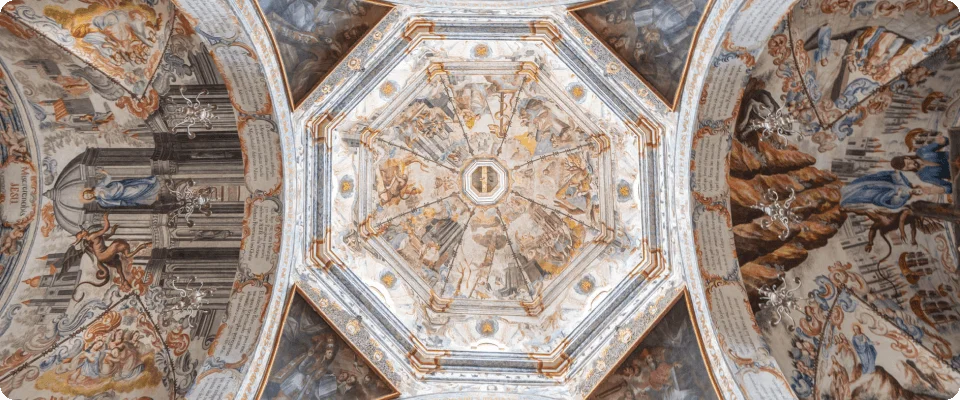
San Miguel de Allende is more of a strolling destination than a “see and do” destination filled with museums, but about 15 minutes away is a separate UNESCO World Heritage site on its own. Known as “The Sistine Chapel of Mexico,” the 16th-century Sanctuary of Atotonilco has an interior completely covered with paintings of biblical scenes (some rather gruesome) that artists Miguel Antonio Martínez de Pocasangre and Rodriguez Juárez created over the course of three decades.
The city’s most famous site is the neo-Gothic church, La Parroquia de San Miguel Arcángel, fronting the main plaza. The original church went up in the 17th century, but in 1880, a self-taught architect named Zeferino Gutierrez added the more fanciful façade, which was modeled after a stamp on a letter from Europe—a continent he never visited.
There are a few large hotels built from the ground up this century, but others are renovated mansions that date back to colonial times. For example, Casa No Name used to be the home of a prominent priest and had tunnels connecting it to a nearby convent. And the main restaurant building of Belmond Casa de Sierra Nevada was once the grand home of the archbishop (his former bedroom is now the bar).
|
|
They might be giants
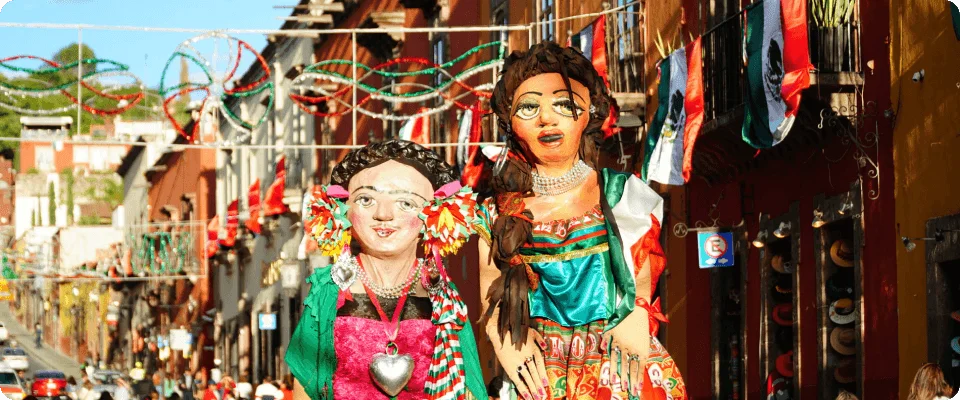
Among Mexicans, San Miguel de Allende is known for two things: destination weddings and mojigangas—the giant paper mache figures featured prominently in the opening of the James Bond movie Spectre.
The two elements come together for those fortunate enough to catch a wedding celebration, since bigger-than-life-sized figures representing the bride and groom will sometimes be parading down the street. The mojigangas (which were brought from Spain to Mexico in the 1600s) also show up in different forms in parades and festivals, often dancing around to the music.
Read more
- The dishes to order at San Miguel’s trendy rooftop bars and restaurants
- An ancient pyramid that changed the map of Mesoamerican history
- How—and where—to sip your way through Bajio wine country
|
|
BJX flight price history
|
|
$283 Average Going deal
|
|
$600 Normal ticket price
|
|
|
|

|
Interested in a trip to San Miguel de Allende?
Premium and Elite members can find, watch, and get alerts for specific destinations on their Watchlist.
|
|
|

|
|
With expert:
Tim Leffel
|
Tim Leffel is a veteran travel writer, editor, and blogger who has won dozens of awards. He runs multiple travel websites, including one of the longest-running sites on the internet: the Cheapest Destinations Blog, established in 2003. He is the author of A Better Life for Half the Price, now in its second edition, and Travel Writing 2.0, now in its third. He is based in Guanajuato City, Mexico.
|
|
|
Share with a fellow travel lover by forwarding to a friend.
|
|
|
Get the app today 
|
|
|