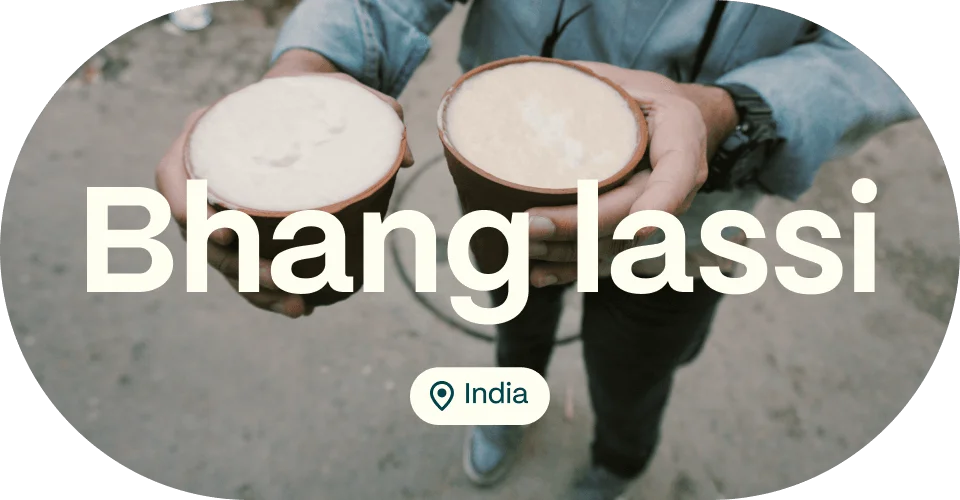
Ask any Indian if they have ever heard of bhang lassi, and chances are you will get a reference to two famous Bollywood movies that brought bhang into the limelight—Aap Ki Kasam (1974) and Silsila (1981). Both of these blockbuster Indian films showcased bhang lassi (a cannabis-infused yogurt drink) as a trippy concoction that people drank to get “high.” While there is some truth in that, it has a lot more cultural significance in India than just a way to get blitzed.
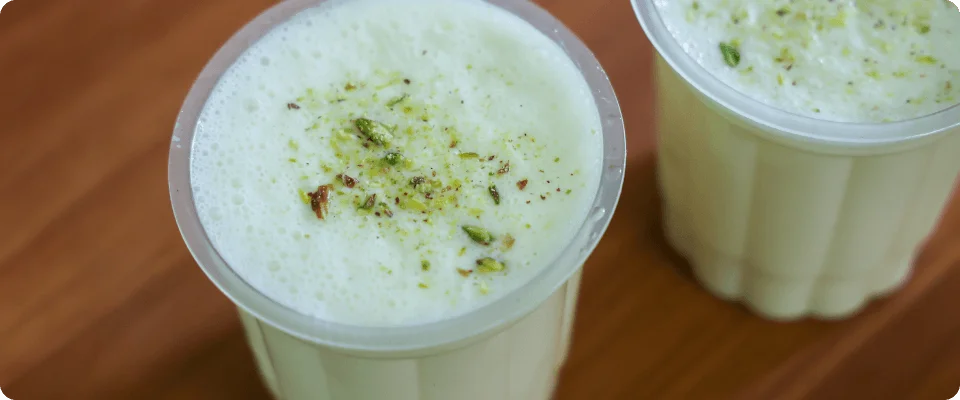
Lassi is a traditional drink that is typically found in many South Asian countries. It is made by blending yogurt, spices, water, and sometimes fruits. It can be either sweet or savory. When cannabis is infused into this drink, it becomes a bhang lassi, which is creamy, sweet, and slightly spicy.
Bhang is an edible mixture that is made from the leaves, buds, and flowers of the marijuana plant, which many claim has been used medicinally as early as 2800 BCE. In India, it has been added to food and drink for thousands of years and is still prominently consumed during many religious rituals, prayer ceremonies, and festivals.
|
|
|

Limited-time offer with Chase Sapphire Preferred®
New cardmember offer: Earn 100k bonus points after spending $5,000 in the first 3 months of account opening.
Act fast—this offer won’t last long.
|
|
The food of the god Shiva
The cannabis plant is often found growing in the wild in India, especially in the mountains and hills around the northern states of Uttarakhand, Uttar Pradesh, Himachal Pradesh, Punjab, and Rajasthan. But, in many of the villages around the Indian Himalayas, it is seen more as a weed than an edible.
However, in Indian mythology and ancient Hindu scriptures, bhang is a sacred plant associated with the divine powers of Lord Shiva, the god of destruction and one of India’s most revered deities. It is believed that he used it to focus and harness his powers for the good of mankind, and bhang is often associated with nirvana (salvation).
While bhang lassi is a drink that can be had at any time, it is especially significant during certain Indian festivals—Holi, celebrated in March as an ode to spring, and Maha Shivaratri in February, which honors Lord Shiva.
Bhang lassi is consumed by many adults as a way to acknowledge the change of the seasons and get closer to the gods in a euphoric state of mind.
“Bhang lassi is very much a cultural expression in Northern India. It is a way for people to connect with their beliefs and faith,” says Samta Gupta, a chef and food entrepreneur with over 20 years of experience in the hospitality industry.
“But it also has practical benefits. The northern part of India gets unbearably hot in summer, and this drink acts as a cooling agent due to the yogurt. A tall glass of bhang lassi does wonders for the mental and physical disposition by acting as a source of happiness and a liberator,” she adds. It also makes for a refreshing drink on the weekend—the perfect way to relax and unwind.
|
|
|
Save 15% with OLIPOP
Healthy meets delicious—try OLIPOP and save 15% on your 1st order. Subscribe and save 15% + get free shipping on every order! Use code ########.
|
|
From bud to bhang
India’s Narcotic Drugs and Psychotropic Substances Act of 1985 prohibits the production, sale, and consumption of certain parts of the cannabis plant. This excludes the leaves, flowering top, and seeds from which the resin has not been extracted.
Since bhang is made from the leaves—and not made from part of the banned cannabis plant—it can be openly consumed in India. Government-authorized bhang shops are found in many North Indian cities like Jaisalmer, Pushkar, and Varanasi. According to the Asian Cannabis Report, around 15 million people in India consume bhang each year (about 1% of the population).
While there are many different ways of making bhang lassi, the traditional method is to blend fresh cannabis leaves, plain yogurt, a pinch of sugar, water, and nuts like almonds and pistachios, along with spices like ginger powder, fennel seeds, cardamom, and peppercorn.
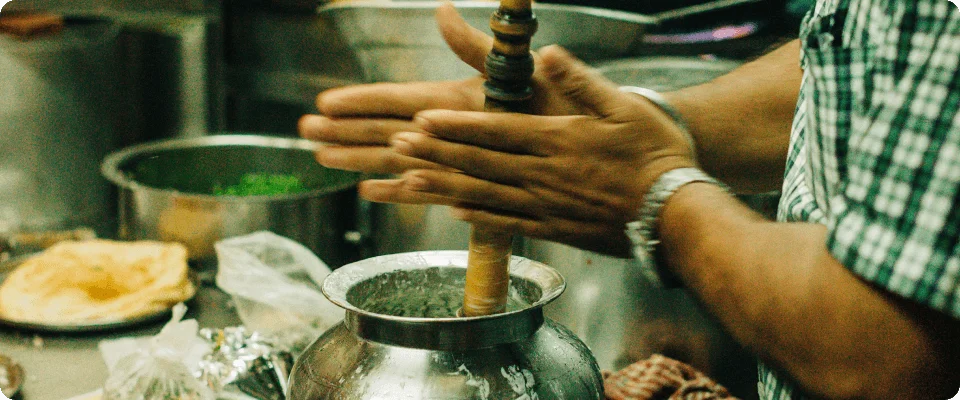
In India, when lassiwalas (people who make lassi) make this drink, they ground fresh (sometimes dried) cannabis leaves into a paste-like consistency using a traditional mortar and pestle. The paste is then mixed with milk and strained before adding the yogurt, nuts, sugar, and spices. It is combined using a hand mixer in an earthen pot, which keeps the lassi cold. The bhang used is generally mild, but you can ask for a medium or strong lassi for a longer-lasting high.
The result is a thick spicy drink that is sure to give the right kick—getting you closer to that happy state of mind—and, who knows, maybe even your version of moksha (enlightenment).
|
|
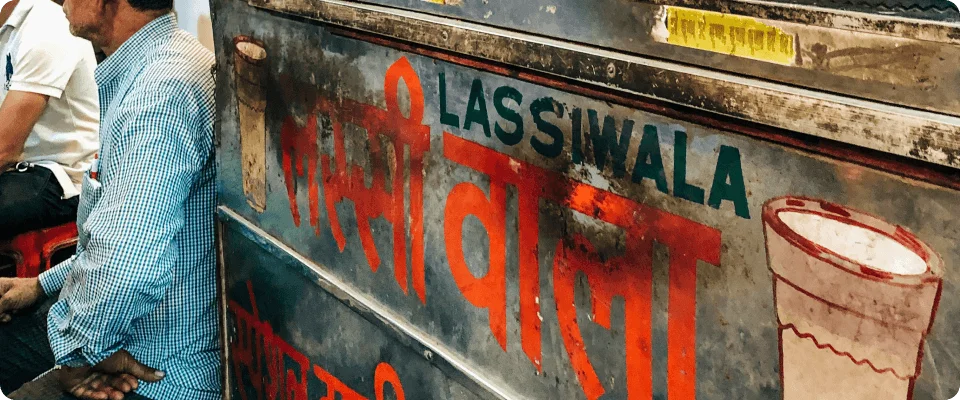
Where to try bhang lassi
Want to try bhang lassi? Read our guide for the best government-authorized shops across Northern India.
|
|
|

Now through April 27, refer friends and enter to win $1,500 in free flights and travel cash, a $199 Elite membership, and your dream trip planned by Going. Each referral to going.com earns you an entry.
|
|

|
|
With expert:
Karthika Gupta
|
Karthika Gupta is a lifestyle and travel photographer, freelance writer, and podcaster. She writes about culture, travel, lifestyle and food across several different print and online publications. Follow her adventures on her site CulturallyOurs or on Instagram at @karthikagupta.
|
|
|
Share with a fellow travel lover by forwarding to a friend.
|
|
|
Get the app today 
|
|
|