|
Together with:
|
|
|
|
|
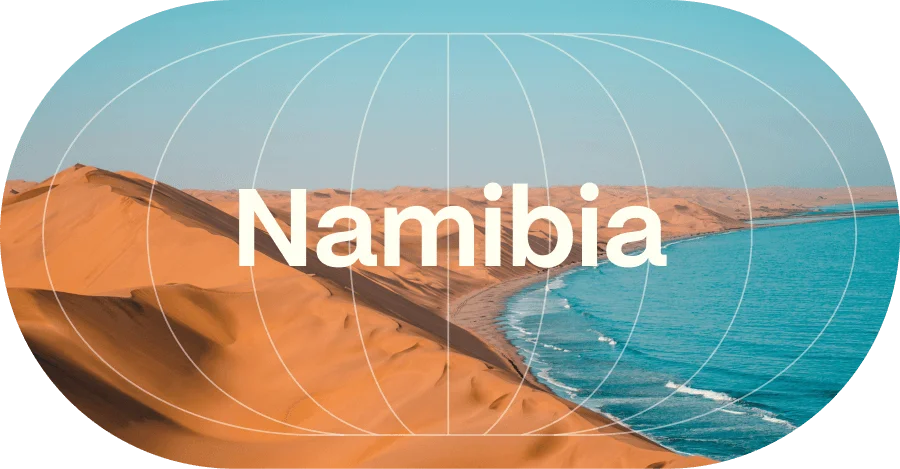
Where shifting sands take over towns, beetles sip on fog, and there’s plenty of room to roam…
Space. Swaths and stacks of enchanting space. Namibia is one of the least densely populated countries in the world. It’s twice the size of the US state of California with less than 10% of the population—that places roughly seven people to every square mile if you do the math.
While there’s evidence of people in Namibia as far back as 25,000 BCE, the name Namib originates from the Nàmá people who settled there in the first century BCE. Namib translates to “vast place,” and the desert that spans 81,000 square kilometers (31,274 miles) and covers a large swath of the country certainly fits that description.
The shifting sands of this harsh desert habitat provide a good reason why so much of Namibia remains uninhabited and why the people, animals, and other creatures that have thrived here are all the more remarkable.
|
|
|
Become an AARP member today
You’re invited. AARP’s mission is to empower people to choose how they age. AARP provides instant access to hundreds of carefully chosen benefits. Pay only $15 for your first year with automatic renewal. Plus, choose your free gift. There’s just one thing to do—join AARP today!
|
|
The odd inhabitants of the oldest desert
Namibia is home to the world's most ancient sands. The Namib Desert has existed for roughly 50 to 80 million years utterly devoid of surface water, yet life has found a way to settle into these parched powders.
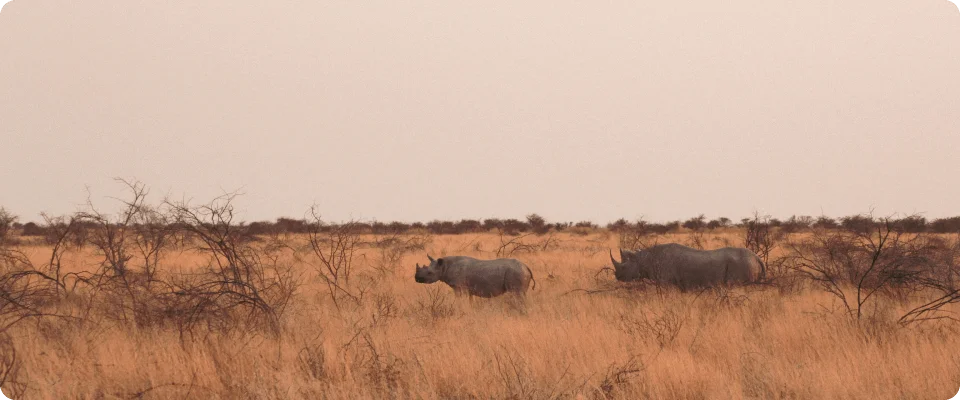
The desert-adapted wildlife found here is like nothing else on Earth. There are free-roaming wild horses, fog-sipping beetles, snakes that bury themselves up to their eyeballs in sand, and lions that prowl the beaches and snack on seals. Impressively, Namibia is also home to the largest unfenced population of black rhinos in Africa.
|
|
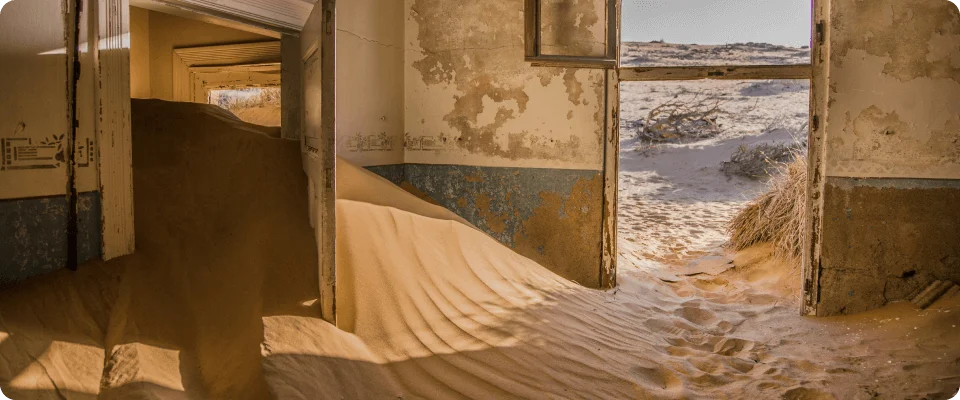
Shipwrecks and sand-filled towns
Shipwrecks splatter the treacherous shores of the Skeleton Coast (if that's your thing, there’s even a shipwreck-inspired hotel), and eerie dilapidated ghost towns stand testament to the harsh realities that fortune-seeking settlers faced trying to forge a life in the desert.
While the Skeleton Coast was named for the whale bones that once littered its shores, those bones have been replaced by the rusting hulls of the many boats that couldn’t contend with the area’s rough seas and heavy fog.
Now deserted, the town of Kolmanskop was once a glamorous (albeit controversial) outpost for fortune-seekers. Established in 1908 after the discovery of diamonds nearby, it was abandoned just 48 years later when even richer diamond deposits were found farther to the south. It now stands vacant—except when buses roll in for the morning tour.
Although interesting with a guide, it's best explored at dawn when golden light sparkles off the sand, much of which has begun to reclaim the old buildings. You may even be lucky enough to catch sight of one of Africa's rarest predators.
|
|
|
Protect your trip in 60 seconds with Faye travel insurance.
|
|
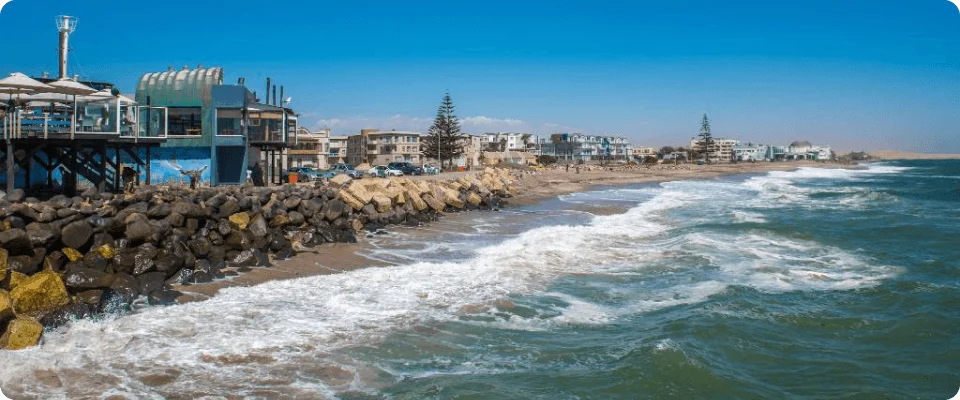
Marathon chickens and mopane worms
Although not native to Namibia, oysters flourish in the cold ocean currents. Affectionately dubbed “Namoysters,” they are affordably available in coastal towns, such as Walvis Bay, Swakopmund, and Luderitz.
Indigenous offerings include marathon chickens (lean, flavorful chickens named for how difficult they are to catch) and mopane worms, which are caterpillars best dried, fried, and eaten like chips.
Traditionally harvested by the San people, the Devil's Claw herb comes with many acclaimed health benefits and has been sipped for centuries. However, when distilled into an alcoholic liqueur, it’s quite bitter. Don't get tricked into downing a shot.
Namibia’s past German colonial presence also left flaky pastries, traditional treats like apple strudel and Black Forest cake, and great local beer (there’s even an annual Oktoberfest in Windhoek).
Read more
- A harrowing history of genocide
- The hit song that never stops playing in the desert
- How to experience Africa’s only International Dark Sky Reserve
|
|
Good to know
|

|
|
Budget: $$$$$
|
|
|
|

|
When to go: May–Oct (dry season, peak wildlife)
|
|

|
Family friendly:
★★★☆☆
|
|

|
Public transportation:
★★☆☆☆
|
|

|
English speaking:
★★★★☆
|
|

|
Main language(s): English, Oshiwambo, German, Afrikaans, and many other Indigenous languages
|
|

|
Global Peace Index rank: Namibia ranks #50 out of 163 countries. Namibia is generally considered safe for tourists. Be mindful of petty crime, like pickpocketing, in crowded areas.
|
|

|
LGBTQ+ Equality Index rank: Namibia ranks #89 with a score of 44 out of 100. Namibia is considered relatively safe for LGBTQ+ travelers, but the country is conservative, particularly in rural areas. To avoid issues, refrain from PDA if possible.
|
|
|

|
Interested in a trip to Namibia?
Premium and Elite members get alerts for specific trip destinations and dates in the Going app.
|
|
|

|
|
With local expert:
Melanie van Zyl
|
Melanie van Zyl is a South African photojournalist with a soft spot for responsible travel and conscious design. She has visited almost every corner of Namibia, spanning ten trips. From driving 4X4s across the Namib Desert with family to following flamingoes to Walvis Bay and catching feisty tigerfish in the Zambezi River, she’ll keep going back for those oysters and endless horizons.
|
|
|
Share with a fellow travel lover by forwarding to a friend.
|
|
|
Get the app today 
|
|
|