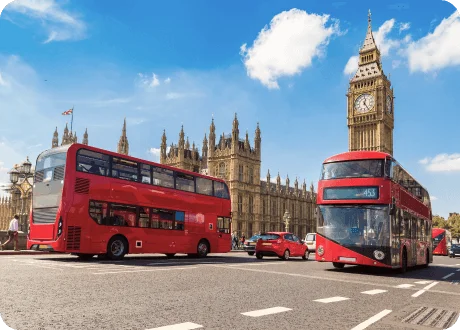
Where tea is an afternoon delight, Sundays are for roasts, and the river’s shore holds buried treasure...
One of the most dynamic and diverse capitals in the world, London has something to offer everyone, from a rich history, international eats, and cutting-edge art and culture to bustling shopping districts, expansive gardens, and world-class entertainment. So you might be surprised to learn that London is also one of the smallest cities on Earth and one of the UK’s least populated.
How is that possible? From its early settlement in Roman times through the Middle Ages, London proper was confined to the tiny area now known as the City of London, which covers only about one square mile and has a population of around 9,000. What’s commonly known as London today is technically Greater London, a sprawling conglomeration of what were once many separate towns, and now contains 9 million people.
The City of London, commonly known as the City or the Square Mile, even has its own coat of arms, police force, mayor, and government with more power than those of London’s 32 boroughs.
|
|
Where there’s Big Smoke, there’s Great Fire
Like most major cities, London has many nicknames—not all of them complimentary. The most common, the Big Smoke, dates from the Industrial Revolution when countless factories sprang up in the capital and started spewing black fumes into the sky above it. London is still battling air pollution today, limiting traffic in designated congestion and low-emission zones in an attempt to improve air quality.
One night in the fall of 1666, a fire started in a bakery on Pudding Lane. It quickly escalated into a major firestorm that burned for several days, destroying most of the medieval City of London—including the original St. Paul’s Cathedral—and leaving tens of thousands homeless. When notified of the emergency, the ineffectual mayor at the time declared that the fire was so small “a woman could piss it out” and went back to bed.
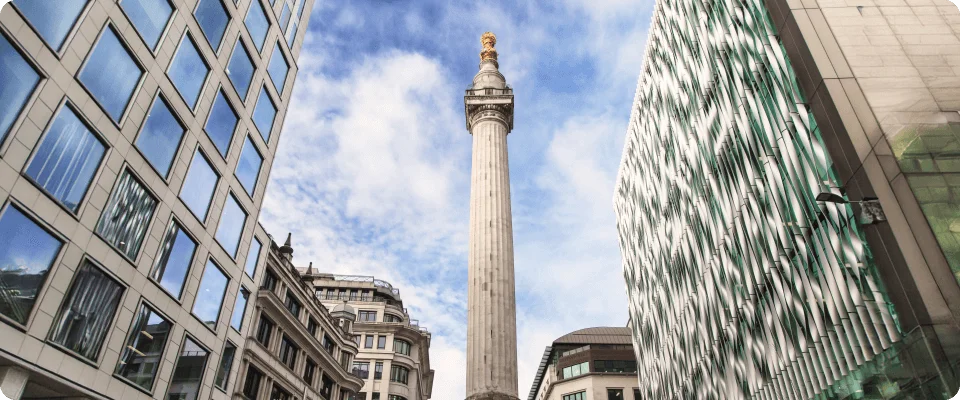
Although incredibly destructive, the fire was also a transformative event for the city. London was rebuilt on the same winding medieval street plan but using more fire-resistant materials such as stone and brick in place of wood, and the fire’s aftermath led to the birth of the property insurance industry. A 202-foot-tall column, known simply as the Monument, was erected near London Bridge to commemorate the tragedy.
|
|
Fancy a cuppa?
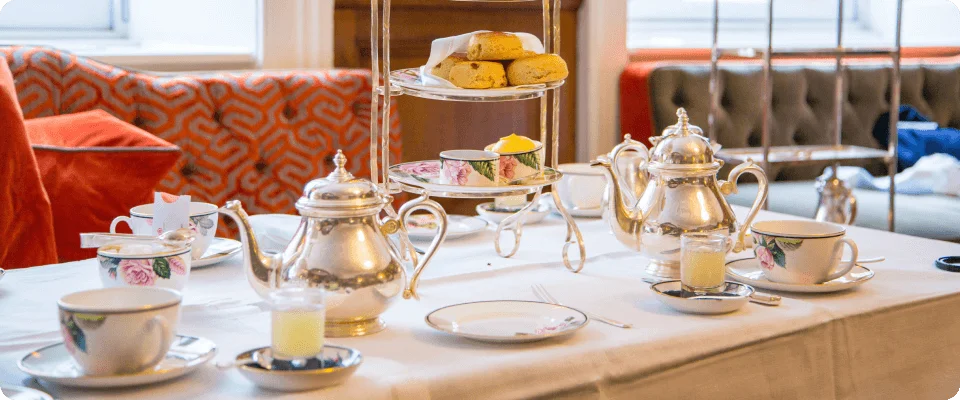
Many people associate London with elegant, formal afternoon teas (note that high tea actually refers to a hearty evening meal, aka dinner), and the city’s luxury hotels are known for their upscale tea services. But tea is also an integral part of day-to-day life in England, with multiple tea breaks an important part of any workday.
For a fancy tea service, tea is brewed loose-leaf in a pot, but everyday tea, often called builder’s tea, is brewed dark and strong in a mug using a teabag, usually with plenty of milk and sugar added, and often served with some biscuits for dunking.
For something in between the two, cream tea is a good option. Not quite as elaborate as a full afternoon tea, which usually starts with dainty finger sandwiches followed by scones and ornate pastries, cream tea is tea served with scones, clotted cream, and jam, usually strawberry or raspberry. There’s an ongoing, heated debate about whether the clotted cream goes on the scones before the jam or vice versa.
|
|
The lungs of London
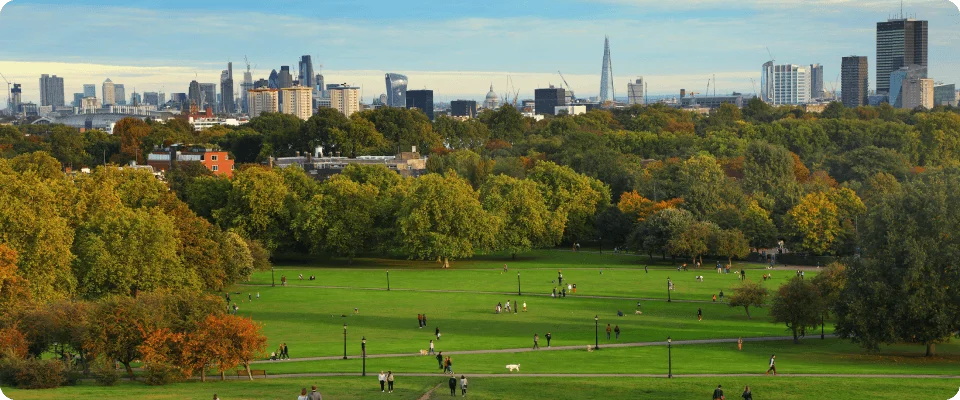
Although London is highly built-up, it has, fortunately, plenty of green space to counteract it. In fact, 18% of its area is public open space, and 44% of Londoners live within five minutes of a park. The city is blessed with 3,000 parks, called “the lungs of London” by Charles Dickens, and it’s often referred to as the world’s largest urban forest, thanks to its more than 8 million trees.
London also has an unusually high percentage of private gardens for a major metropolis, and for one weekend each year, some of these normally off-limits, hidden green spaces welcome the public for Open Gardens.
Read more
- The mighty river Thames and its unique pastime: mudlarking
- Where to find the best Sunday roast (hint: it’s not so simple)
- London’s favorite tipple—after the trusty pint, of course
|
|
LHR flight price history
|
|
$500 Average Going deal
|
|
$950 Normal ticket price
|
|
|
|

|
Interested in a trip to London?
Premium and Elite members can find, watch, and get alerts for specific destinations on their Watchlist.
|
|
|
|
|
|
|
|
|
19 of the best day trips from London
Read more
|
The perfect itinerary, from 2 to 5 days
Read more
|

|
|
With local expert:
Danette St. Onge
|
Danette St. Onge is a freelance food and travel writer. She lived in Paris for the past six years and is now based between Paris and London.
|
|
|
Share with a fellow travel lover by forwarding to a friend.
|
|
|
Get the app today 
|
|
|