|
Together with:
|

|
|
|
|
Where you’ll find some of the best restaurants, most abundant biodiversity, and most precious Incan gold in the world…
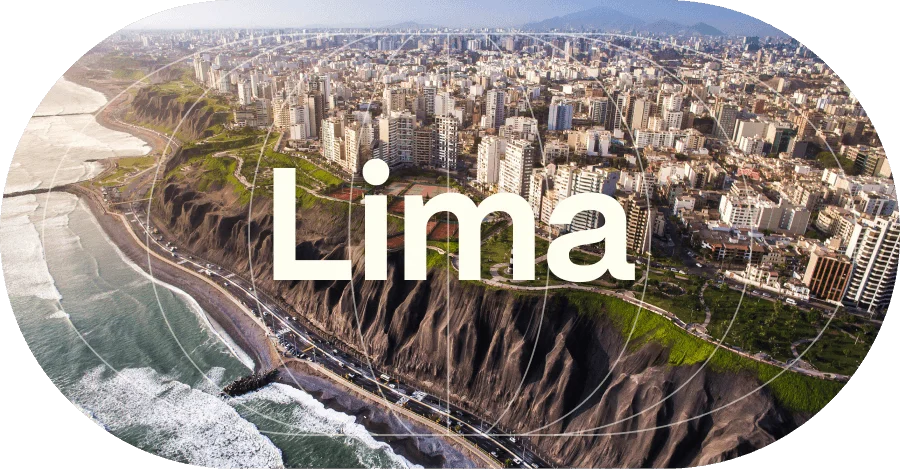
Where an opalescent sky meets the Pacific, surrounded by an otherworldly desert reminiscent of Mars, the capital city of Peru is a cultural hub of 43 distinct neighborhoods, home to over 10 million inhabitants, and the bedrock of a culinary scene that has captivated the world.
Some travelers may pass through the capital on their way to trek the Andes or en route to the Amazon, but those in the know linger in Lima, a city that merges the vestiges of the Incan Empire with the dramatic baroque of Spanish colonialism alongside influences from Africa, China, and Japan.
Sample local produce grown by farmers with generations of experience cultivating one of the most biodiverse lands on Earth, then indulge in that same produce at a Michelin-starred restaurant. Even a casual jaunt around the block reveals Lima’s artistic pulse, with colorful murals celebrating Lima’s diverse heritage, or the music of cart vendors crooning verses to sell their wares.
|
|
|
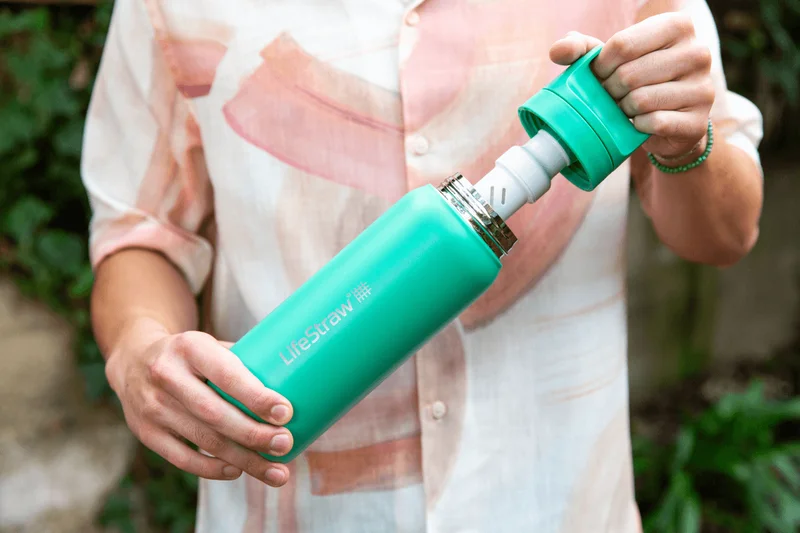
From red-eyes to roadtrips, this bottle filters as you go.
Whether you’re filling up from an airport water fountain or from a sketchy gas station tap, LifeStraw Go Series filters out bacteria, parasites + microplastics while making gross water taste better. Its stainless steel body keeps water cool for hours and features a covered mouthpiece + an easy-to-use filter design that lasts up to five years. Plus, for every product sold, a child in need receives a year of safe water—11 million to date.
|
|
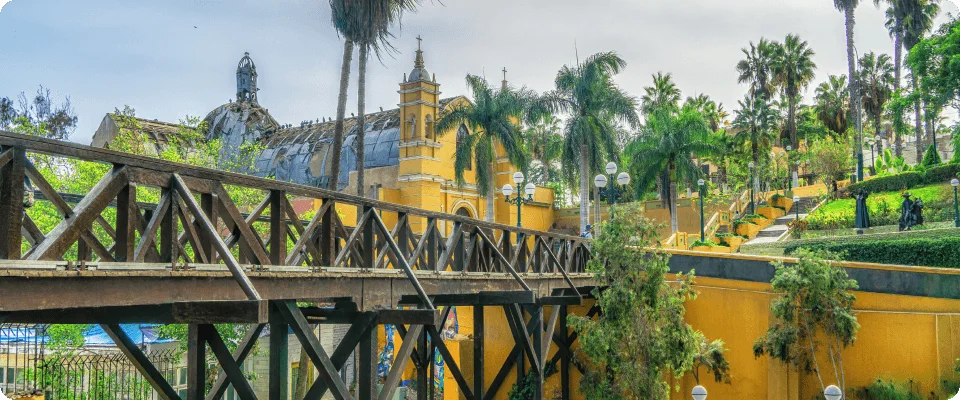
Biodiversity on display
Peru is one of the most biologically diverse countries in the world. It’s home to tens of thousands of species of flora and fauna adapted to survive in one of its 90 unique microclimates. It even ranks second in the world for number of species of birds, and it competes with Colombia to be first in the world for species of butterflies (both countries have claimed the title).
Lima itself has become a haven to showcase all the diversity that Peru has to offer. The city has taken a special interest in uplifting the work of native ecologists and agricultural scientists through ferias ecológicas stationed throughout the city.
Much like a farmer’s market, these fairs allow land stewards from all over the country to showcase and sell the hundreds and even thousands of varieties of fruits, vegetables, and livestock endemic to Peru—there are more than 4,000 types of native potatoes alone!
Explore the luscious tastes of tropical fruits like chirimoya and tuna fruit (prickly pear), test your spice tolerance with a variety of ajíes like rocoto, limo, and amarillo, and chat with the vendors about how best to use kiwicha, pallares, and huacatay—vegetables and herbs unique to Peruvian cuisine.
For a more cerebral experience, visit the Archaeological Sanctuary of Pachacamac. Pachacamac translates to “soul of the earth, the one who animates the world,” and the village was the heart of coastal culture dating back to 5,000 BCE. It still serves as a conservation space for native flora and fauna like your favorite local camelid, the llama; guinea pigs; many species of coastal bird; and the charismatic Pachacamac dogs, the only species raised in the pre-Hispanic era.
|
|
Remnants of an empire
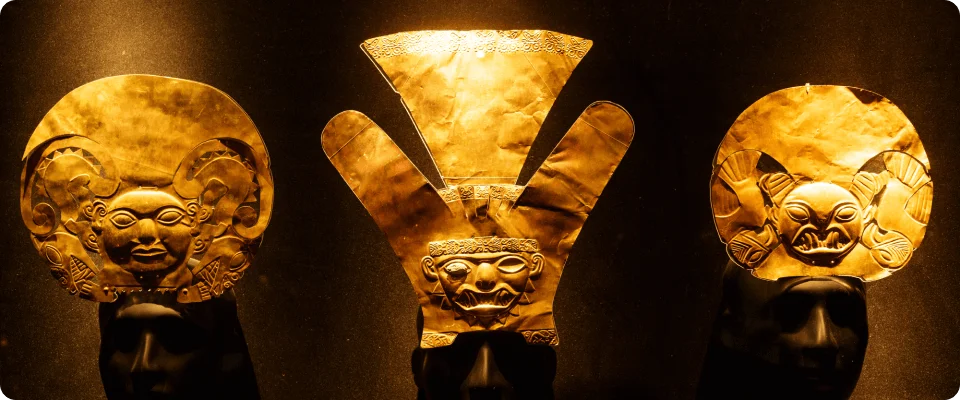
The Incan Empire was founded in the 12th century, and its might was known far and wide during the pre-colonial era. To this day its legacy persists, most famously by the empire’s gold. According to local legend, gold was the blood of the sun god Viracocha, and as such, it was treated with reverence. Incan goldsmiths refined their techniques to form some of the most intricate art and technology forged from the purest gold in the world.
When the Spanish invaded in 1532, they spent 40 brutal years dividing and pillaging the empire. Although much of the empire’s gold was melted down and sent to Spain as gold bars, remnants of these ancient artifacts can be found in the Museo Oro del Perú (Museum of Gold).
The two-story museum bears witness to the violence of that conquest, as well as the spoils of the lost empire. Peruse the hundreds of war relics, weapons, propaganda, uniforms, and military history of the nation before descending into the bowels of the museum, where what is left of the Inca Empire’s most precious metal is heavily protected by Peruvians to this day.
|
|
|

Get to your gate faster with CLEAR+
We’ve teamed up with CLEAR because we believe finding cheap flights should come with stress-free travel. As a valued Going member, you get 2 months free!
|
|
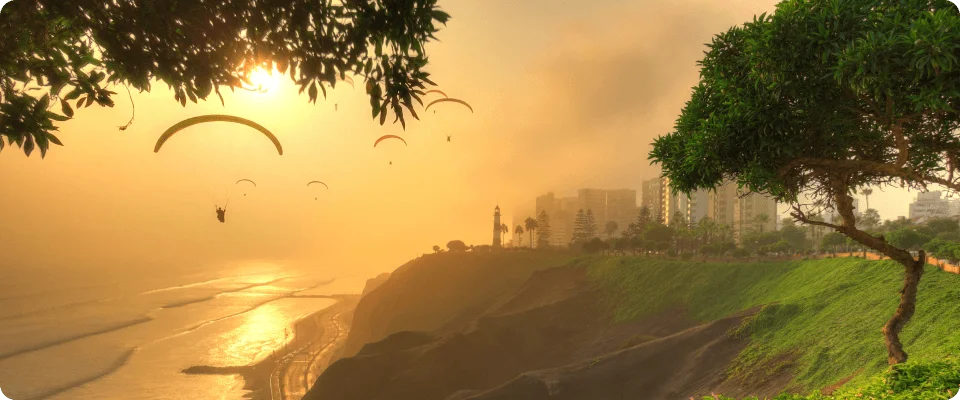
Lima from the sea and sky
There’s no shortage of options for thrill-seekers in Lima. Be it by ocean, air, or land, there are activities for every kind of adventurer and opportunities to see Lima from another angle, literally.
The second-largest desert city in the world after Cairo, Lima is surrounded by miles of dunes bordered by the Pacific, which gives it a unique cloudy tropical climate. This distinct coastal heat makes Lima a perfect place for aquatic daredevils. Avid surfers will find themselves drawn to Playa Agua Dulce (Sweet Water Beach), though there are plenty of surf sites along the entire coastline of Lima. There’s also room for novice surfers to test their mettle through the guidance of surf schools in the bohemian Barranco district.
For those who are more partial to air than sea, the Miraflores neighborhood is the perfect place to take in the ocean breeze over cocktails at Larcomar, a sprawling park and open-air shopping center. Adrenaline junkies can strap on a parachute and leap off the Miraflores cliffs to catch a whirlwind, bird’s-eye tour of the city.
Read more
- Home to some of the world’s best eats
- Pisco tipples to wet your whistle
- Cart-crawling through the capital
|
|
LIM flight price history
|
|
$367 Average Going deal
|
|
$750 Normal ticket price
|
|
|
|

|
Interested in a trip to Lima?
Premium and Elite members get alerts for specific trip destinations and dates in the Going app.
|
|
|

|
|
With local expert:
Melanie Canales
|
Melanie Canales is a Peruvian-American writer and land steward who focuses on the intersection of ecology and culture. She performs marketing and translation work for clients around the world, and her passion for travel accessibility manifests through her workshop series Viajera Soltera, a community symposium about cultural exploration for solo, femme-presenting, Latine travelers.
|
|
|
Share with a fellow travel lover by forwarding to a friend.
|
|
|
Get the app today 
|
|
|