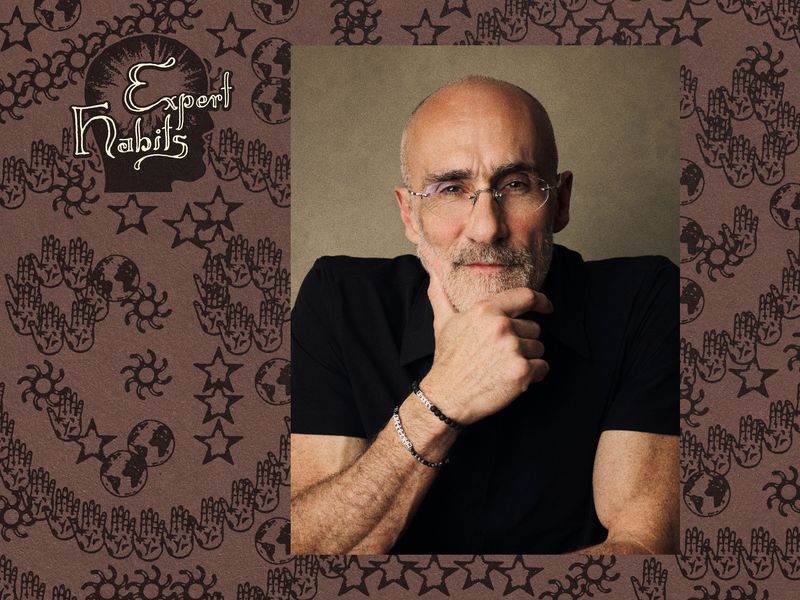
Arthur C. Brooks has made a living by studying the myriad mysteries and meanings of life. Writing weekly columns about happiness for The Atlantic, penning three books about how to craft a better life, and teaching a class at the Harvard Business School literally called “Leadership and Happiness” all make Brooks well-equipped to handle the rigors of modern existence. “I’ll spend the rest of my life writing, speaking, and teaching about the science of happiness,” Brooks said in a recent video chat.
His latest venture, a book titled The Meaning of Your Life: Finding Purpose In An Age of Emptiness, is out today. Per the book’s description, its purpose is to use science and evidence-based approaches to help you, dear reader, “find the meaning you need to live a happy, fulfilling life.” Now 61, the man with an eclectic background—he is also an accomplished French hornist, and in the ’90s, he did military research on a special project for the Air Force—shares his expert habits that can turn your life from unfulfilling to unstoppable.
Become a morning person
“You’re more of a morning lark than you think, and you can be more of a morning lark than you are. Mornings are just absolute magic time for productivity and creativity and happiness. There’s an ancient theory in Hindu philosophy, Vedic physics, actually. It’s called the Brahmamuhurta. In Sanskrit it’s called the Creator’s Time. It was the ancient idea that if you get up an hour and 38 minutes before dawn, there’s special properties and how it will affect your day. Getting up before dawn—especially if you witness the sunrise—more productivity, more focus, more creativity, more happiness. If you’re getting up when the sun is warm, you already made a big sacrifice. But it starts the night before, so you got to go to bed.”
Don’t eat too close to bedtime
“One protocol that I’ve changed recently is that I was eating too close to bed. The way that I process glucose is a lot less efficient than it used to be. My pulse will be elevated if I eat too close to bed, meaning I need at least two or ideally three hours, and that’s something that I’ve actually changed. That’s something that’s actually really, really important. Second thing is, I’m actually doing more prayer and meditation at night than I used to do. Part of the reason is because once again, probably because of the way that I was inefficiently processing glucose and my heartbeat and blood pressure were elevated, it was actually affecting my ability to go to sleep and my ability to calm myself. I’ve changed those parts of the protocol and it’s made a big difference.”
Always be ready to change
“Your habits are everything. Your protocols are everything, and if you don’t think you have protocols, that’s because you’re not paying attention to your protocols. You have them. People are very habitual creatures. They cut a groove all the time. Now, there are a lot of things where I don’t do the same thing every day. I mean, I wake up in a different bed every morning and I wake up in a different city two or three times a week. That’s just my life, but I’m exercising 60 minutes a day. I go to mass. I’m a Catholic. I go to mass every day. These are protocols that I actually have that not everybody has.”
See all 10 rules here.
Related: