As someone who recently got married, I am very aware that this is supposed to be the happiest time of my life. Everyone from my friends to my local barista has asked me how married life is, usually in a singsongy voice, which makes me believe there is only one correct answer to the question. As a result, I’ve become hyperaware of my happiness.
Am I happy? I ask myself when my alarm clock goes off in the morning. Am I happy? I ask again as I reply to an email. Am I happy watching Shrinking with my new husband on the couch? Eventually, this repeated question led me to another: How happy am I—or anyone—supposed to be at any given moment anyway?
Americans have long been obsessed with being happy. Our country itself began by codifying the “pursuit of happiness” into our Declaration of Independence. According to a 2024 study published in Current Psychology, Americans pursue individual happiness more than people in other countries, where happiness is more of a byproduct of how they live, not a focused quest.
And these days, there’s certainly no shortage of tools to help us get there. Books like The Power of Now, Build the Life You Want (cowritten by Oprah), and The Happiness Project became instant best sellers, the latter spawning an entire brand built around the idea of trying to be happier. Harvard’s positive-psychology course (dubbed the “happiness class”) is the university’s most popular class ever. Despite this, America’s rate of depression is at an all-time high, according to a 2025 Gallup poll.
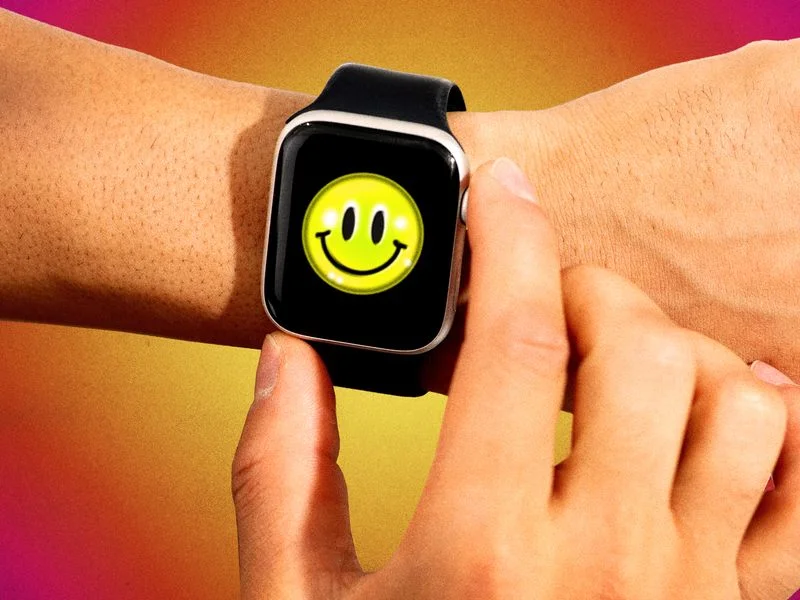
The latest example of our cultural obsession with happiness is the ability to track it in real time. The mindfulness app on the Apple Watch includes a State of Mind feature, where users can log and track their mood. Oura rings have a Stress Resilience feature, which determines how stressed out you are. Fitbits, Garmin watches, and Google Pixel watches also measure stress. But does being aware of how happy (or miserable) you are have any impact on your mental health? I talked to the world’s top happiness experts to find out.
Click here to find out if mood-tracking wearables help—or hurt—your mental health.