When tattoo artist Aingelblood first started sketching strange, spiky, almost sorcery-like symbols on clients’ bodies, their boss rebuked it like the needles were hexed.
“I was straight up told I would be fired if I tattooed this,” the 30-year-old L.A. artist says. “That was in 2018. And now I’m sure they get people walking through the door every day asking for it.”
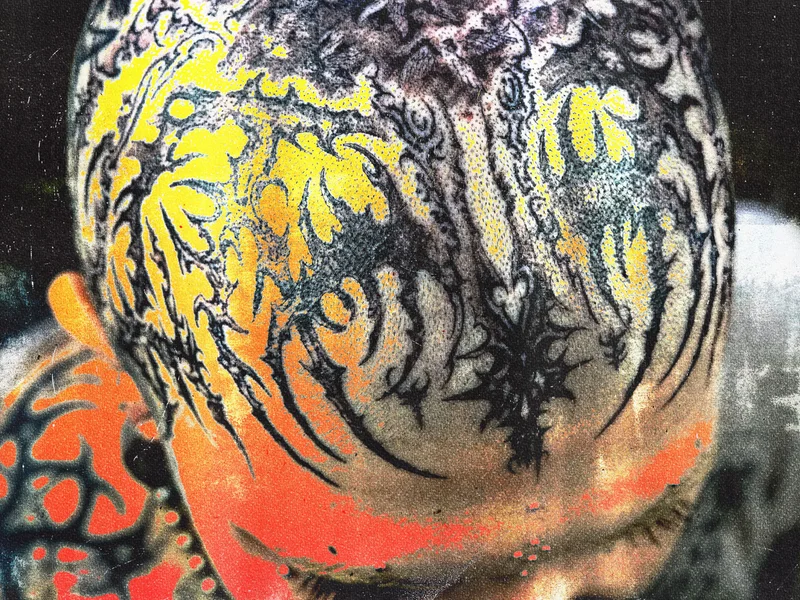
Back then, the style had no name and only a handful of curious clients. Today, the cybersigilism tattoo has emerged as one of the industry’s dominant visual codes: a cobweb-like mash-up of glitchy futurism and ancient, ritualistic glyphs. Think H.R. Giger’s biomechanical horror art, grungy Y2K-era video-game aesthetics, and circuitboard‑meets‑spellbook linework that looks like a demon hacked your skin.
It’s a style that’s hard to pin down but impossible to miss. And it’s seemingly everywhere—splashed across Gen Z’s dystopian-fashion TikTok rabbit holes, stamped all over Playboi Carti’s vamped-out camp, carved into Grimes’ alien-scarred torso, and blazing across Billie Eilish’s infernally inked back.
“A lot of people describe it as looking almost like a witch’s curse,” says Aingelblood, who claims some credit with coining the term cybersigilism. “I would define it as any sort of magical-looking tattoo that people get to make themselves like their body a little bit more.”
Some see it as a grasp for meaning in a hyper-digital, end-times-coded world. Others are just here for the vibes. But not everyone in the tattoo community is enchanted by it. Naysayers mock it as Gen Z’s version of the tribal tat—a misguided trend doomed to curdle like a millennial's old drunken Facebook statuses—and argue it veers into cultural insensitivity, lifting sacred iconography for clout, much like its predecessor.
“The cybersigilism boom will be remembered alongside the barbed-wire armbands of the ’90s and the finger moustaches of 2010,” says Australian tattoo artist Thomas Roder.
His Sydney-based shop, Markd, is one several pumping out TikToks where artists take turns roasting the style. “You shouldn’t get a tattoo because someone else has the same thing or it’s the trendy tattoo of the moment," says Roder. “It should be something you like, something that resonates with you personally.”
For Aingelblood, though, it couldn’t get more personal. They first began experimenting with free-flowing, cybernetic reinterpretations of sigils—ancient symbols considered to be encoded with magic—as they started their gender transition. At the time, defying tattooing’s old guard felt as urgent as reshaping their own identity.
“It was a way to just be like, fuck the system, fuck all these forced sides of femininity, all the misogyny I’d experienced in tattooing,” says Aingelbood, who now works out of L.A. shop Spearmaiden.
Click here to learn about the hidden meaning behind the ultra popular cybersigilism tattoo.