When I became editor of this magazine some seven years ago, one of the first orders of business for me and the team was to modernize the way we gave advice to our readers. In the biz, we call this stuff “service journalism”—the long and noble tradition of stories that, at least in men’s magazines, once told readers how to buy a suit or how to talk to a woman or how to style your hair or how to grill the perfect steak or where to go on the best vacation.
You see, what had gone stale—and needed to change fast—was the idea that GQ should prescribe a cookie-cutter mold of a stylish man, and insist that all of our readers cram themselves into it if they ever expected to get a promotion, or get laid, or be considered handsome, fashionable, and cool.
What had become clear to a new generation of us was that, if you truly are cool, you don’t care about a magazine’s cookie-cutter mold of masculinity.
We had entered a bold and exciting new era of individualism and self-determination, and our hallmark statement of that heady time of change was November 2019’s issue that examined and celebrated what we called “The New Masculinity.” It became our blueprint for a whole new approach to GQ.
At that moment, the #MeToo Movement was raging. The whole culture was justifiably furious at men for decades of boorish, violent, and misogynist behavior, almost all of which was given a pass.
As a men’s magazine, we could either see the outrage of that moment as a problem we’d need to hide from or an opportunity to lead. We took the opportunity to lead.
And so we hosted Pharrell Williams on the cover wearing a giant yellow puffer gown, framed by the words “The New Masculinity” and a small cover line that read: “An Exploration of Identity, Culture, and Style in 2019.”
Instead of telling our readers who to be and what to wear, in this new iteration of GQ we wanted to help men find those answers for themselves. The issue was like a giant mood board celebrating all the defiantly nontraditional forms of masculinity that had sprouted out of so many different subcultures—and were fast becoming pop. No cookie cutters allowed.
Upon publication, the issue had an instant impact. We had recaptured the zeitgeist, which is exactly where GQ has always belonged.
Jump cut to 2025.
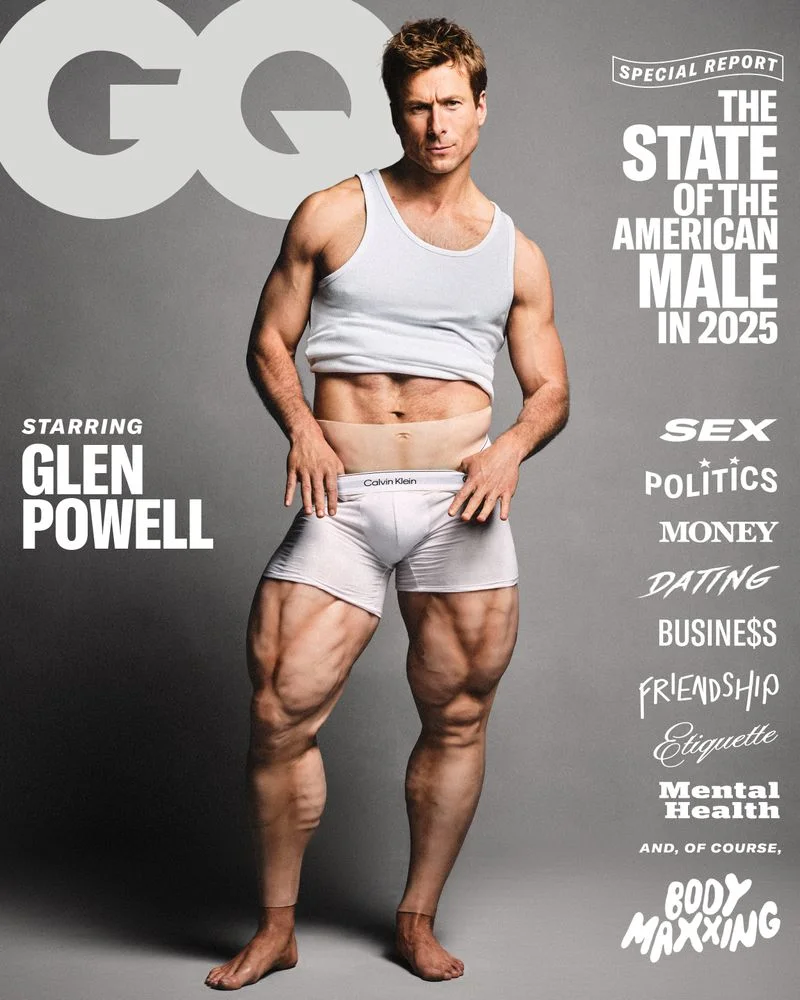
We are now, obviously, in the second Trump administration. Life feels…chaotic. And there are op-ed headlines, almost daily, declaring that we’ve swung back to a retrograde form of masculinity. You know: the whole “men can be men again” thing. (A movement espoused by JD Vance and Mark Zuckerberg—two hyperintelligent individuals who also happen to be untrustworthy when it comes to anything cultural.)
At the same time, we are supposed to believe that Gen Z represents a lost generation, and that Andrew Tate (whoever that is) has young men by the balls.
To which I say: bollocks.
The glory and promise of the New Masculinity moment—the whole point, really—is that masculinity is not a simple pendulum that swings dumbly from toxic to woke and back again.
Read Will Welch’s full note on the October issue here.