The message below is from our friends at the National Geographic Society. We’re sharing this because their mission to protect and illuminate our world through exploration, research, and education reflects the same spirit that connects all National Geographic fans.
|
|
|
|
Dear Friend,
Next year is going to be out of this world for three National Geographic Explorers from around the globe.
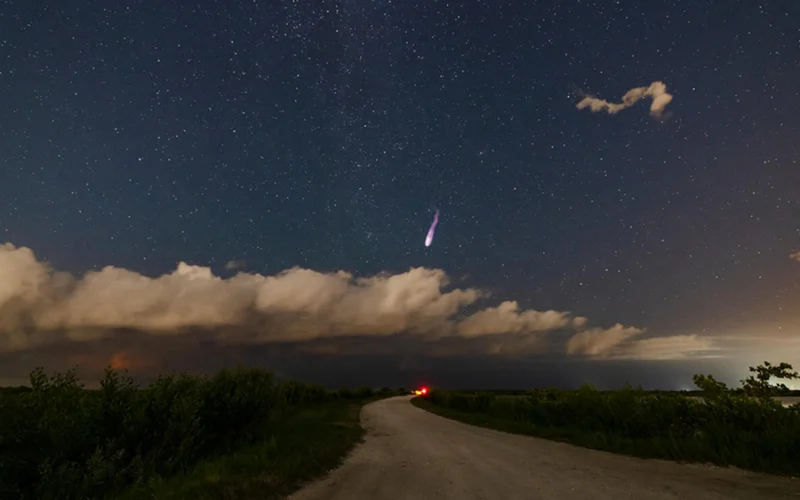
In order to better understand how life on Earth responds to extreme environmental stress, they’re sending living organisms from their local ecosystems to the International Space Station (ISS)!
The ISS offers a unique laboratory for observing biological behavior under conditions that cannot be replicated on Earth. By studying how microbes and other living systems respond to microgravity and radiation, scientists can gain new insight into how life adapts–or struggles to adapt–under stress.
What we learn in space illuminates life back down here on Earth. And, your support makes critical programs and research by our Explorers possible – from mountains to coasts and from the depths of the ocean to the vastness of space. Make your impact with a gift today!
|
|
|
What makes this mission especially compelling is who is leading it. These Explorers are not traditional space researchers; they are scientists working on the frontlines of climate, ocean and agriculture resilience. Meet the inspiring team:
|
|
|
|
|
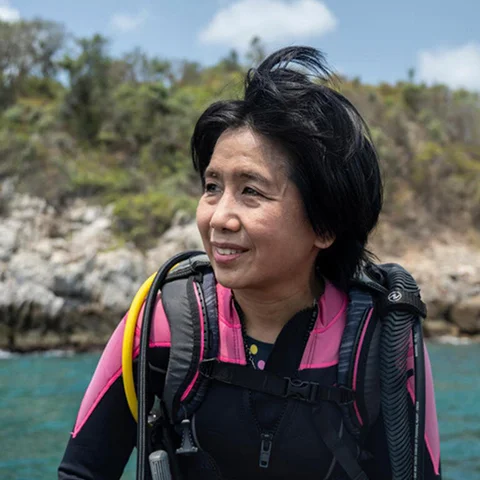
National Geographic Explorer Suchana “Apple” Chavanich Ph.D., is a marine biologist from Thailand who is sending the "tiny guardians" of coral reefs, Pseudoalteromonas sp., to the ISS. By studying how this bacterium responds to the stress of space, she hopes to better understand its limits and what that might reveal about coral resilience in the face of climate stress. The mission may also represent a first: a biological sample from Thailand, led by a Thai scientist, sent to the ISS!
|
|
|
|
|
National Geographic Explorer Gabrielle L. Corradino Ph.D., a marine scientist, plankton ecologist and oceanographer from the United States, is sending a variety of microscopic organisms to the ISS. Sometimes called the "ocean's lungs," these organisms play an essential role in ocean ecosystems and global oxygen production. Inspired by a question asked during a National Geographic Explorer Classroom session, she will examine how radiation and microgravity affect their ecology, advancing our understanding of how these foundational organisms function under stress.
|
|
|
|
|
National Geographic Explorer Moola Mutondo Ph.D., a geneticist with a passion for astrobiology, is sending extremophiles (organisms generally able to live in extreme environments) to the ISS. Because these resilient organisms are used to create nitrogen-rich bio-fertilizers, Moola is testing whether the extreme conditions of space will enhance their nitrogen-enriching properties, an insight that could contribute to the development of more potent locally sourced bio-fertilizers for Zambian farmers. Another first: this mission may mark the first time a biological sample from Zambia, led by a Zambian scientist, has been sent to the ISS!
|
|
|
David Glass
Vice President, Annual Giving & Membership
|
|
|
Clicking on the Facebook, Instagram, and National Geographic Channel links will take you away from our National Geographic Partners site where different terms of use and privacy policy apply.
|
This email was sent to name@example.com: Please do not reply to this email as this address is not monitored.
This email contains an advertisement from:
National Geographic | 1145 17th Street, N.W. | Washington, D.C. 20036
Stop all types of future commercial email from National Geographic regarding its products, services, or experiences.
Manage all email preferences with the Walt Disney Family of Companies.
© 2026 National Geographic Partners, LLC, All rights reserved.
|
|
|
|