|
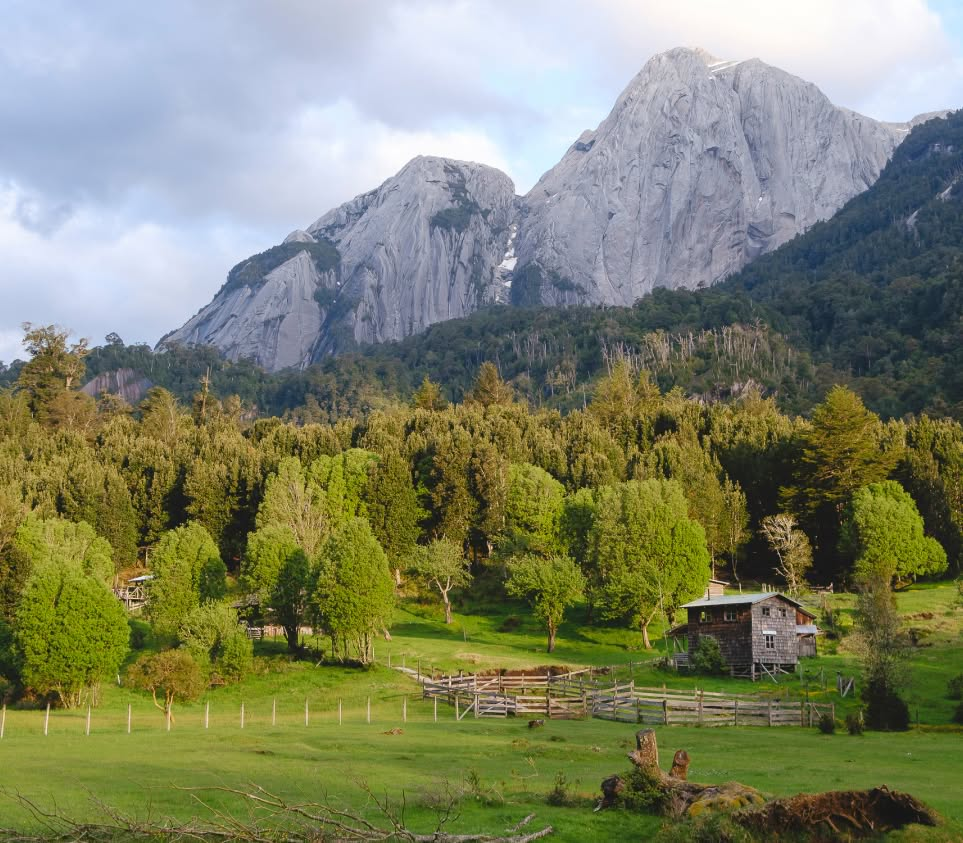
Maybe this is ringing a bell for some of you. I’m talking about Cochamó Valley located in Northern Patagonia, and the recent epicenter of one of the biggest conservation victories of our lifetime. So, how did
Conserva Puchegüín—a local Chilean conservation initiative—raise over $78 million to protect 328,650 acres of land in the heart of Cochamó Valley? When I interviewed the people involved in the effort to save Cochamó and heard their stories, it sent shivers down my spine. Conservation on this scale—led, in part, by climbers—is almost unheard of. And yet, I get the impression that most climbers still don’t fully understand what happened here.
For those outside of Cochamó, this story begins a few years back when Roberto Hagemann put his property up for sale. In the
Patagonia Stories piece, “Cochamó Por Siempre,” Daniel Seeliger explains, “In June 2022, Hagemann acquired the Puchegüín estate and 124 acres right next to our campground. He proposed, yet again, roads, hotels and gondolas for high-paying clientele. But maybe our years of persistent opposition paid off, because he ended up listing Puchegüín for $150 million with Christie’s, right next to other pieces of luxury international real estate.”
I sat down with Alex Perry, Patagonia’s GM of the Latin America region, to learn what happened next. He laughed, telling me about how Rodrigo Condeza and José Claro, two Chilean climbers and conservationists, walked into Hagemann’s office and said, “We want to buy Puchegüín.” And he replied, “Yeah, cool, $150 million.” And they say, “How about 50?” As the story goes, Hagemann paused, and said, “How about 100?” At this point, Rodrigo and José looked at each other thinking,
holy shit, he’s negotiating. “So, they finally get to $63 million to purchase it,” Alex said, finishing the story. “They shake hands, and José and Rodrigo walk out and go, ‘F**k! Where are we going to find $63 million? Because we’ve got about zero in the bank.’”
I asked Rodrigo, who is also a professional mountain guide and director of
Puelo Patagonia, what made these efforts so successful in Cochamó. He explained, “It’s not just the granite, it’s not just the forest. It’s something about this place. Once you fall in love with it, you cannot stop doing things for it. We’ve always had the same North Star: taking care of Cochamó.”
What really strikes me about Rodrigo is his dedication and intuition. He is not afraid to commit first and figure out the details second. Twenty years ago, Rodrigo was looking for a place to live outside Santiago, away from the city. In the first of many seemingly serendipitous occurrences, he ended up in Northern Patagonia, in Cochamó Valley, after seeing it in a video. He became enamored with the place, and after his first visit, he found some land for sale and bought it.
As Rodrigo spent more time in the Valley, he learned more about the forces threatening it. His first conservation battle in Cochamó was against a large hydroelectric project that intended to dam La Junta River, which flows through the Valley. Serendipity worked its magic again as Rodrigo ended up on a trip down the Puelo River with a woman who worked closely with the national director of the waters in Chile. Through this connection and other subsequent interactions with the right people, a small organization called Conservación Cochamó was able to keep La Junta River flowing.
|
|
|
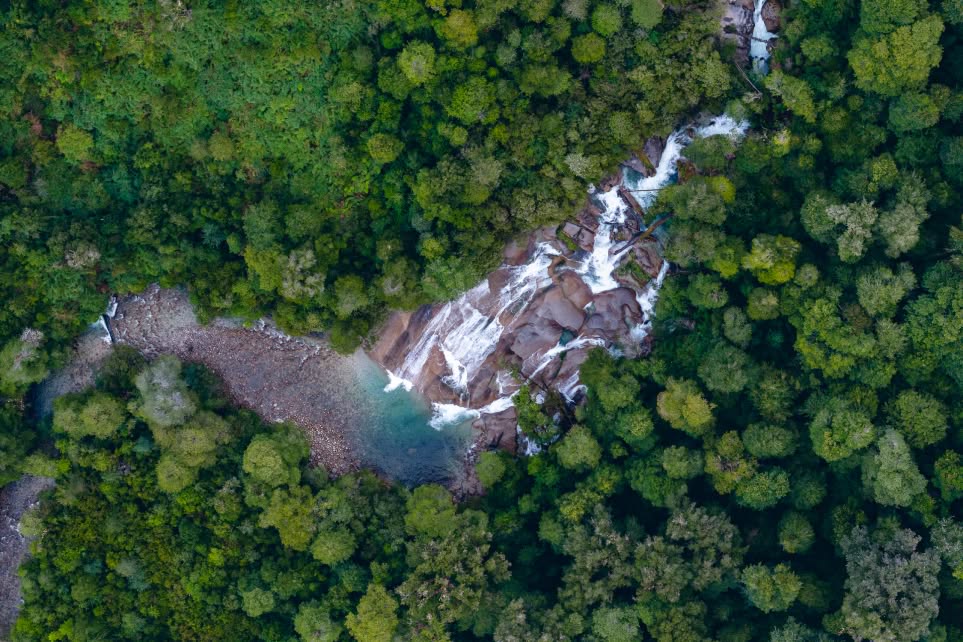
The famous “Los Toboganes” (The Slides) next to the main campsites in La Junta are an iconic if frigid swimming hole. Photo: Rodrigo Manns
|
Rodrigo’s story is peppered with little moments like this: being in the right place at the right time, acting with confidence, making real connections with people and sprinkles of Cochamó magic. Later, when Rodrigo was fighting to save a different river, the Puelo River, from another hydro project, he and José came into contact with Leonardo DiCaprio, who promptly donated to their cause and posted about it on social media. The post caused enough of a stir to raise substantial additional funds for the project.
Fast-forward to 2024, and the Cochamó magic continued to grow. Alex Perry was organizing a trip to Patagonia for journalist David Gelles as part of his research for his book
Dirtbag Billionaire. As Alex tells it, he called up Rodrigo and asked, “Do you want to tell this story to a
New York Times journalist? Are you ready to go big with this thing?” So Cochamó was added to the trip, and Gelles—moved by the story, the landscape and the people he met—promptly went home to write, “How Locals Saved the ‘Yosemite of South America.’”
The article blew up. Its impacts on the fundraising effort were felt almost immediately. Five million dollars in donations came in on the same day it was published. When big-name organizations like the Nature Conservancy, Freyja Foundation and the Wyss Foundation joined Conserva Puchegüín, what started off as a grassroots effort took center stage in the conservation world. It’s amazing what happens when a story falls into the right hands and gets shared—and it’s these types of “pinch-me” moments that played a huge part in the long-term story of Cochamó’s success.
|
|
|
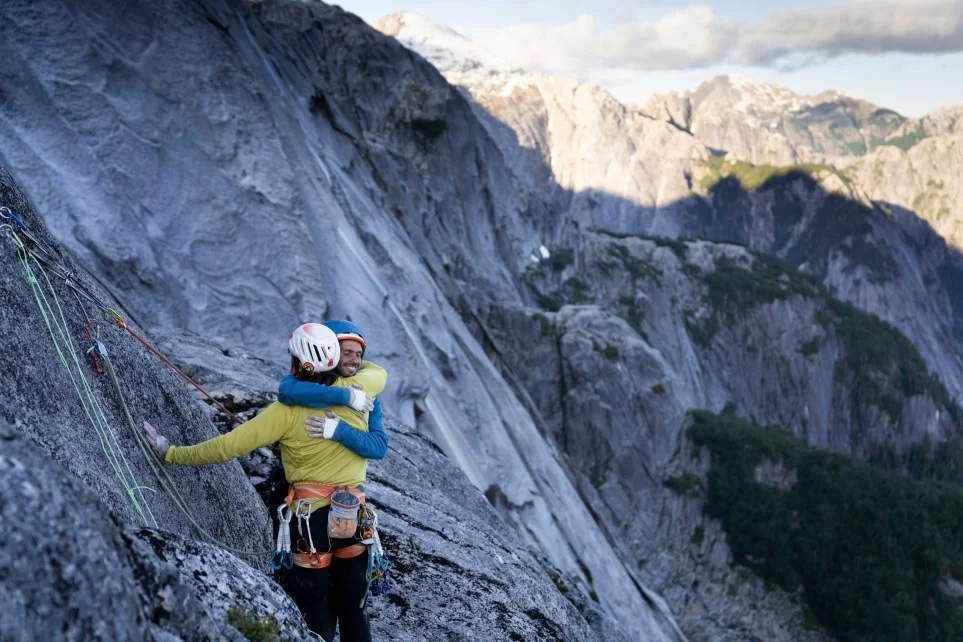
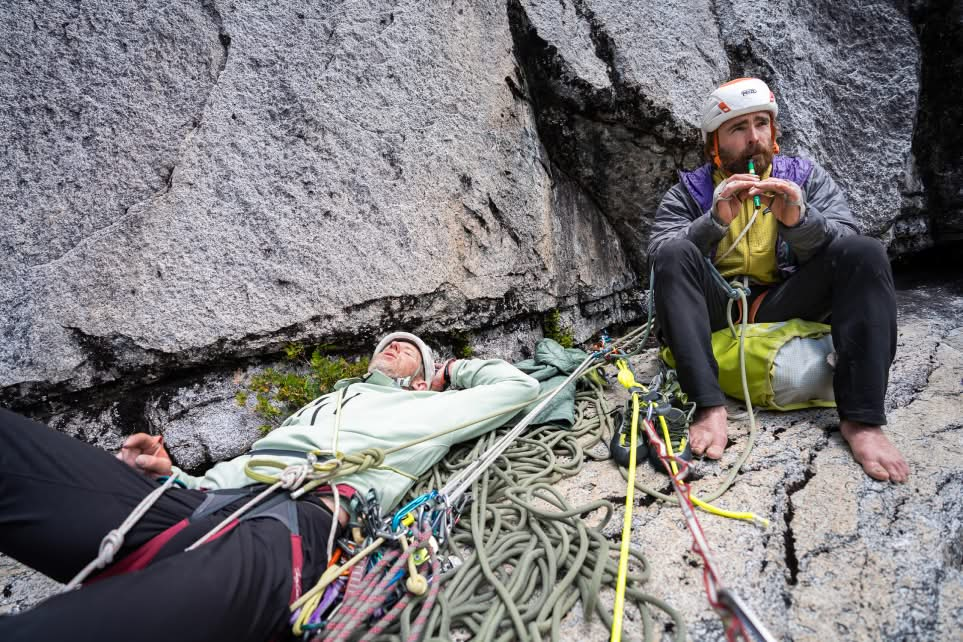
Tommy Caldwell and Seán Villanueva O’Driscoll relax and wait below another party in Cochamó Valley. Photo: Austin Siadak
|
The story of Cochamó has had me reeling. I wonder if future generations will celebrate the architects of this effort the same way they celebrate John Muir or John Wesley Powell? But these “architects” probably wouldn’t call themselves that. They are just climbers who didn’t lose sight of their North Star, who used their skill, intuition, commitment and creativity to protect their chosen home.
|
|
|