April 2026: Thinking in the age of AI |
|
|
|
|
|
|
|
Welcome to reThink, your guide to better thinking from the team at reMarkable.
This issue looks at the value of human thought in the age of AI. With so much vying for our attention, clear thinking matters more than ever.
Find a quiet corner, and we’ll work through
it together, whether it’s with pen and paper or your paper tablet. |
|
|
IN THIS EDITION |
Modern life asks a lot of the mind. What happens to our brain when AI speeds up everything around us?
Try Steven Kotler’s exercises to find flow and focus in a fragmented world Read about the juxtaposition of human thinking and artificial intelligence Watch a neuroscientist’s take on slow thinking for fast times |
|
|
|
|
 |
|
Thinking in the age of AI with Steven Kotler |
 |
|
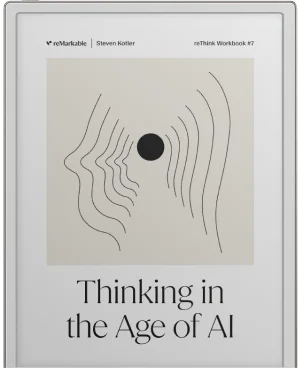
How does a brain built for a slower world operate at today’s relentless pace?
Created with bestselling author Steven Kotler, this practical workbook looks at the mismatch between modern life and an ancient nervous system, and what it takes to stay focused even when your phone keeps pinging.
Use the exercises to build better conditions for attention, flow, and more meaningful work. |
|
|
|
|
|
Connect subscribers can find all our reThink workbooks on Methods, our resource for exclusive templates and tips from a community of expert thinkers. |
|
|
|
|
|
 |
|
The School of Life: How to think |
|
 |
|
In How to Think, The School of Life offers a guide to thinking well in the age of AI. This is a simple approach to thinking more clearly, helping us stay connected to our own judgement — even when answers are readily available.
Read
How to Think |
|
|
|
|
 |
|
Faster thinking ≠ better thinking |
|
 |
|
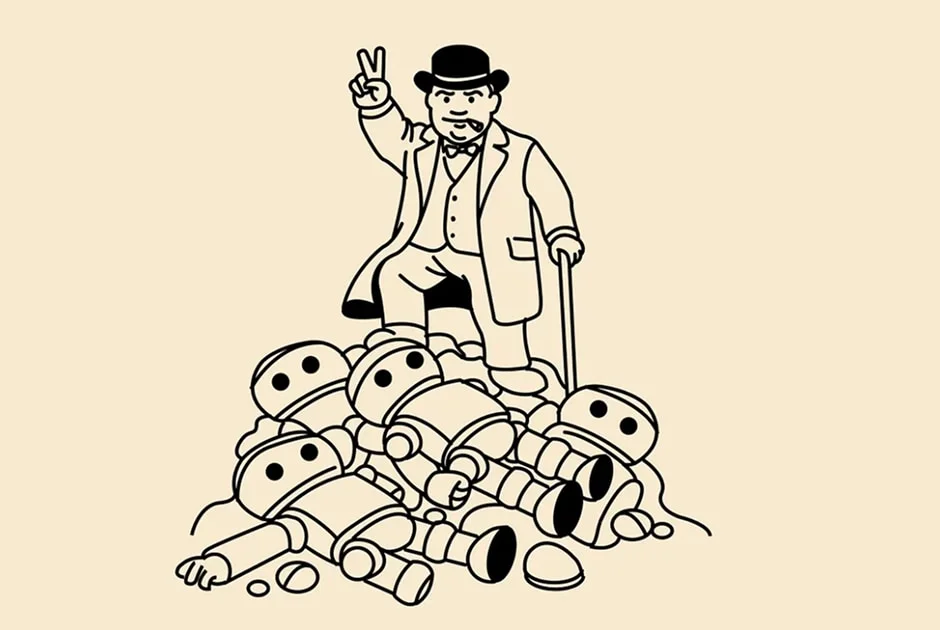
As AI becomes more widespread, William Chaumeton looks at the value of clarity, discernment, and original thought.
What happens when efficiency starts to replace reflection? And if thinking itself becomes easier to outsource, what do we have that remains distinctly human?
Read now |
|
|
|
|
 |
|
Reflection isn’t retreat — it’s rebellion |
|
 |
|

Data shows that the mere presence of a smartphone is enough to reduce cognitive capacity by up to 40%.
In this talk, Dr. Thomas Zoëga Ramsøy, neuroscientist and member of reMarkable’s Scientific Advisory Board, reflects on distraction, focus, and why technology should support clearer thinking.
Watch the film
|
|
|
|
|
 |
|
Your thoughts on this |
|
What did this issue make you think about? We’d love to hear what stayed with you, what felt useful, or what you’d like to see more of in future editions of reThink.
Drop us a line |
|
|
|
|