Our emotional age often has little to do with our physical age. We might be 55 on the outside, yet react like a 4-year-old when hurt. How do we often respond to disappointment and what does it reveal about us? | We get distraught but refuse to explain why, secretly hoping others will magically understand – just as a child hopes a parent might read their mind. | Our rage may look robust, but it masks a more profound truth: we feel broken and defenceless inside. The bigger the anger, the deeper the wound. | | | When hurt feels unbearable, we build walls of indifference. We insist we don't care – precisely when we care the most. | 1. Having the courage to explain our hurt.
2. Having the strength to stay calm.
3. Developing the wisdom to be vulnerable. | These aren't gifts we're born with but they are skills we can learn. The good news is that emotional maturity isn't fixed. Like learning a new language, we can master it at any age. It just takes patience, practice, and the willingness to learn a little more about ourselves every day… | | | If there were schools devoted to emotional education, people in their 40s would often be placed in certain classrooms alongside 6-year-olds.
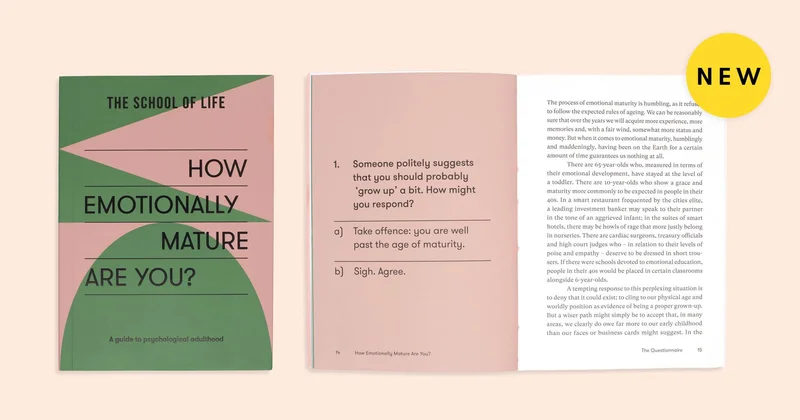
If you’re wondering what your emotional ‘age’ might be – and how you might go about becoming more ‘mature’ – we would recommend our new book How Emotionally Mature Are You?
Our latest release is a guided questionnaire, with accompanying essays, that help us determine – and develop – our level of emotional maturity. | | | The Self-Knowledge Collection | | The Find Your Courage Collection | | | They make the perfect gift for others – or just for yourself… | | | |