


“For the object of African art is not to please the eye or the sense but to use art as a means, as a language to express feelings and ideas in relation to the present, the future and the past . . .” —Ernest Methuen Mancoba
Next stop on our trip around the world: Africa. From sculptures to beaded crowns and dance costumes, our Arts of Africa collection is among the nation’s largest and most comprehensive.
If you’re in town, come see our Museum spotlight Sakimatwemtwe: A Century of Reflection on the Arts of Africa, before it closes on April 5. Stay tuned for exciting updates to gallery—coming Fall 2027.
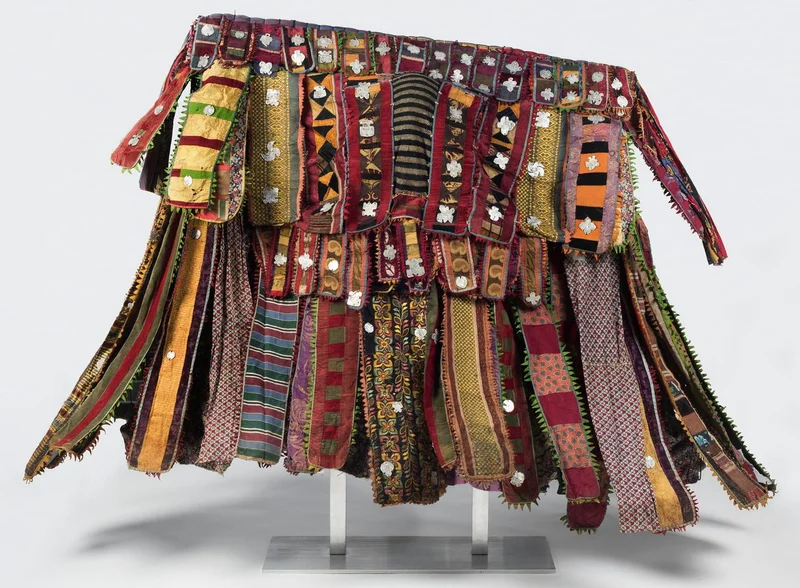
Paka Egúngún (Egúngún Masquerade Dance Costume), Yorùbá artist
Egúngún, meaning “masquerade” in Yorùbá, is celebrated across Yorùbáland in Nigeria, Benin, and Togo. Extensive research revealed that this paka masquerade costume was taken from the Lekewọgbẹ family shrine almost 70 years ago. Originally from Ògbómọ̀ṣọ́, Nigeria, the family now lives in Brooklyn.
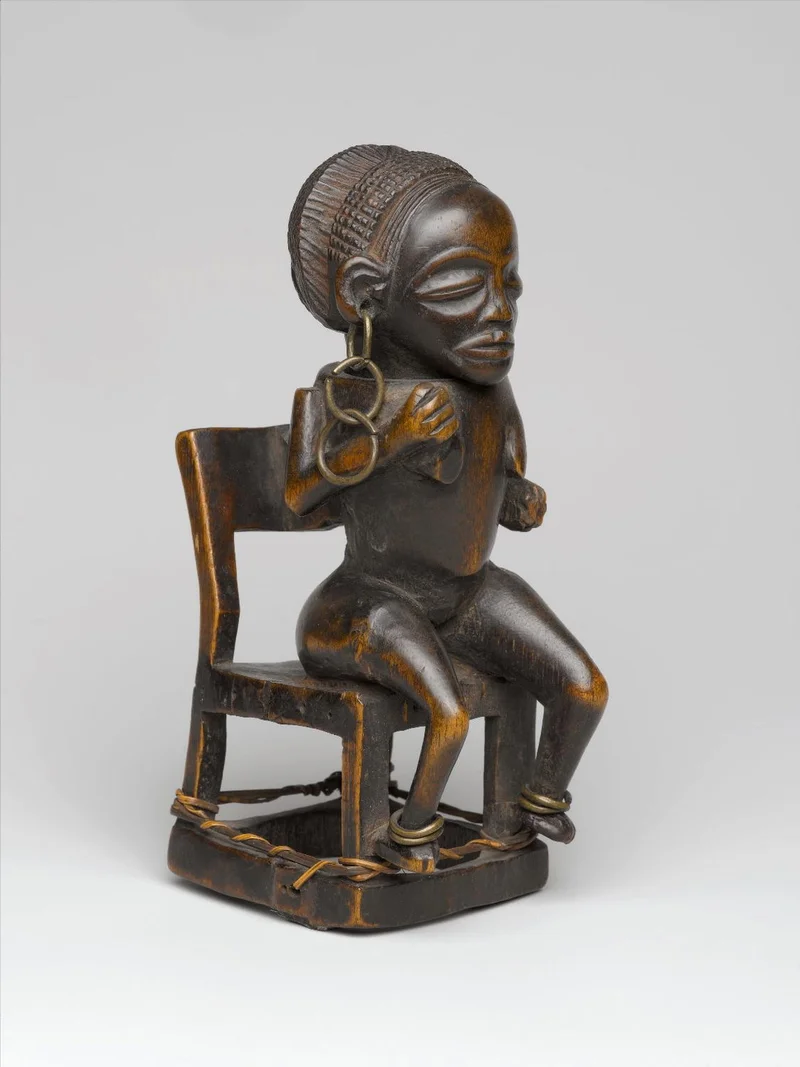
Tesa Ya Ma Kanya (Snuff Mortar), Chokwe artist
Snuff, or finely ground tobacco, entered the market of Central Africa’s western coast in the 16th century through Portuguese and Dutch traders. In the regions that now encompass modern-day Angola, Zambia, and the Democratic Republic of the Congo, Chokwe woodworking artists, or songi, carved intricate sculptures that doubled as containers or mortars for snuff. Acquired in 1922, this example was one of the first objects to enter into the Brooklyn Museum’s holdings.
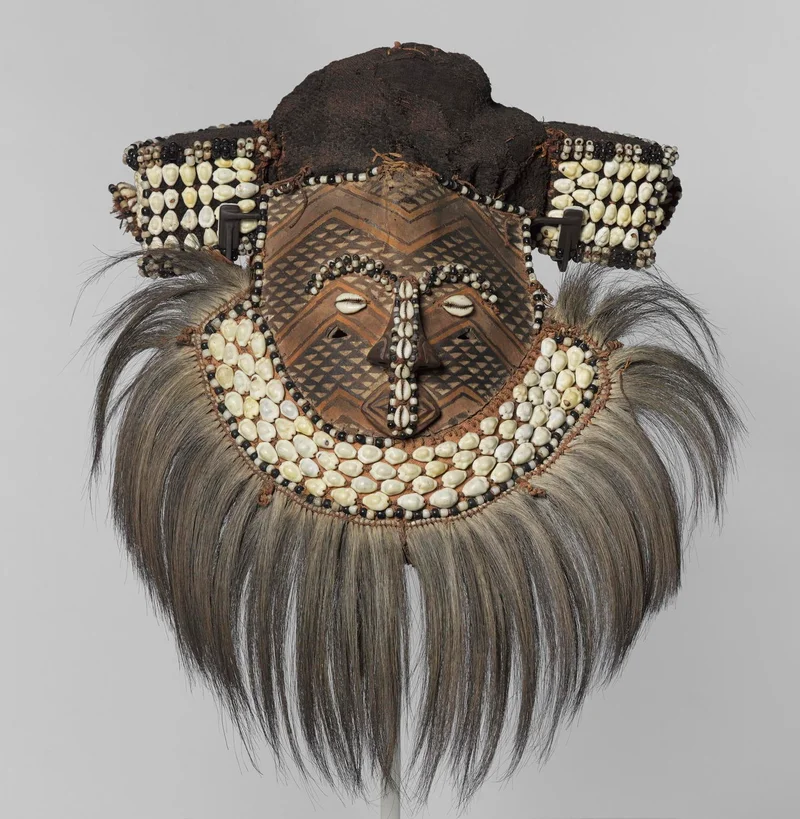
Mwaash aMbooy (Mask), Bushoong (Kuba) artist
The Mwaash aMbooy mask personifies Wóót, mythical ancestor of the Kuba peoples. Kings and dancers performed this mask during initiations and funerals. One performance told the story of Wóót’s role in the Kuba kingdom's founding and his ties to its first ruler. Mwaash aMbooy’s physical features underscore an ideal Kuba leader’s traits. Its monkey-fur beard symbolizes wisdom. The cowrie shells were a royal privilege and a sign of wealth. They also reference how Wóót stole the creator god’s bead-and-cowrie-covered basket of knowledge.
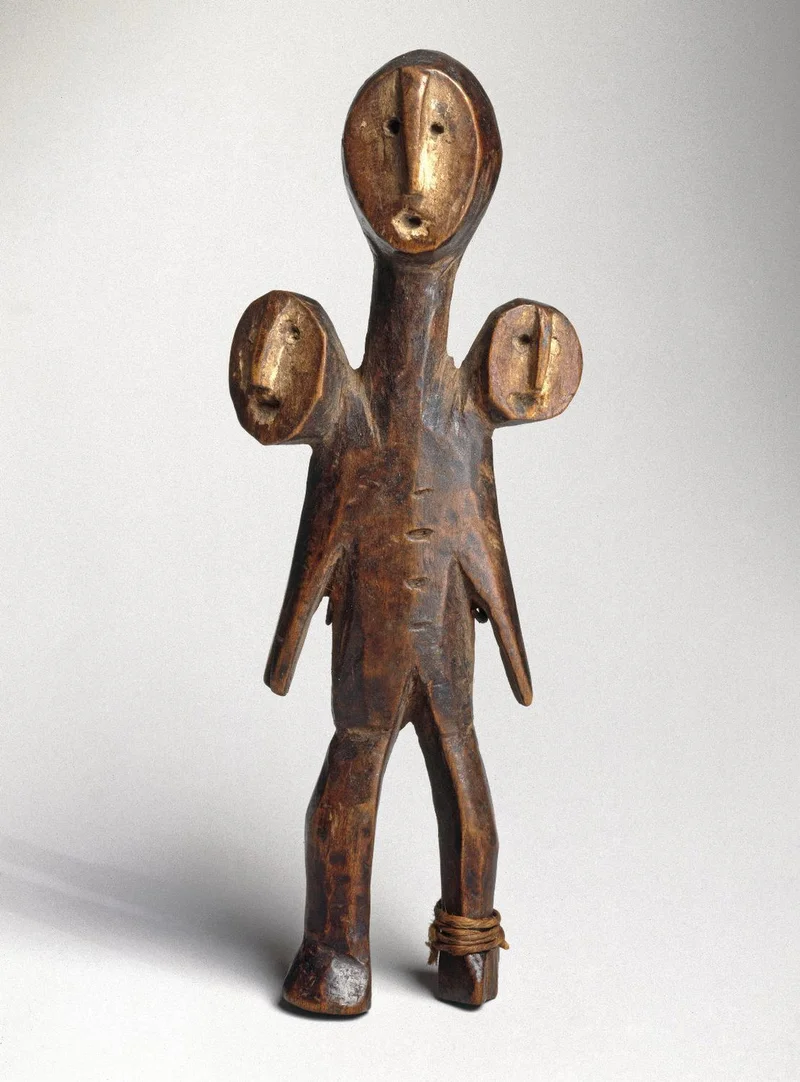
Sakimatwemtwe (Three-Headed Figure), Lega artist
This three-headed figure is called sakimatwemtwe, meaning “many heads.” The work would have been owned by a male member of the semi-secret Bwami society of the Lega people of the Democratic Republic of the Congo. This association’s teachings, which guide moral development and relationships with others, are represented through carved objects such as this wooden figure. The figure represents Kindi, a rank reserved for the highest-level initiates of the Bwami society, who are the principal visual arts patrons among the Lega people.
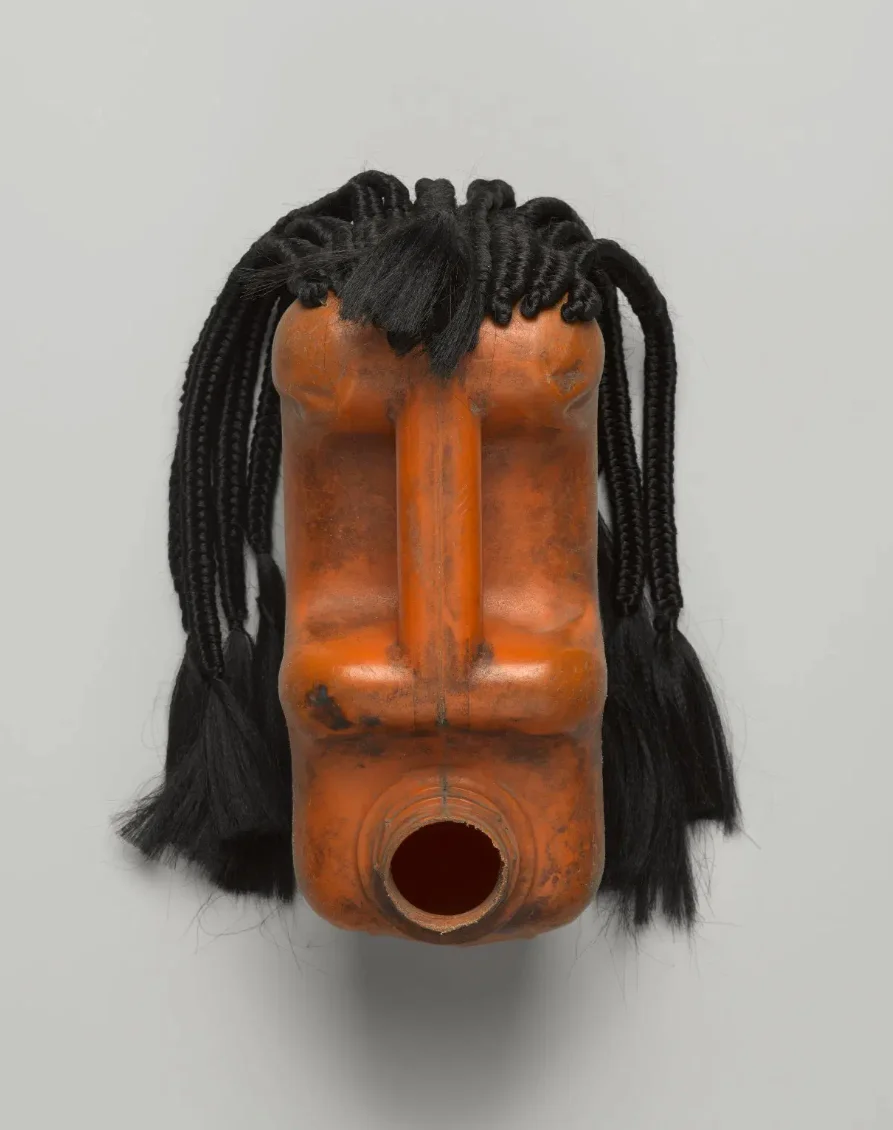
Fiegnon, Romuald Hazoumé
Loosely resembling a African mask, Fiegnon is part of an ongoing series of playful and political works constructed from recycled waste by Romauld Hazoumè. The Beninese artist has noted that his works are portraits of particular individuals. This example, with its long braids, represents a Fulani man Hazoumè met fishing in the lagoon where he found the oil can, or jerrican.
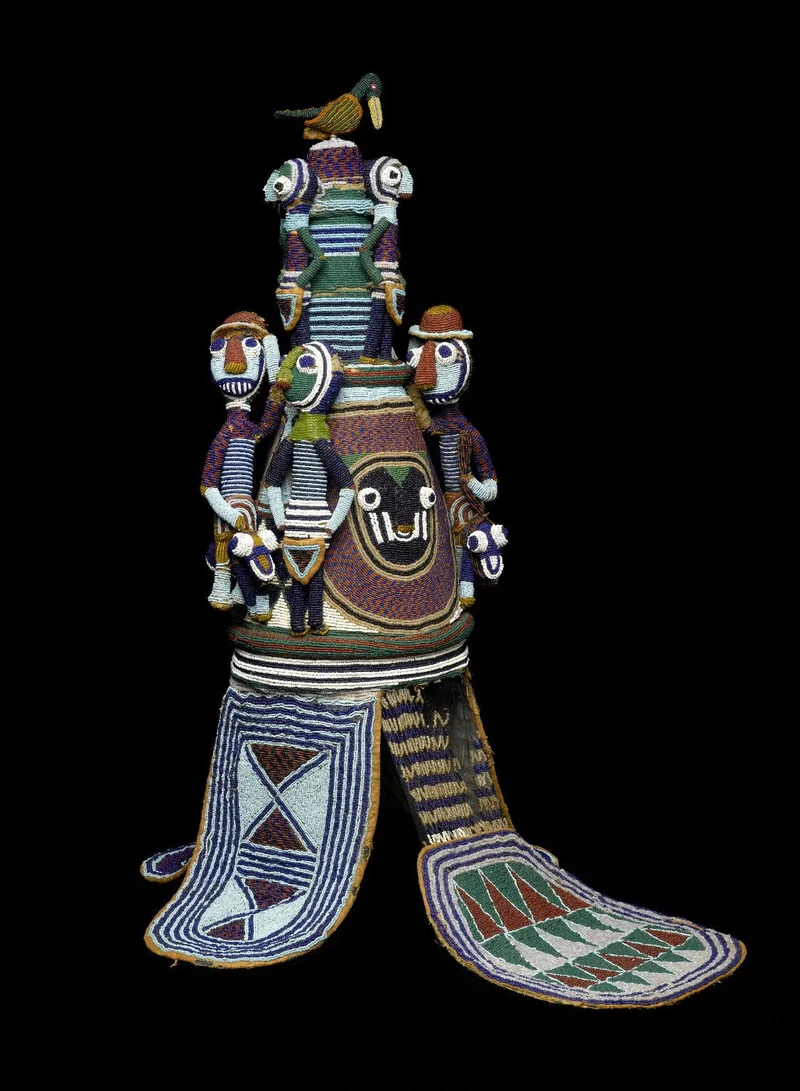
Adé (Crown) of Oníjagbó Obasorò Alówólódù, Yorùbá artist
This beaded crown is the ultimate symbol of Yoruba kingship. Although the Yoruba have a long history of glassmaking, the beads used to make this crown would have been imported from the British in the late nineteenth century. At the time, glass beads were a signifier of wealth, and small European “seed beads” were particularly valued for their uniform size and color variety. Blue beads were particularly valuable because the color was not commonly found in natural materials.
From the top: Caption: Yorùbá. Paka Egúngún (Egúngún Masquerade Dance Costume). Cotton, wool, wood, silk, synthetic textiles (including viscose rayon and acetate), indigo, and aluminum. Brooklyn Museum, Gift of Sam Hilu, 1998.125.; Chokwe. Tesa Ya Ma Kanya (Snuff Mortar), 19th century. Wood, iron, fiber. Brooklyn Museum, Museum Expedition 1922, Robert B. Woodward Memorial Fund, 22.1089. (Photo: Brooklyn Museum); Kuba (Bushoong subgroup) artist. Mask (Mwaash aMbooy), late 19th or early 20th century. Rawhide, paint, plant fibers, textile, cowrie shells, glass, wood, monkey pelt, feathers. Brooklyn Museum, Museum Expedition 1922, Robert B. Woodward Memorial Fund, 22.1582.; Lega. Three-Headed Figure (Sakimatwemtwe), 19th century. Brooklyn Museum, Museum Expedition 1922, Robert B. Woodward Memorial Fund, 22.486. (Photo: Brooklyn Museum); Romuald Hazoumé (Beninese, born 1962). Fiegnon, 2011. Plastic, fiber (possibly synthetic), metal (copper wire). Brooklyn Museum, Caroline A.L. Pratt Fund, 2014.32.2. © Romuald Hazoume. (Photo: Brooklyn Museum); Yorùbá. Beaded Crown (Ade) of Onijagbo Obasoro Alowolodu, Ògògà of Ikẹ́rẹ́ (r. 1890-1928), late 19th century. Basketry, beads, cloth. Brooklyn Museum, Caroline A.L. Pratt Fund, Frederick Loeser Fund, and Carll H. de Silver Fund, 70.109.1a-b. (Photo: Brooklyn Museum)


