


In 1971, Brooklyn-born art historian Linda Nochlin asked a question that changed art history: “Why Have There Been No Great Women Artists?” Her iconic essay helped spark a generation of feminist artists and reshape the art world.
In honor of Women’s History Month, we’re continuing that conversation by taking you into our Feminist Art collection. Encounter six iconic feminist artworks below. After all, as Beyoncé said: Who run the world? Girls.
If you’re in town, plan a visit to see The Dinner Party and new feminist art acquisitions in Everyday Rebellions: Collection Conversations.
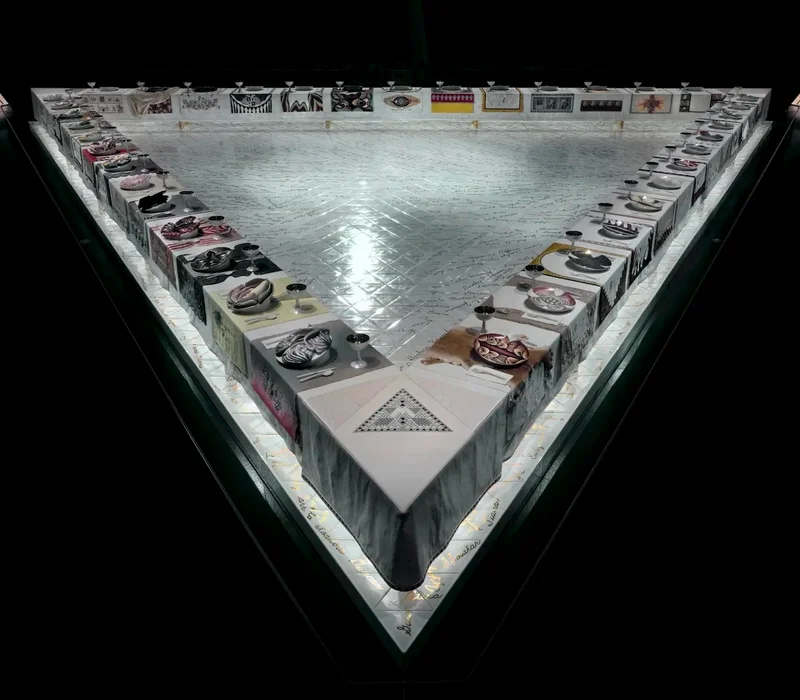
The Dinner Party
Judy Chicago, 1974–1979
Judy Chicago’s The Dinner Party is an icon of 1970s American feminist art, one of the most important artworks of the 20th century, and a visitor favorite.
The large-scale installation celebrates the lives and achievements of historical and mythical women across Western civilization in the form of a lavish banquet table set for 39.
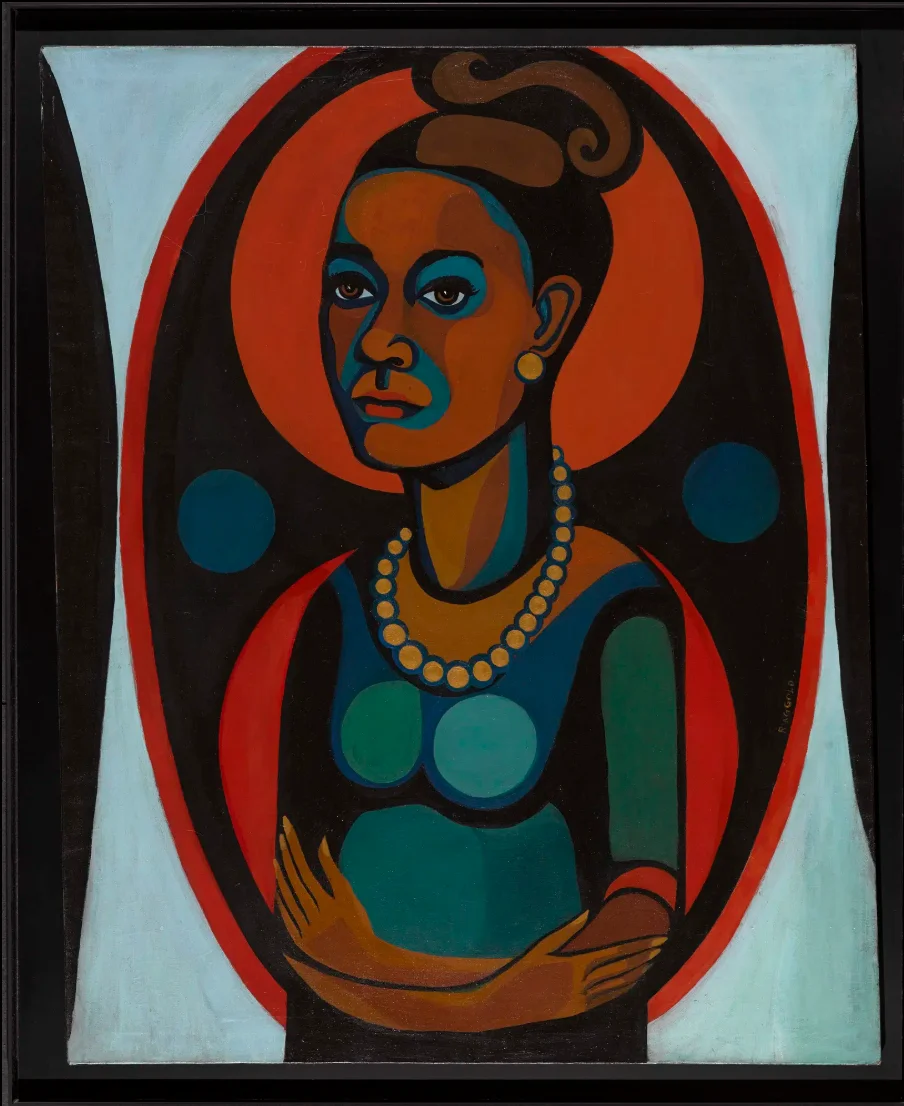
Early Works #25: Self-Portrait
Faith Ringgold, 1965
In 1965, Faith Ringgold was 35 years old and already a force to be reckoned with, though many didn’t know that yet. Self-Portrait is part of an early series in which the artist addressed the political realities of Black Americans in the 1960s head-on.
As she once explained in an interview, Ringgold painted people and racially charged events at the dawn of the civil rights movement because she “couldn’t pretend everything was OK.”
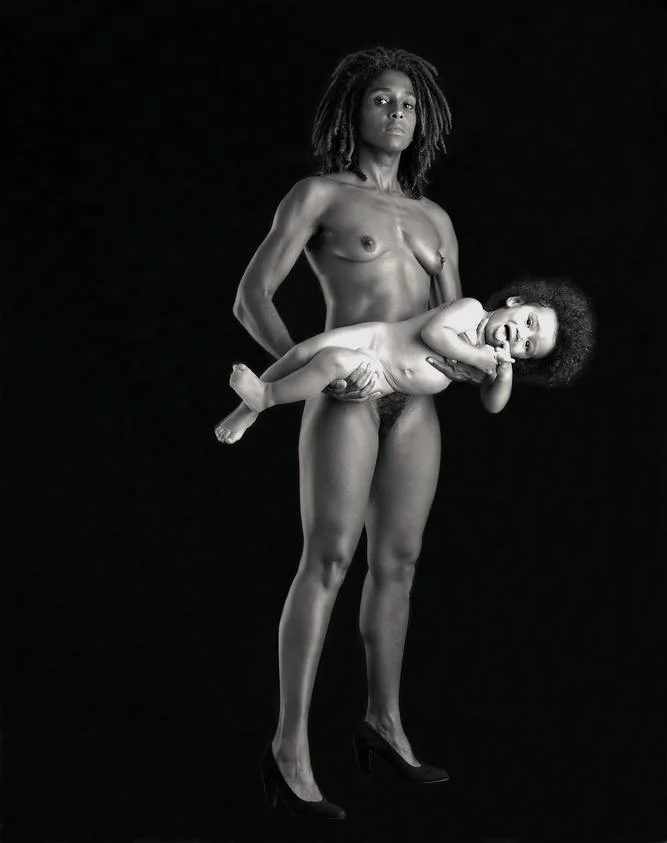
Yo Mama
Renee Cox, 1993
Much of Renee Cox’s artistic practice involves portraying herself and Black women as icons and mythical figures. In Yo Mama, she embodies a Madonna, or Virgin Mary, figure in a powerful, oversize photograph.
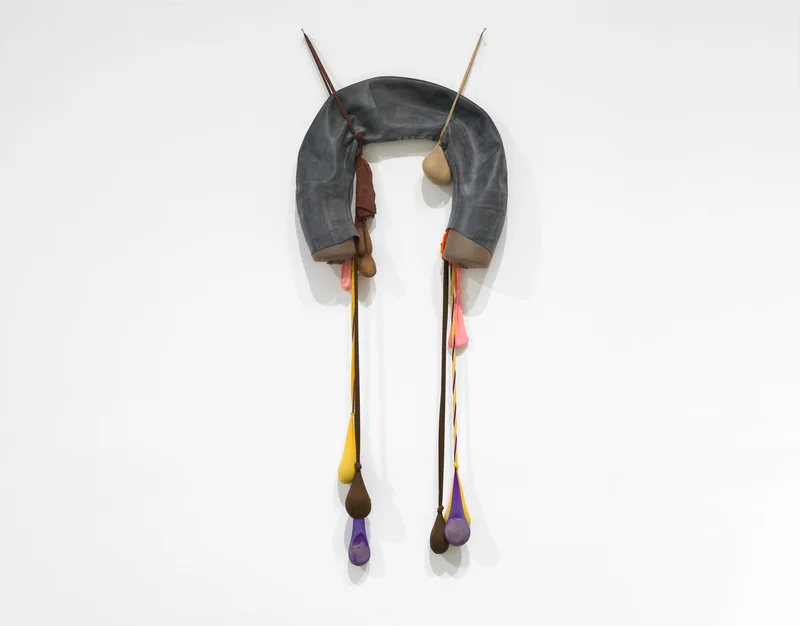
Inside/Outside
Senga Nengudi, 1977
Inside/Out is one of the most iconic works by pioneering conceptual and performance artist Senga Nengudi. The sculpture is part of a series that was shown in 1977 under the title R.S.V.P., first in Los Angeles and then at the groundbreaking gallery Just Above Midtown in New York.
The title, an abbreviation used to ask recipients to respond to an invitation, was Nengudi’s way of encouraging audiences to actively engage with the works. All were made of similar materials—here, sand-filled pantyhose and a rubber inner tube.
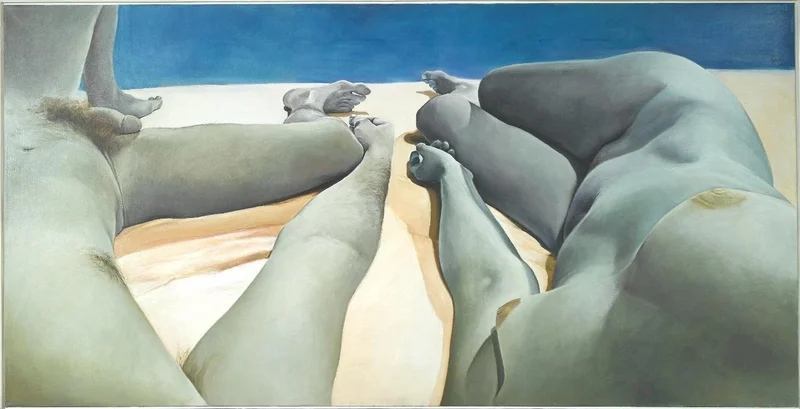
Intimacy-Autonomy
Joan Semmel, 1974
In Intimacy-Autonomy, Joan Semmel considers the female nude. Many depictions of nude women throughout art history were made by men. In this painting, Semmel is reclaiming the nude by painting herself and her partner in bed. She used non-naturalistic blue tones to make the painting seem more surreal.
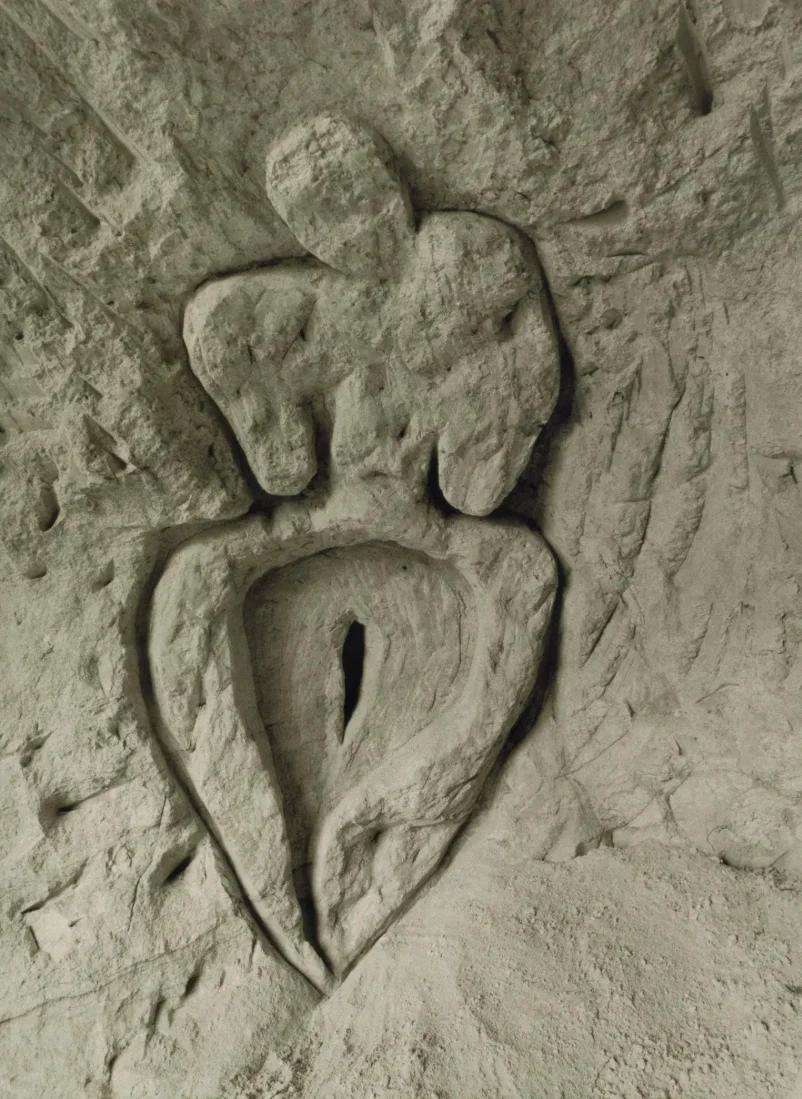
Ana Mendieta, 1981/1994
Ana Mendieta carved an abstracted female form into a soft limestone cave wall in Cuba, the land she was forced to leave as a child and to which she returned as an adult. This work’s title and voluptuous shape refer to ancient Indigenous goddess and fertility figures, as well as Mendieta’s own body and her relationship with the earth.
Want to see more?
Continuing the Brooklyn Museum’s legacy of honoring visionary women, our upcoming exhibition Iris van Herpen: Sculpting the Senses celebrates one of the most forward-thinking fashion designers of her generation.
This not-to-be-missed exhibition opens May 16, and public tickets go on sale next month. (Hot tip: The Member presale starts on March 23, so join today for early access.)
From the top: Judy Chicago. The Dinner Party, 1974–79. Ceramic, porcelain, textile. Brooklyn Museum, Gift of The Elizabeth A. Sackler Foundation, 2002.10. © Judy Chicago. (Photo: Donald Woodman); Faith Ringgold. Early Works #25: Self-Portrait, 1965. Oil on canvas. Brooklyn Museum, Gift of Elizabeth A. Sackler, 2013.96. © Faith Ringgold, 1965. (Photo: Brooklyn Museum); Renee Cox. Yo Mama, 1993. Gelatin silver photograph. Brooklyn Museum, Gift of the Carol and Arthur Goldberg Collection, 2009.82.3. © Renee Cox. (Photo: Courtesy of the artist); Senga Nengudi. Inside/Outside, 1977. Nylon, mesh, rubber. Brooklyn Museum, Gift of Burt Aaron, the Council for Feminist Art, and the Alfred T. White Fund, 2011.21. © Senga Nengudi. (Photo: Brooklyn Museum); Joan Semmel. Intimacy-Autonomy, 1974. Oil on canvas. Brooklyn Museum, Anonymous gift, 2004.117. © Joan Semmel. (Photo: Brooklyn Museum); Ana Mendieta. Untitled (Guanaroca [First Woman]), 1981/1994. Gelatin silver photograph. Brooklyn Museum, Gift of Stephanie Ingrassia, 2007.15. © The Estate of Ana Mendieta Collection Courtesy Galerie Lelong, New York. (Photo: Courtesy of Galerie Lelong, New York)


