

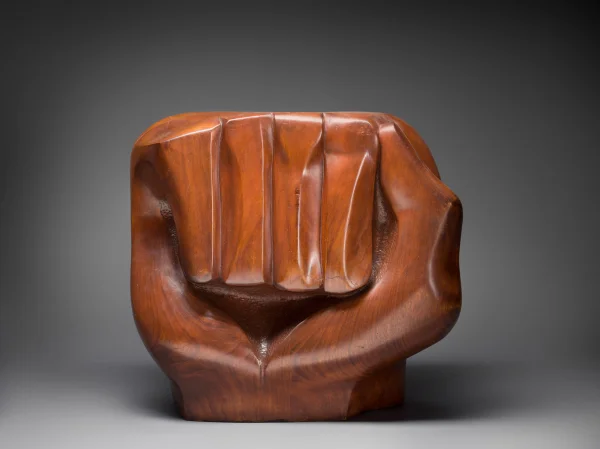

How can your art and your activism shape one another?
This is a question perhaps best explored in the body of work by Elizabeth Catlett (1915–2012). A deft sculptor and printmaker, devout feminist, and lifelong social justice advocate, Catlett was uniquely committed to both her creative process and political convictions.
Growing up during the Great Depression, she witnessed class inequality, racial violence, and U.S. imperialism firsthand. In 1946, she moved to Mexico, where she worked to amplify the experiences of Black and Mexican women.
As an artist, she was bold and experimental—exploring various mediums, calling upon ancestral legacies, and gravitating toward bold lines and voluptuous forms to tell her stories. Similarly, as an activist, she was intersectional: interested in transnational politics, complicating ideas of motherhood, and depicting those on the margins.
This exhibition features over 150 powerful works that speak directly to all those united in the fight against poverty, racism, and imperialism.

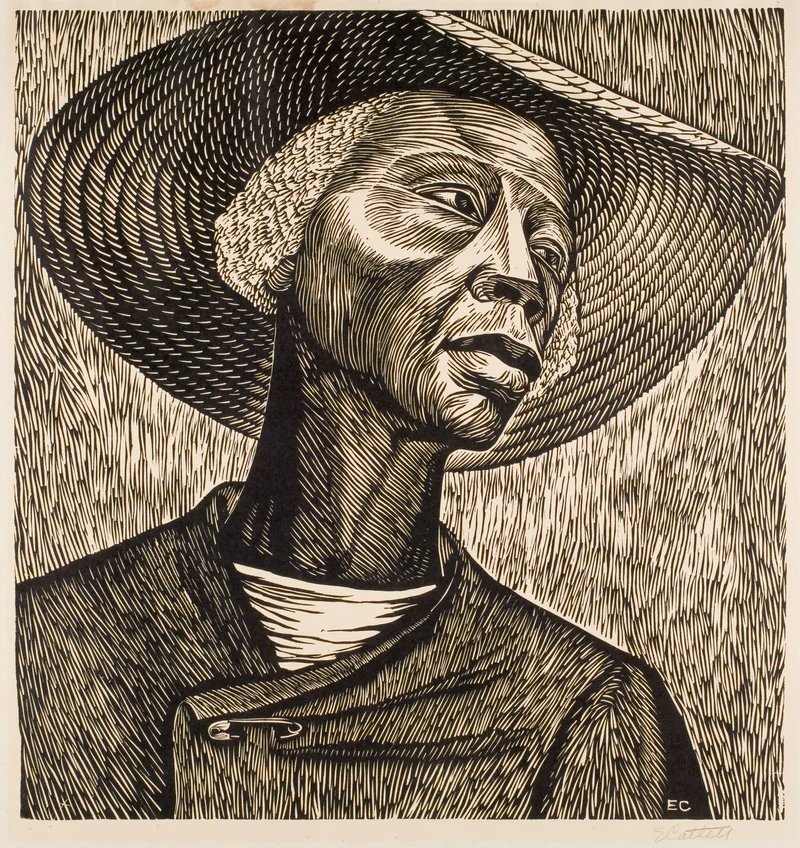
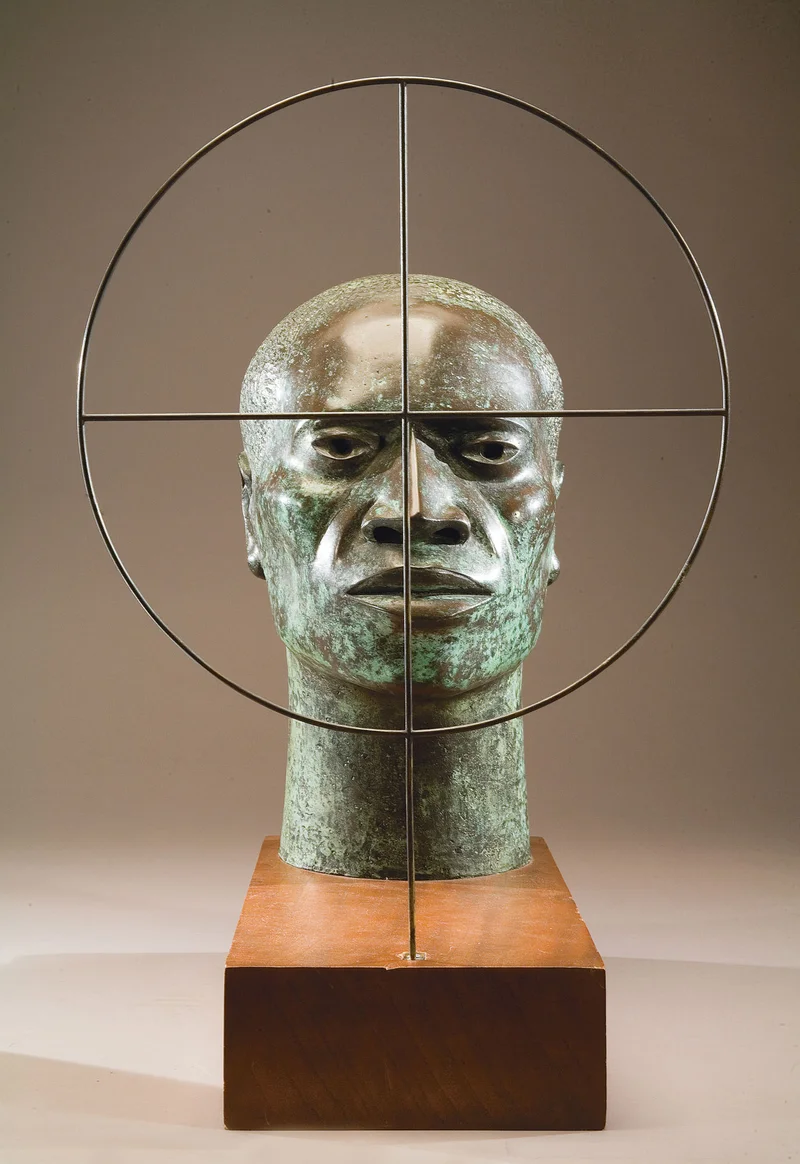
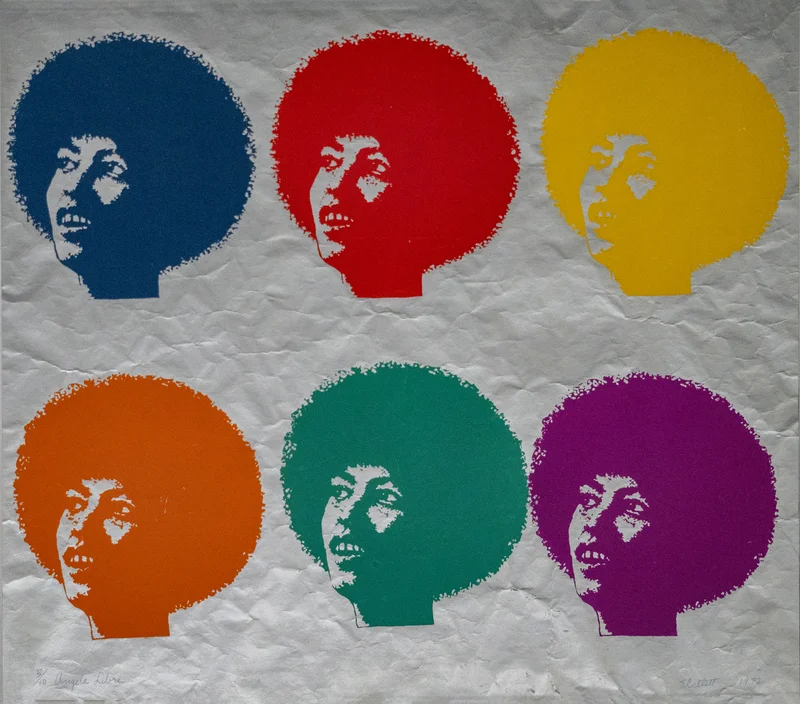

Elizabeth Catlett believed that everyone deserves access to art.
By becoming a Brooklyn Museum Member, you support the Museum’s mission to bring people together through art and experiences that inspire celebration, compassion, and the will to act.


200 Eastern Parkway, Brooklyn, NY 11238
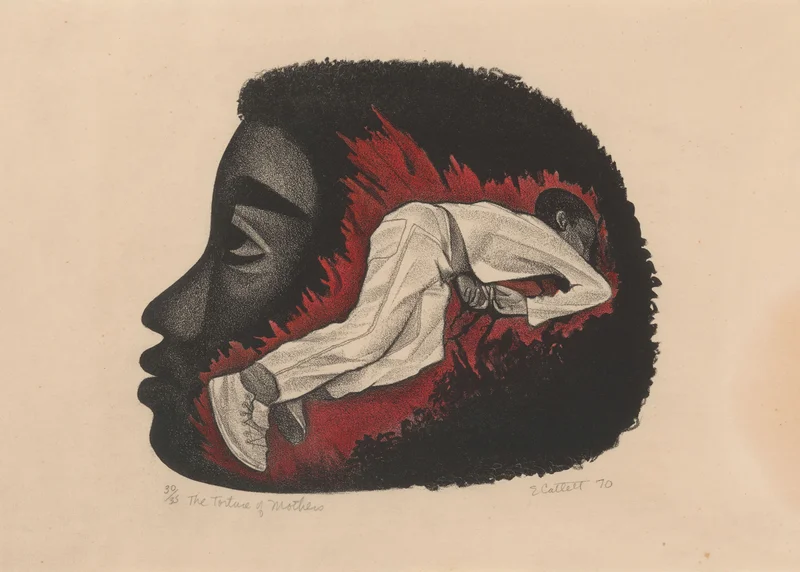
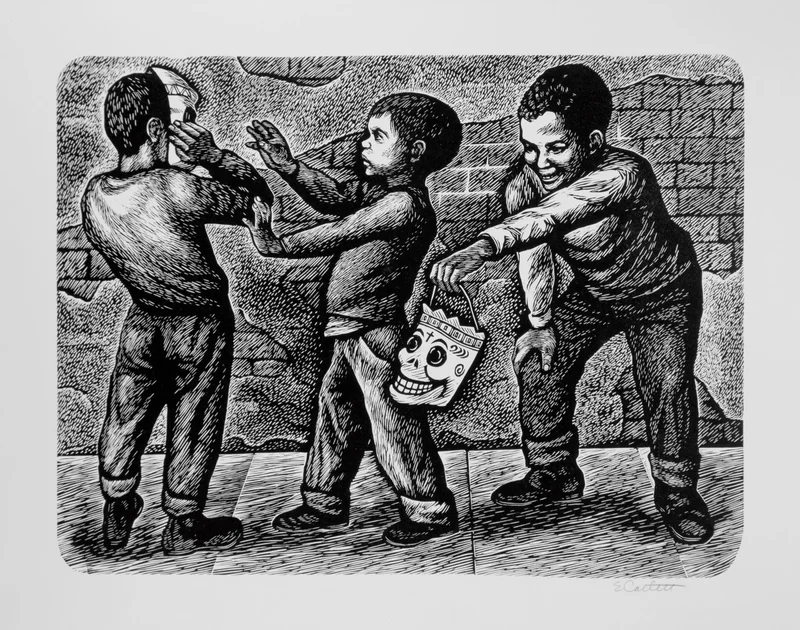
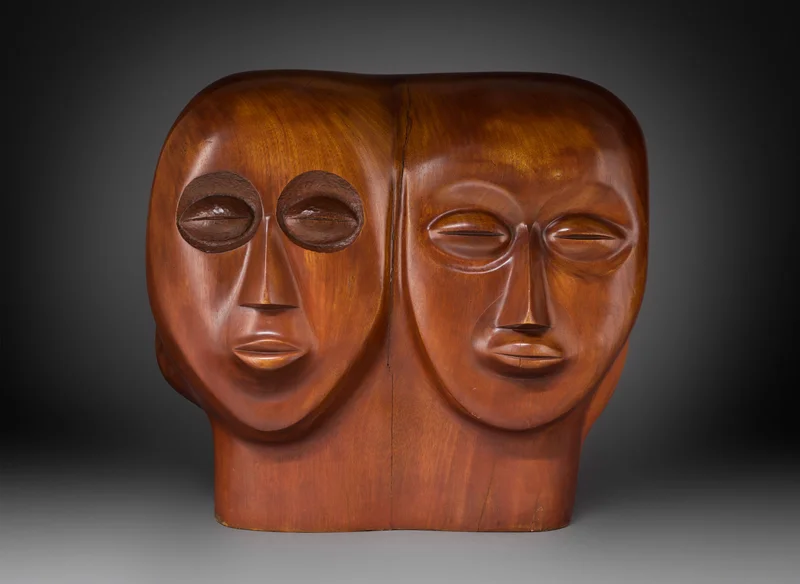
From the top: Elizabeth Catlett. Black Unity, 1968. Cedar. Crystal Bridges Museum of American Art, Bentonville, Arkansas, 2014.11. © 2024 Mora-Catlett Family / Licensed by VAGA at Artists Rights Society (ARS), NY. (Photo: Edward C. Robison III); Elizabeth Catlett. Sharecropper, 1952. Linocut on paper. Davis Museum at Wellesley College, Wellesley, MA, Gift of Paula Kaplan Hawkins (Class of 1957). © 2024 Mora-Catlett Family / Licensed by VAGA at Artists Rights Society (ARS), NY; Elizabeth Catlett. Target, 1970. Bronze. Courtesy of the Amistad Research Center, New Orleans, LA. © 2024 Mora-Catlett Family / Licensed by VAGA at Artists Rights Society (ARS), NY. (Photo: Courtesy of the Amistad Research Center, New Orleans, LA / Bridgeman Images); Elizabeth Catlett. Angela Libre, 1972. Color lithograph on silver foil. Private collection. © 2024 Mora-Catlett Family / Licensed by VAGA at Artists Rights Society (ARS), NY. (Photo: Neil Boyd); Elizabeth Catlett. Torture of Mothers, 1970/2003. Hand-colored lithograph on paper. Collection of Juanita and Melvin Hardy. © 2024 Mora-Catlett Family / Licensed by VAGA at Artists Rights Society (ARS), NY. (Photo: Mark Gulezian/Quicksilver); Elizabeth Catlett. Mis Niños, 1958. Linocut on paper. Colección Academia de Artes, México, Taller de Gráfica Popular archives, no. 34.35. © 2024 Mora-Catlett Family / Licensed by VAGA at Artists Rights Society (ARS), NY; Elizabeth Catlett. Black Unity, 1968. Cedar. Crystal Bridges Museum of American Art, Bentonville, Arkansas, 2014.11. © 2024 Mora-Catlett Family / Licensed by VAGA at Artists Rights Society (ARS), NY. (Photo: Edward C. Robison III)
Elizabeth Catlett: A Black Revolutionary Artist and All That It Implies is organized by Dalila Scruggs, Augusta Savage Curator of African American Art, Smithsonian American Art Museum; Catherine Morris, Sackler Senior Curator, Elizabeth A. Sackler Center for Feminist Art, Brooklyn Museum; and Mary Lee Corlett, Associate Curator of Modern Prints and Drawings (retired), National Gallery of Art; with Rashieda Witter, Curatorial Assistant, National Gallery of Art, and Carla Forbes, Curatorial Assistant, Elizabeth A. Sackler Center for Feminist Art, Brooklyn Museum. The exhibition is organized by the Brooklyn Museum and the National Gallery of Art, Washington, in collaboration with the Art Institute of Chicago.
This exhibition is made possible through support from the Terra Foundation for American Art.
Leadership support is provided by the Every Page Foundation and the Henry Luce Foundation.

Major support is provided by MaryRoss Taylor.
Generous support is provided by Tom Healy and Fred P. Hochberg, The Maurer Family Foundation, the National Endowment for the Arts, and by



