


How do conservators handle ancient art?
The array of materials within the Brooklyn Museum’s extensive collection, from contemporary canvases to prehistoric sculptures, requires an equally broad range of conservation treatments. At any given time in the Conservation Lab, the Museum’s conservators are treating objects that could be up to 6,000 years apart in age. With that age difference comes a difference in approach. Let’s look at key questions that arise when we treat ancient art.
Repair or stabilize?
When an object is broken into fragments, it might make sense to put them back together. But what if you didn’t know what the piece originally looked like? Would you still try to reassemble it and make it look “new”? This question commonly arises in the conservation of ancient objects. Conservation teams often decide to repair the objects when possible, prioritizing their stability, but any purely aesthetic compensation must be supported by evidence from comparable objects and research.
For example, let’s compare Female Figure (ca. 3500–3400 B.C.E.) and Anthropoid Coffin of the Servant of the Great Palace, Teti (ca. 1339–1307 B.C.E.), two vastly different objects that both required some form of reassembly.
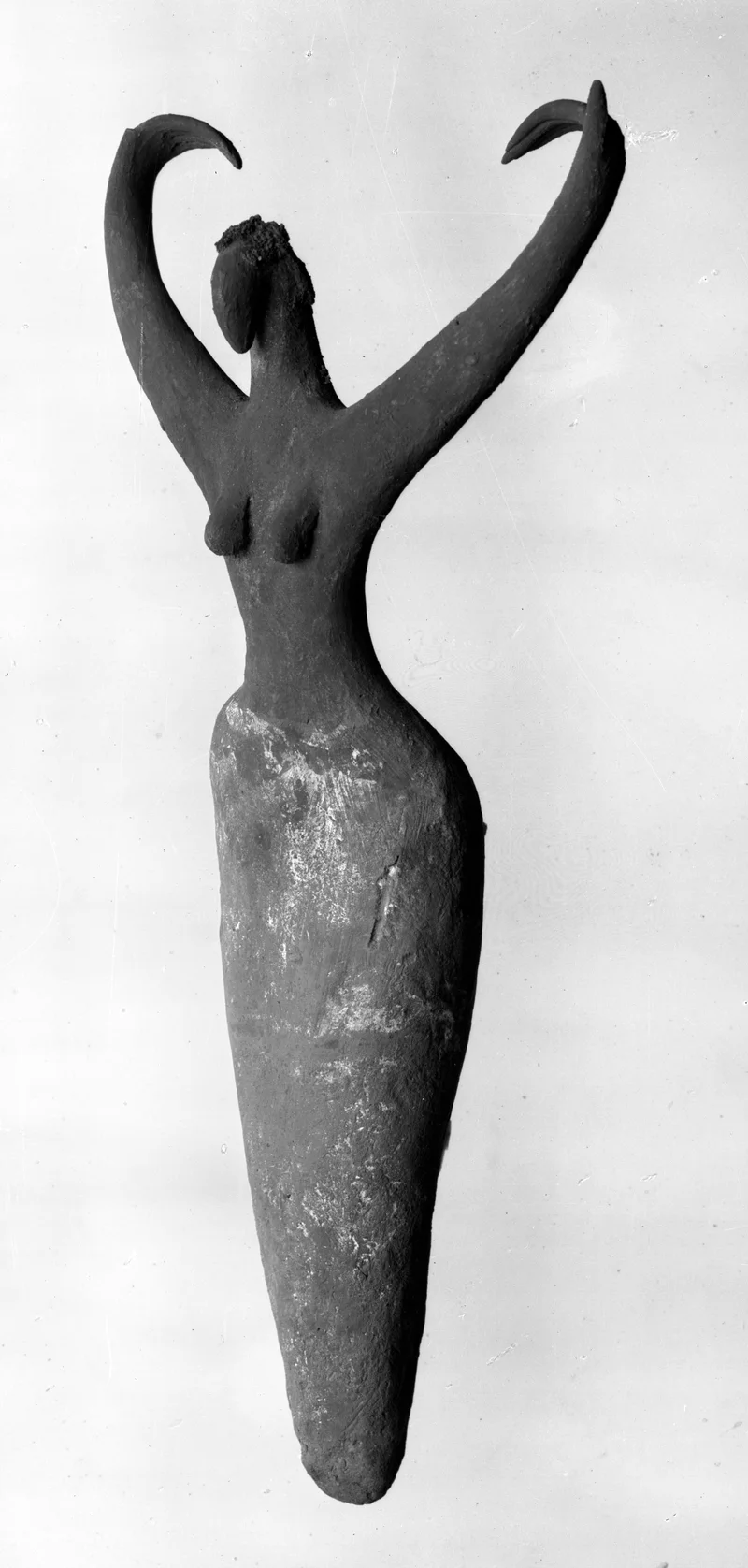
Female Figure in one of its earliest photographed forms (fully intact).
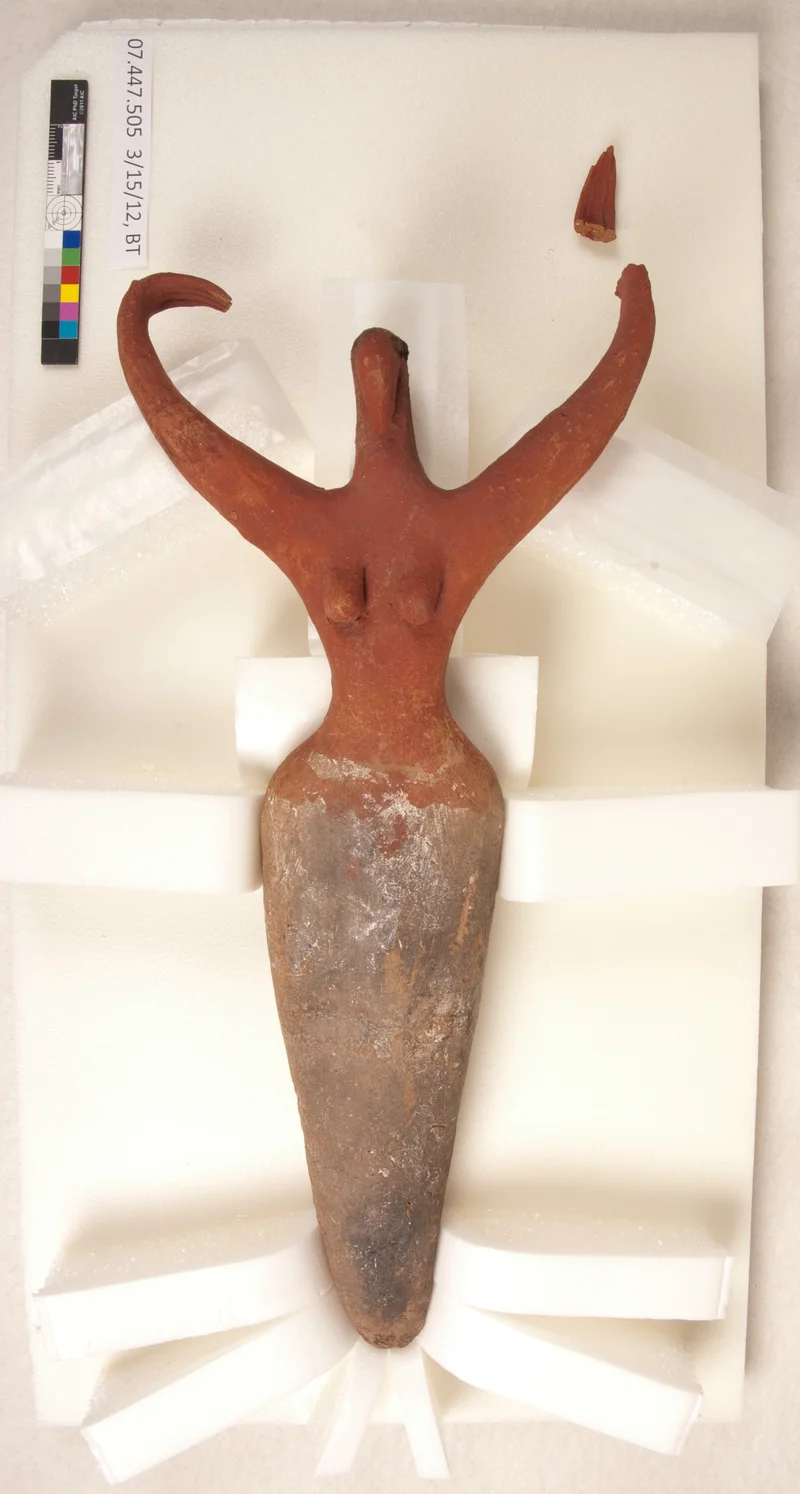
While traveling, the left hand of Female Figure broke off due to weaknesses in the ceramic from the lime content. It was carefully reattached in its original position.
Female Figure was excavated in one piece; however, weaknesses in the clay from the lime content made it brittle, causing a hand to break off during travel in 2012. The break edges fit together almost perfectly, and the original alignment was well-documented in photographs, giving us a reliable guide. We reattached the hand to the figure with adhesive and applied small fills of plaster to further stabilize the break. Lastly, the plaster was painted to match the surrounding surface.
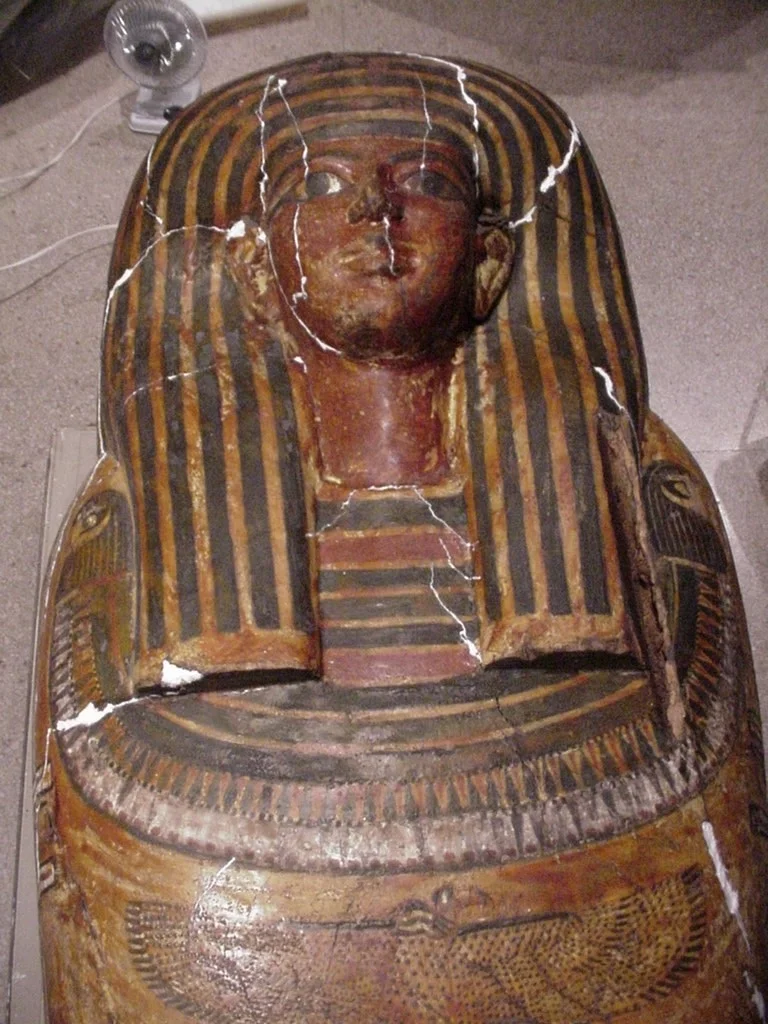
Structural, preventive, and some aesthetic fills were completed to stabilize Anthropoid Coffin of the Servant of the Great Palace, Teti; they were then painted to prevent visual distraction to viewers.
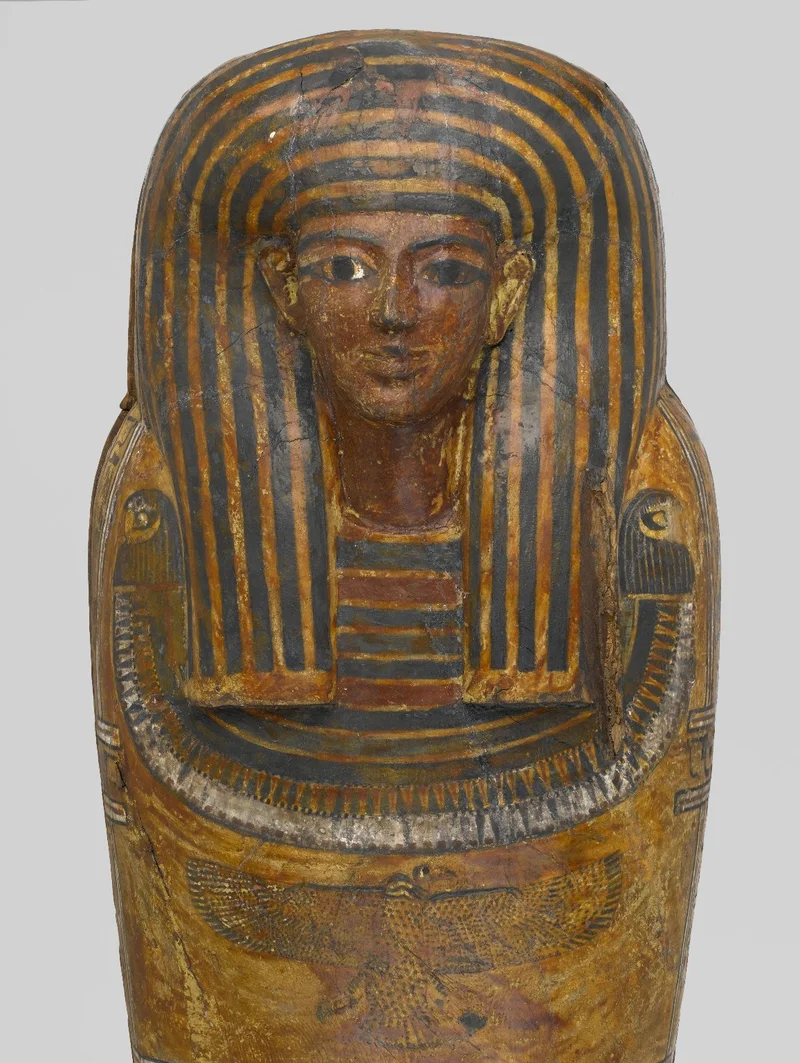
The face on Anthropoid Coffin of the Servant of the Great Palace, Teti after major conservation efforts.
A different approach was required during a major conservation effort of Anthropoid Coffin of the Servant of the Great Palace, Teti. The coffin had many large losses in its surface. Before addressing them, the team categorized the fill areas, or the sections that needed repair, as structural, preventive, and/or aesthetic. Structural and preventive fills were completed to stabilize the object for the long term.
Got a question for our art experts?
Drop us a line! We’d love to know which topics interest you.
Support art conservation!
When you make a donation to the Brooklyn Museum, you’re helping to support our mission: to bring people together through art. Your generosity makes art preservation possible.
All photos: Brooklyn Museum


