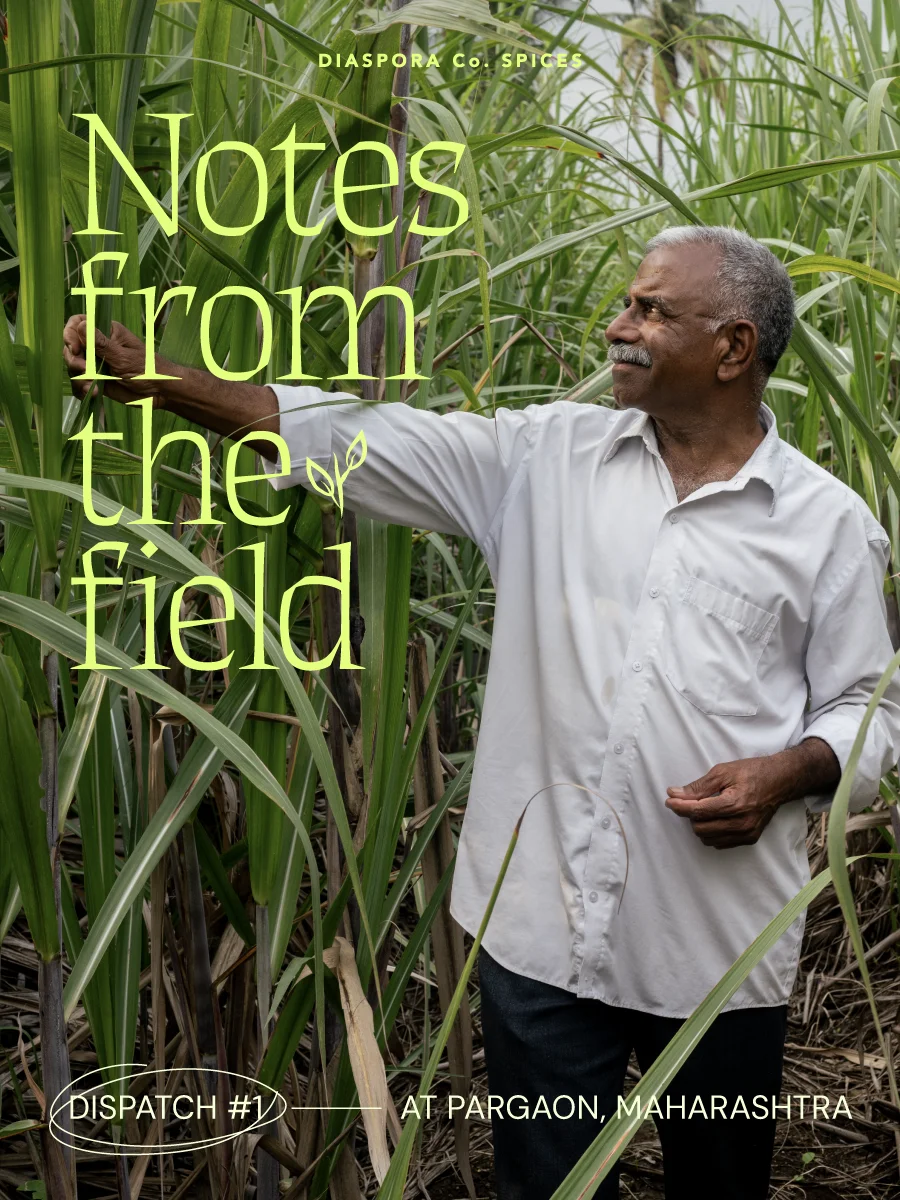
It is 3pm on a cloudy afternoon in August, and I am making my way through a field of densely planted sugarcane in Pargaon, Maharashtra. Purple and green stalks tower above me, swaying and rustling in the afternoon breeze. The path is narrow, no more than a foot wide, and I proceed tentatively, following Kantilal Randive, the farmer of this field, and the source of our exquisite Madhur Jaggery.
Kantilal shows me to a clearing with a water tank, with over a dozen weaver-bird nests hanging above. The sun dances on the water, while the birds twitter about their delicate, hanging homes made from little twigs and dried leaf.
This little oasis of weaver nests—these little moments of magical co-existence—are one of the things I love about regenerative farming. When food is grown in a manner that enriches the ecosystem, it makes for a fuller, more enriching experience. For many it touches, from the earthworms in the soil, the weaver birds above the water, and farmers like Kantilalji, to the people who cook with the produce, and the loved ones they feed along the way.
But before we dig in further, allow me to introduce myself.
Hello fellow earth beings :) My name is Neha, and I am the Farm Partner Manager at Diaspora Co. I work on matters related to sourcing, like finding regenerative spice farms in India and South Asia, meeting with farmers like Kantilal, listening to their triumphs and challenges, and working towards a supply chain that is rooted in compassion and community. I’m also a kitchen-gardener and have a thriving backyard garden where I grow veggies, herbs, tubers, coffee, and fruit. I continue the practice of growing food for two reasons: The wonder I experience on a regular basis, and for the flavor it brings.
There is a strong connection between the biodiversity of a habitat and the flavor of its produce: the more layered the habitat, the more complex the flavor it yields—assuming a careful selection had been made in choosing the variant being grown. In other words: terroir.
Before my life as a regenerative gardener, I lived in Mumbai, and worked as a journalist, writing about food and travel. As my practice of gardening furthered, I began to write about food from the perspective of habitat, and co-existence. At the heart of my quest were these questions: What would it mean to grow food regeneratively, in a way where land, community, and the Earth at large benefit? Is this even possible? What would it look like? These questions continue to guide my work at Diaspora Co.
Every time I speak with a farmer like Kantilal—who tells me about the wealth of wildlife on his sugarcane farm—and taste the complex notes in his jaggery powder, I receive a blip of affirmation. A gentle reminder of the ways that we are connected to our habitats. You can ready my complete field notes here. For now, that’s it from me :) I will be back next month, with more stories from our farms, and more glimpses into the habitats they sustain.