For the past couple of years, I’ve been testing productivity methods and tools to see how they actually work in real life.
This year, I’m taking a slightly different angle.
Instead of just trying new advice, I’m revisiting some of the most popular productivity methods and giving them a reality check. Some hold up surprisingly well. Others... not so much.
The theory: Get everything out of your head
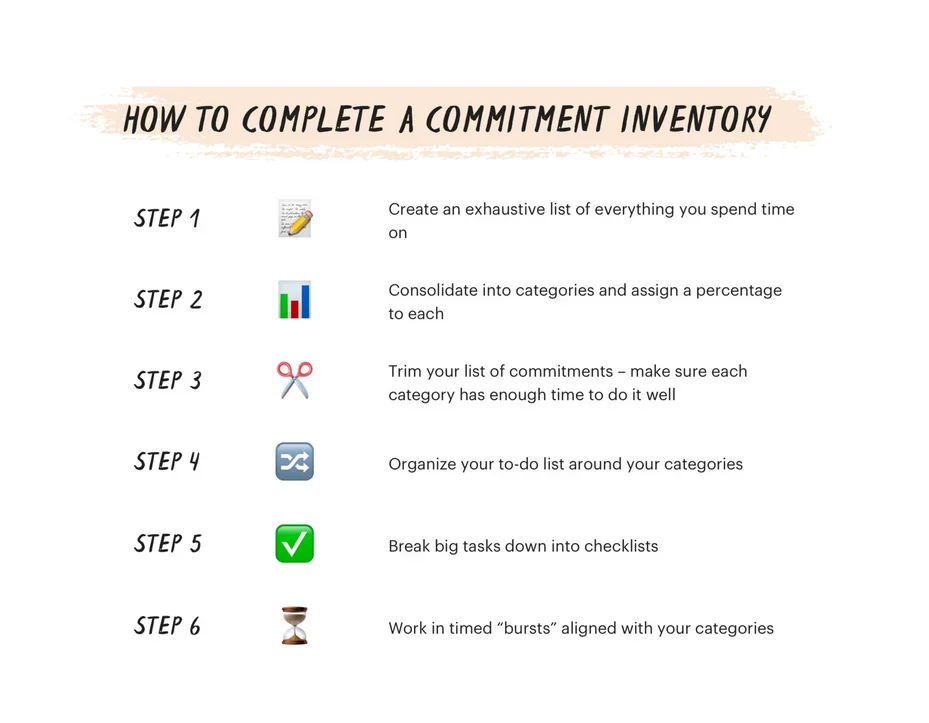
The Commitment Inventory is built around a simple idea. Write down everything you’re responsible for, from work projects to personal goals to everyday tasks.
The goal is to see the full picture so you can prioritize what actually matters and stop trying to keep track of it all in your head. If your brain feels overloaded, it’s usually not because you’re doing too little. It’s because you’re trying to hold onto too much at once.
Since this month is all about befriending your brain and self-care, the Commitment Inventory felt like the perfect fit.
I tried this one about a year ago when I was in a similar funk and shared the full experience on
the blog.
TL;DR: It’s great for creating clarity and realizing just how much you’re juggling.
The problem: It turns into another system to manage
In practice, I found myself spending more time organizing the list than actually doing anything on it.
The full method involves listing everything, categorizing it, assigning priorities, and maintaining it over time. Which is helpful, but also a lot to keep up with, especially when things are already busy.
And that’s kind of the irony.
When your brain already feels overloaded, adding a detailed system to manage everything doesn’t always make it feel lighter. It can just feel like one more thing to stay on top of.
The adjustment: Keep the brain dump, skip the rest
What ended up working better for me was stripping it way down.
Instead of trying to maintain a full inventory, I just focus on the first step. Getting everything out of my head and onto the page.
No categories. No percentages. Just a messy list of everything I’m keeping track of.
That alone makes a bigger difference than I expected. Once it’s out, it’s a lot easier to decide what actually needs my attention and what doesn’t.
Your turn: Clear the mental clutter
If your brain feels a little crowded lately, try this.
Take 10 minutes and write down everything you’re keeping track of right now. Tasks, reminders, ideas, anything that feels like it’s taking up space.
Don’t organize it. Don’t filter it. Just get it out. Then decide what actually deserves your time.