


Inspired by Around the World in Eighty Days, we invite you on a global journey. Over the next few months, we’ll tour the planet through 80 artworks. Our first stop is the Egyptian, Classical, and Ancient Near Eastern Art galleries. Scroll on to begin your trip! ✨
If you’re in town, come by to experience these Brooklyn Icons, a set of standout artworks from across our encyclopedic collection, along with one of the world’s only complete and gilded Books of the Dead.
Six must-see artworks
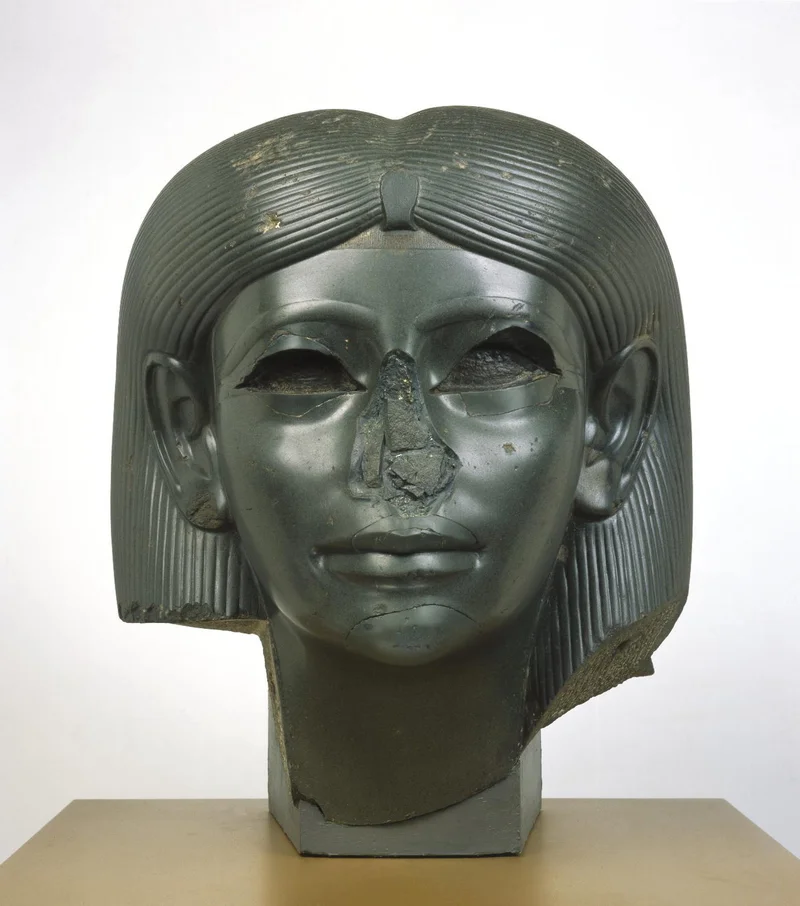
Head from a Female Sphinx
ca. 1876–1842 B.C.E.
Depicting a queen or princess, this striking green head is one of the earliest representations of a female sphinx. Its size and powerful presence contrast with its smooth and delicate features.
The face and neck, once attached to a sphinx’s reclining body, reveal evidence of ancient damage and more modern repairs. The empty eyes originally held stone inlays.
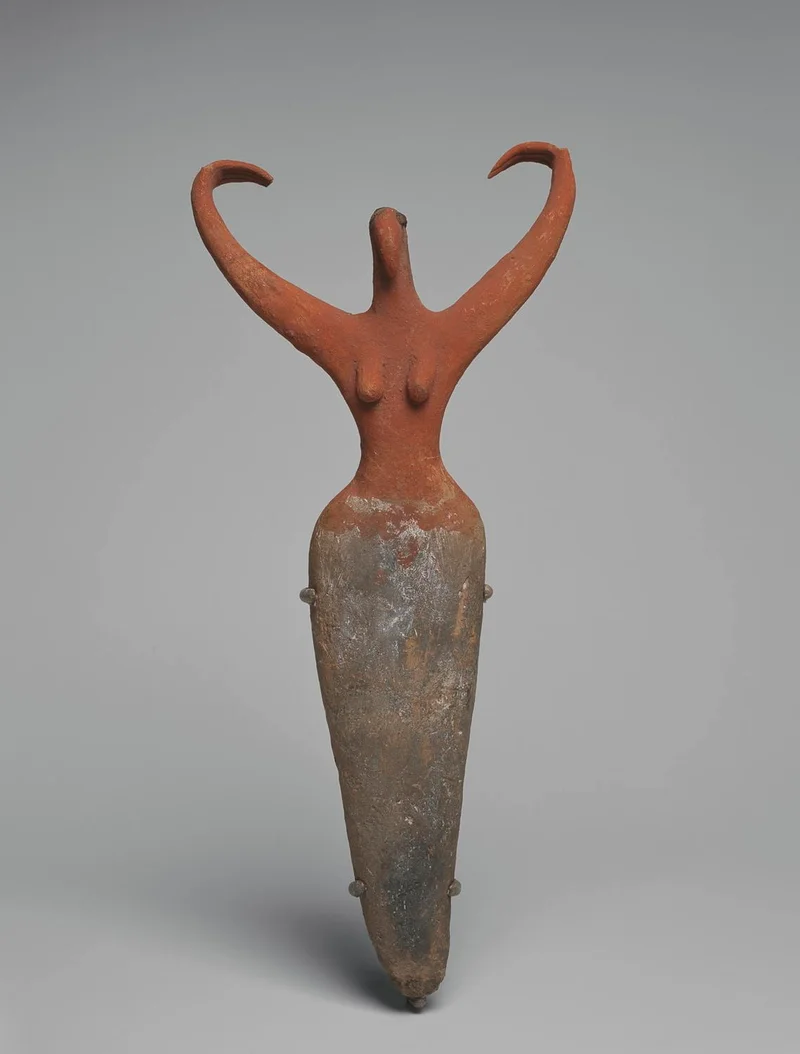
Female Figure
ca. 3500–3400 B.C.E.
This dramatic terra-cotta female figurine is one of the Museum’s oldest objects. Its level of preservation is remarkable. Although a few other examples of such figurines exist, this is the only one that is fully intact.
The statuette was excavated in 1907. Henri de Morgan, who was working on behalf of the Brooklyn Museum, found it in a tomb at the site of El Ma’marîya in southern Egypt.
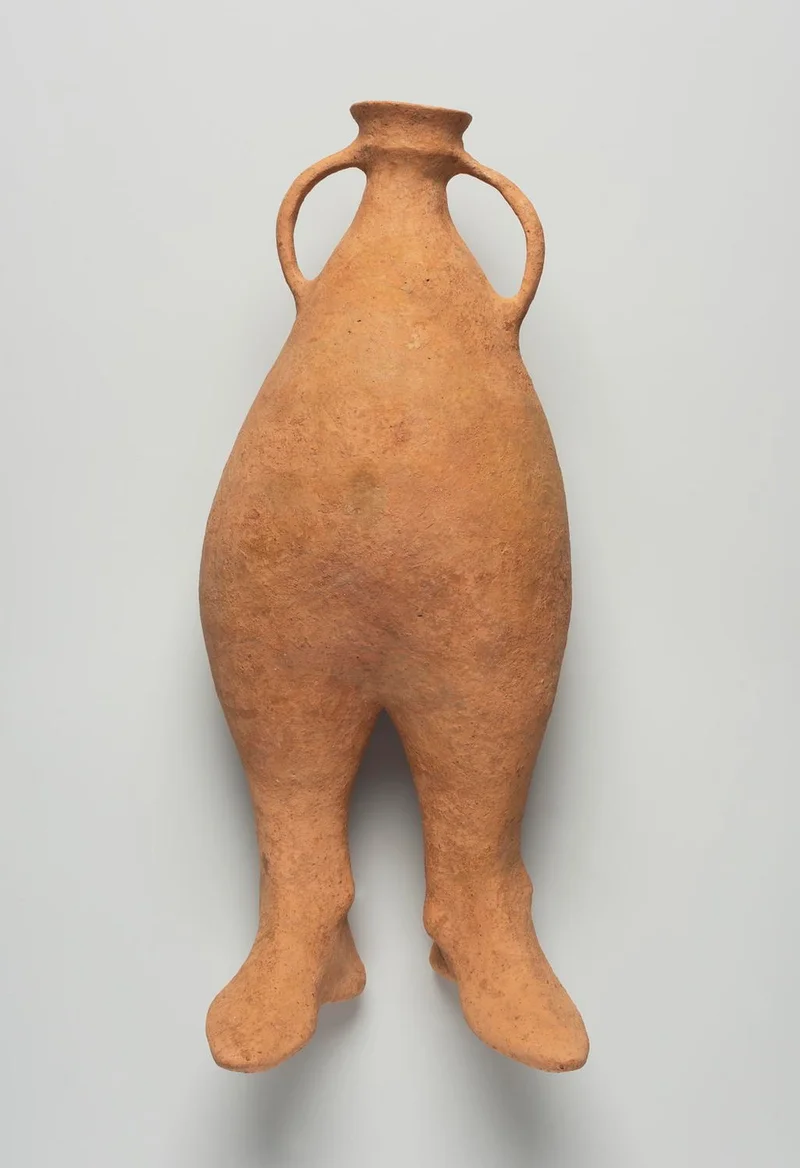
Vessel with Two Feet
ca. 1000–800 B.C.E.
Captivating and playful, this pink earthenware vessel has two legs and booted feet. This type of container is called a wine leg. When poured into the top, wine would have spurted out of tiny holes in the sole of each boot.
Later Persian texts suggest that drinking wine from vessels shaped like human legs and feet could remove the drinker’s grief. Even just beholding this wonderful container can elicit joy!
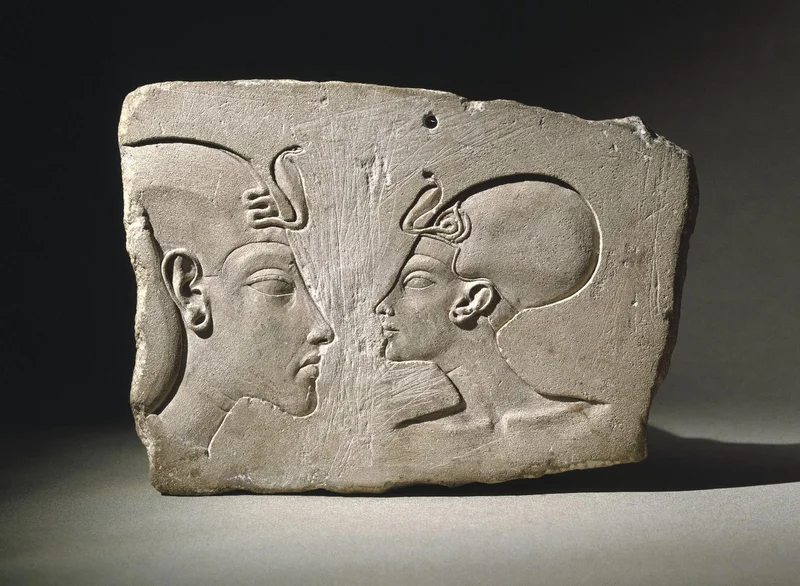
The Wilbour Plaque
ca. 1352–1336 B.C.E. or slightly later
This finely carved stone plaque is named for American Egyptologist Charles Edwin Wilbour, who purchased the piece at Amarna in 1881. Amarna, the city where this work was most likely created, was built by King Akhenaten.
The plaque is famous for its excellent execution of profiles that reflect the distinctive style of late Amarna art. They most likely represent Akhenaten and his wife Nefertiti.
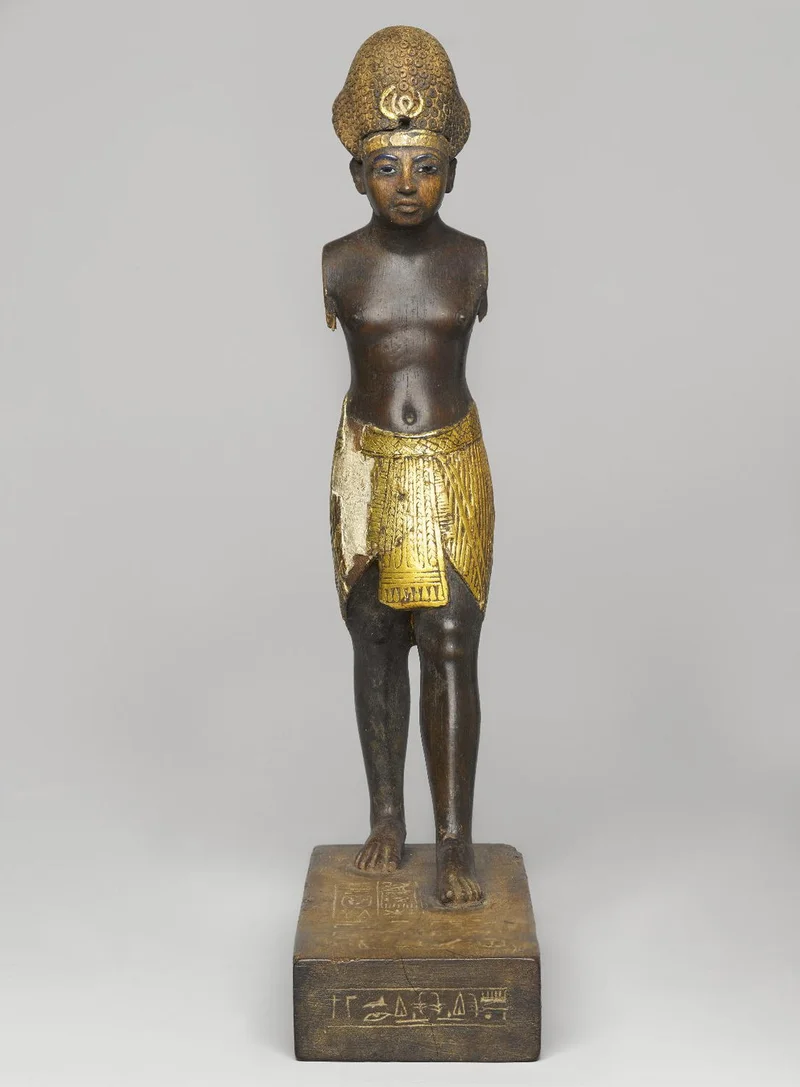
Amunhotep III
ca. 1390–1352 B.C.E.
Small but striking, this wooden statuette of Amunhotep III is a prime example of the artistic innovation that developed during this king’s long and prosperous reign. Amunhotep III’s face and figure are finely carved.
His crown—known as the Blue Crown—and kilt are gilded, and his eyes and eyebrows are delicately inlaid with glass. The king’s rounded body might be surprising given that pharaohs were often depicted as strong and lean, but his form arguably reflects divine power.
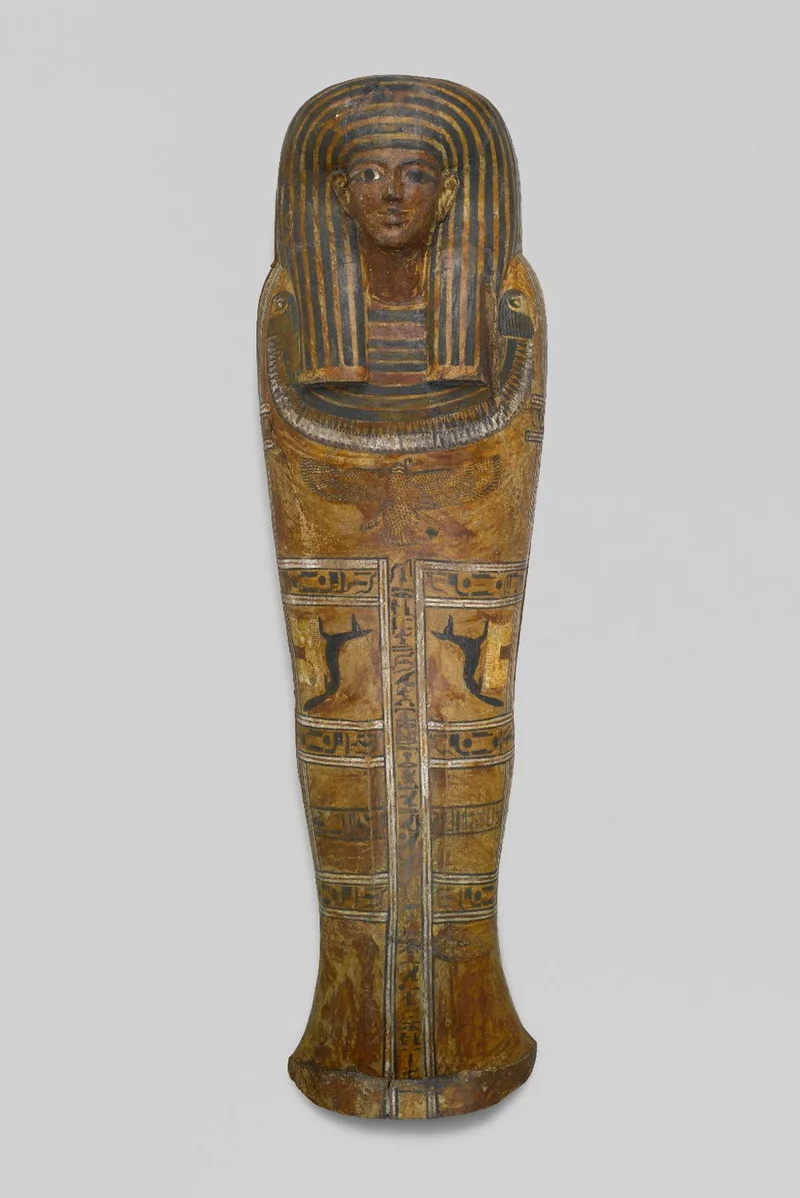
Anthropoid Coffin of Teti, Servant of the Great Palace
ca. 1339–1307 B.C.E.
This is one of the earliest preserved examples of a yellow painted coffin. It would have been commissioned by the deceased, a man named Teti, or his family.
Teti was an artist in Deir el-Medina, a vibrant community of scribes, artisans, workers, and their families (not unlike Brooklyn!). Teti was not particularly wealthy, and his coffin was painted yellow to imitate gold gilding on more expensive examples.
From the top: Head from a Female Sphinx, ca. 1876–1842 B.C.E. Chlorite. Brooklyn Museum, Charles Edwin Wilbour Fund, 56.85. (Photo: Brooklyn Museum); Female Figure, ca. 3500–3400 B.C.E. Clay, pigment. Brooklyn Museum, Charles Edwin Wilbour Fund, 07.447.505. (Photo: Brooklyn Museum); Vessel with Two Feet, ca. 1000–800 B.C.E. Clay. Brooklyn Museum, Gift of the Arthur M. Sackler Foundation, NYC, in memory of James F. Romano, 2015.65.28. (Photo: Brooklyn Museum); The Wilbour Plaque, ca. 1352–1336 B.C.E. or slightly later. Limestone, pigment. Brooklyn Museum, Gift of Evangeline Wilbour Blashfield, Theodora Wilbour, and Victor Wilbour honoring the wishes of their mother, Charlotte Beebe Wilbour, as a memorial to their father, Charles Edwin Wilbour, 16.48. (Photo: Brooklyn Museum); Amunhotep III, ca. 1390–1352 B.C.E. Wood, gold leaf, glass, pigment. Brooklyn Museum, Charles Edwin Wilbour Fund, 48.28. (Photo: Brooklyn Museum); Anthropoid Coffin of Teti, Servant of the Great Palace, ca. 1339–1307 B.C.E. Wood, pigment. Brooklyn Museum, Charles Edwin Wilbour Fund, 37.14Ea-b. (Photo: Brooklyn Museum)


