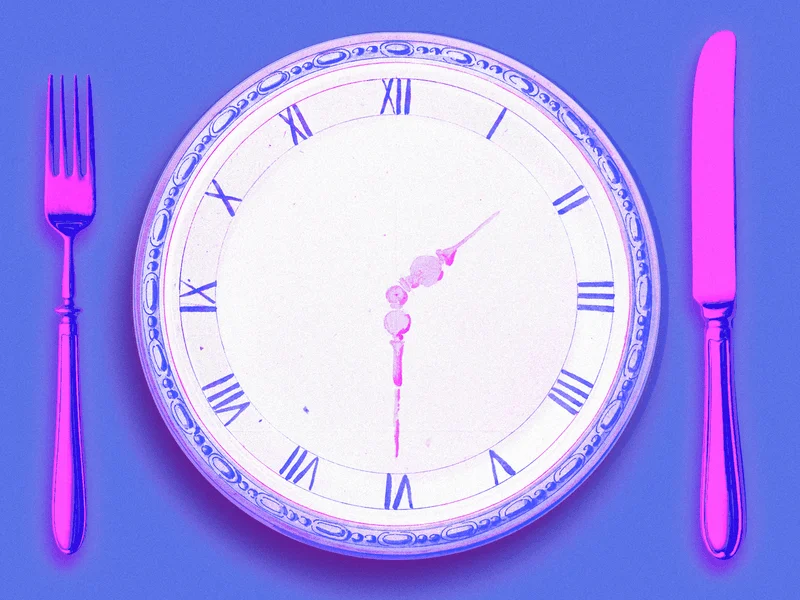
Every couple of years, like the very clockwork it depends on, intermittent fasting resurfaces as a dietary trend. “It’s really interesting that it has held this kind of unusual fascination as a trend for so many years, as it isn't anything new from a clinical nutrition perspective,” says Stacie Stephenson, DC, CNS, board member of the American Nutrition Association.
To be fair, though, intermittent fasting is one of the more beneficial and universally useful nutrition strategies out there—just not for the reason most people think. “Do I consider intermittent fasting a weight loss diet? No, I don't,” Dr. Stephenson says. “But I think it's a really great tool.”
A tool for what, then, you might ask? Here’s everything you need to know.
What is intermittent fasting?
“Intermittent fasting is as simple as not eating for half the day,” says Dr. Stephenson. “For 12–14 hours of your day, you’re not consuming anything other than water. That is as simple as it is.”
Basically, with intermittent fasting, half or more of your day is spent in a fasted state, with a specific window designated for eating. When that window occurs, and how long it lasts, is up to you—nutritionists recommend up to 12 hours, but no fewer than eight—as long as you’re consistent.
“What became known as intermittent fasting was really the concept of a window in which you consume calories,” says Ashley Koff, RD, nutrition course director for UC Irvine’s Susan Samueli Integrative Health Institute’s Integrative and Functional Medicine Fellowship. “It came about as a way to double down on explaining to people that you should not be consuming calories all the time.”
Click here to read how intermittent fasting can improve your sleep and energy levels.