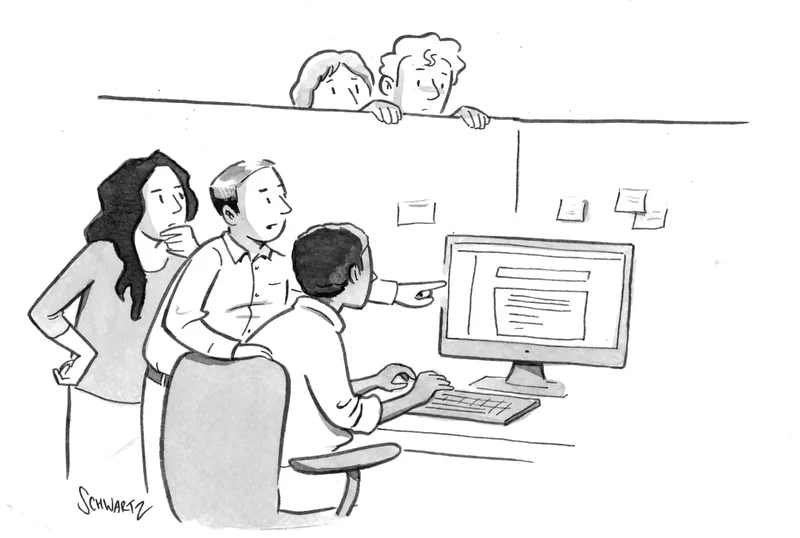
If your team is hesitant to adopt AI, the issue might not be a lack of skill. It might be guilt.
Even when leadership emphasizes the need for AI adoption to work more efficiently and spark new ideas, a surprising number of employees still feel like it’s cheating. According to our AI at Work 2025 Report, guilt is one of the most frequently cited fears of AI-apprehensive employees – especially the fear of being judged or discredited for relying on AI tools.
For many, the rise of AI raises big questions about their value, skill, and identity at work. These feelings can create an aversion to AI that hinders progress and may even stunt your team's professional growth and impact.
If your team is slow to adopt AI tools, it might not be technical guidance they need, but freedom to use AI. As a leader, you need to help them understand that using AI isn't lazy; it's a way work gets done now. Your response to their hesitation can directly influence how boldly they experiment, adapt, and grow.
So how can you help your team move from guilt to empowered, intentional use of AI?
Name the feeling of guilt
AI guilt thrives in silence. Many employees feel uneasy about admitting they use AI to speed up tasks, especially now that tools can plan, draft, analyze, and write. By openly acknowledging your team’s emotions, you remove the shame around them and create space for conversation. After discussing their feelings, you might reiterate to your team that using AI isn’t cutting corners; it's the new baseline for doing great work. That's why finding new applications for it is important. When people know their manager expects and welcomes AI use, guilt turns into acceptance. And that acceptance can be the beginning of new ways of working.
Key question: “How can you openly acknowledge AI guilt so your team feels safe discussing it?”
Encourage your team to stay in the details
AI can absolutely take the first pass of a project, and that’s a huge advantage. But your team still needs to understand that the real value comes from what they do next. Leadership doesn’t want the AI-generated draft; they want the deeper thinking behind it. That means refining the output, questioning its assumptions, and adding the nuance only a human can bring. This is where AI guilt often shows up: people worry they’re “cheating” by letting AI start the work. But the first draft isn’t the finish line, it’s the starting point. Your team’s judgment, creativity, and expertise are what turn an AI draft into something extraordinary. Remind your team that using AI doesn’t replace their insight; it actually creates more space for it. Their value shows up in the depth, accuracy, and thoughtfulness they add.
Key question: “How can you help your team build the habit of refining AI outputs with their own expertise?”
Provide micro-wins that reduce hesitation
Many people feel guilty because they’re not sure they’re “using AI correctly.” So it helps to ground your team in practical wins. Give them small, well-defined AI tasks like summarizing meeting notes, generating a project outline, or spotting workflow bottlenecks so they can immediately see the value. These quick wins build confidence fast. But there’s another benefit worth naming: when AI handles the smaller, repeatable tasks, your team can redirect their time toward more strategic work. According to the AI at Work 2025, AI users are taking on broader, more advanced responsibilities than non-AI users. Helping your team understand this shift reframes AI from something they “should” be using to something that unlocks their potential. As those micro-wins accumulate, employees begin to internalize the impact, and adoption becomes a natural next step.
Key question: “What simple AI use case could you introduce this week that would give your team an easy, undeniable win?”
Empower employees with skills-building
When you deliberately train your employees to use AI in their process, they will tend to feel less guilty about using it because it becomes a natural part of everyone’s workflow. Offer short training sessions, share prompts that worked for you, or hold “show and tell” moments where teammates demo how AI helped them solve a problem. When AI learning is encouraged, employees shift from feeling guilty to empowered to innovate and experiment. Importantly, they’ll also feel like they’re being developed rather than devalued, which not only reduces guilt but also boosts engagement.
Key question: “What skill-building opportunities can you provide to help your team feel more capable and confident with AI?”