monday.com’s take on the latest work trends - sent on Tuesdays.
|
|
|
|
Inside this issue
|
|
|
- Workplace trends
- The AI corner
- Having productive disagreements
- Question of the week
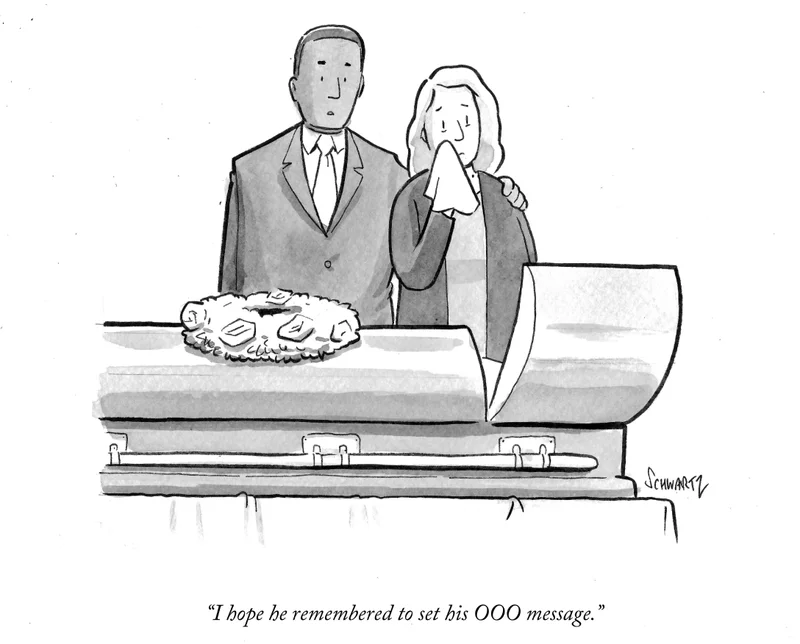
- Just for laughs
-
Follow the monday.com weekly on LinkedIn
|
|
|
|
Workplace trends
|
|
Work-life
|
|
The rise of the "empowered non-complier"
|
|
A new workplace trend is emerging where high-performing employees are ignoring return-to-office mandates and getting away with it. These workers are typically younger managers in tech who leverage their market value to work remotely when it suits them, according to JLL's Workforce Preference Barometer 2025. According to the survey, a mere 74% of US employees strictly follow return-to-office rules compared to 90% in France and Italy. Rather than rejecting office culture, these are usually caregivers facing time constraints and long commutes who make calculated decisions based on their market value. This trend reflects a broader shift in workplace priorities, with work-life balance now overtaking salary as the top concern for 65% of workers globally, the survey found.
|
|
Labor laws
|
|
UK updates sick pay
|
|
The UK just passed major labor reforms that change how low-wage workers receive sick pay. The new Employment Rights Act now pays workers from their first sick day, instead of making them wait three days, bringing the UK closer to European standards. The change addresses a wider public health concern: when workers don't get sick pay from day one, they come to work ill because they can't afford to stay home. This was on full display during the COVID pandemic, when officials found that care homes offering sick pay to their employees had fewer COVID cases than those that didn't, the Financial Times reported. Labor experts view the reforms as necessary improvements for workers who previously had some of the weakest sick pay protections in developed countries.
|
|
|
|
The AI corner
|
|
Investment
|
|
Is Big Tech massively overspending on AI?
|
|
Tech giants are raising billions from investors to fund AI infrastructure, but the spending boom is raising concerns, according to the Financial Times. Meta, Microsoft, and Amazon are pouring tens of billions into data centers, a dramatic shift from their traditionally lean operations. Investment experts note this pattern looks similar to past booms that ended badly - telecom companies in the 1990s borrowed heavily for fiber-optic cables, and energy companies did the same during the 2000s oil boom. Both created valuable infrastructure but struggled financially for years afterward. The concern now is whether AI will generate enough value to justify the enormous investment, or if companies are over-betting on this technology that might evolve faster than expected.
|
|
Health
|
|
Google's AI gives dangerous health advice
|
|
Google's AI Overviews are putting people at risk by providing false health information at the top of search results, according to a Guardian investigation. In one case, Google wrongly advised pancreatic cancer patients to avoid high-fat foods, the exact opposite of what doctors recommend. The AI also provided incorrect information about liver function tests that could leave people with serious disease thinking they have normal results. Google argued that the vast majority of its AI Overviews are accurate, but medical experts warn that the misleading summaries appear when people are most vulnerable and searching for critical medical information.
|
|
|
|
Having productive disagreements
|
|
|
|
When you’re trying to bring a plan to life and guide your team toward a shared goal, disagreement can feel demoralizing.
As leaders, we’re often told that confidence and decisiveness are essential traits, which can quietly add pressure to have all the answers. So when a team member pushes back on your direction, it may feel like a challenge to your authority or credibility. But how you respond to disagreement can actually strengthen your strategy and deepen trust with your team.
When managers shut down feedback or dismiss dissent, valuable insights go unused, and plans suffer. But when disagreement is handled with respect, it becomes a powerful driver of better decisions, stronger relationships, and healthier team dynamics. According to a recent McKinsey study, the most effective CEOs lead with curiosity. They’re open about what they don’t know, invite honest conversations, and address tough topics early, creating space for teams to solve real problems together and achieve stronger results. In other words, saying “I don’t know” or “you might be right” doesn’t weaken your leadership; it signals that you’re listening, that you value different perspectives, and that you’re working toward the best outcome together.
|
|
So how can you respectfully and productively disagree with team members?
|
|
Actually listen
|
|
Disagreements can trigger an instinct to defend your position or “win” the argument. Instead of listening, you may find yourself mentally preparing a response while the other person is still talking. That reaction is human, but it shuts down understanding. When you notice this happening, pause and slow the conversation down. Listening doesn’t mean you have to agree, but it does mean fully understanding your employee’s perspective before responding. One simple technique is to paraphrase what you heard before sharing your own view. This shows respect, reduces misunderstandings, and can soften defensiveness on both sides.
|
|
Key question: “How will you make sure you’re truly listening and not just waiting to respond?”
|
|
Find common ground
|
|
Even when opinions differ, shared goals probably exist beneath the surface. Maybe you and your employee disagree on how to approach a project, but you both want it to succeed. Calling out that alignment reframes the conversation from conflict to collaboration. So, before diving into your different points of view, ground the discussion in what you agree on. This might sound like, “We both want this launch to go well,” or “We’re aligned on the outcome, so let’s talk about the best way to get there.” Establishing common ground lowers emotional tension and makes disagreement feel less adversarial. When people feel aligned on purpose, they’re more open to different ideas about execution.
|
|
Key question: “Where should AI absolutely be used, and which approved tools best support each task?”
|
|
Steps for using AI
|
|
For high-impact use cases, create a document and spell out the workflow. For example, a marketing team creating a landing page might use AI to generate an initial draft based on brand guidelines and audience research, then have a writer refine the copy. An engineering team might use AI to suggest solutions or refactor code, with engineers validating logic, performance, and security before anything ships. As you create this workflow, try to be as explicit as possible about which steps involve AI and which do not. Clear steps remove ambiguity and reinforce where human ownership matters most.
|
|
Key question: “What shared goals can you highlight before discussing where opinions differ?”
|
|
Consider perspective
|
|
Each of your team members brings a unique set of experiences, information, and context to the table. When someone disagrees with you, they may be reacting to constraints, risks, or details you haven’t seen yet. So instead of assuming resistance, assume insight. Ask yourself what might be shaping their point of view. Are they closer to the customer? More familiar with a technical limitation? Feeling pressure you’re not aware of? By actively seeking context, you turn disagreement into a learning opportunity. In the process, you build psychological safety by showing your team that their perspective matters.
|
|
Key question: “What might this person be seeing that you’re not?”
|
|
Encourage clarifying questions
|
|
Healthy disagreement improves when people feel safe asking questions instead of jumping to conclusions. Encourage your team to start pushback with curiosity rather than certainty, and model that behavior yourself. Ask clarifying questions like “Can you walk me through your thinking?” or “What led you to that conclusion?” Invite explanation without judgment. Asking questions slows reactive thinking and improves listening, leading to more thoughtful, solution-oriented responses. Also, making space for questions helps teams disagree without escalating tension.
|
|
Key question: “How will you normalize clarifying questions before forming opinions?”
|
|
Demonstrate constructive disagreement
|
|
If you want people to speak up, you have to show them that doing so is valued. That means acknowledging and reinforcing thoughtful pushback when it happens. This could be as simple as thanking someone for challenging an idea, pointing out how their feedback improved a plan, or recognizing a respectful debate during a team meeting. These moments send a powerful message that disagreement is welcome when it’s constructive. Over time, consistent reinforcement builds trust and encourages employees to raise concerns early before small issues become big problems.
|
|
Key question: “How will you recognize and reinforce healthy disagreement?”
|
|
|
|
|
Water cooler chatter
|
|
Trader Joe's $3 tote bags are selling for up to $50,000 on eBay. The canvas carriers have become an unexpected status symbol in cities like Seoul and Melbourne, where there are no Trader Joe's stores, according to the Wall Street Journal. Because the bags sell out quickly, even in the US, the scarcity has fueled a resale frenzy.
|
|
"I always make an effort to smile at the person carrying it, which isn't a super common thing to do in London."
|
|
Holly Davies, London Resident
|
|
MrBeast's "Beast Games" became Prime Video's most-watched unscripted show ever. The 27-year-old YouTuber, who runs the world's most popular channel, 50 million viewers in 25 days and featured 1,000 contestants competing for a $10 million prize through challenges like being hunted by Navy SEALs, according to the Wall Street Journal.
|
|
"His commitment to his craft is no different than an Olympic athlete getting up at 4am in the morning to be on the river to row."
|
|
Jeff Housenbold, CEO of Beast Industries
|
|
|
|
Question of the week
|
|
Last week’s answer: 48%
This week’s question: What percent of AI users created more work for themselves with their new tech tools?
|
|
|
|
Just for laughs
|
|
|