Happy Earth Day! Everyone’s talking about sustainability today, and we’re no different. But sustainability is on our minds 365 days a year — because it has to be. When we bring water to a community, it’s critical that that community never returns to a life without water, which means every water project we fund has to be the most durable, sustainable solution possible.
For some communities, that means a gravity-fed system. For others, a borehole and hand pump is the way to go.
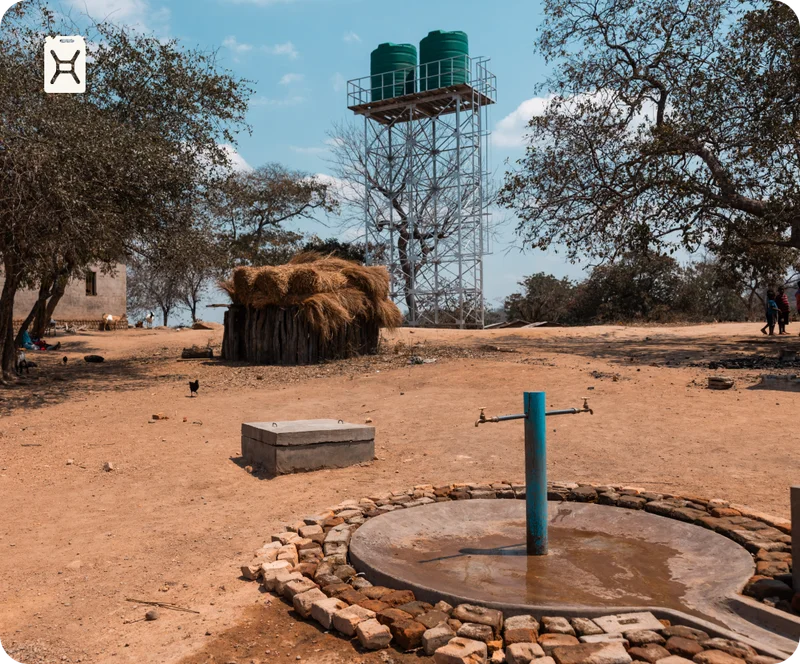
And for many communities in Malawi, like Tsamba and Chamanga, it’s all about solar. In places with ample sunshine, like these neighboring villages, a solar-powered piped system is the solution that’s sure to go the distance.
We could tell you more about why these highly advanced and super-sustainable water systems are worth every dollar — or, in Malawi, every kwacha — but we’d rather share a story about these two communities. Because no one knows the worth of these solar-powered piped systems better than the people whose lives are changed by them.
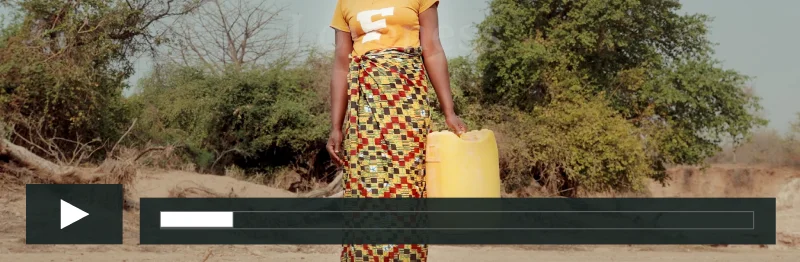
In Tsamba, a community of approximately 5,000 people in Malawi, women and girls used to wake up as early as 4:00 a.m. to walk six hours round trip to the nearest water source. Then, later in the day, they would repeat the journey — walking 12 hours each day for water. Yes, you read that right.
In November 2021, Tsamba received access to clean water thanks to a solar-powered piped system that serves not only their community, but also two other communities and a school. Entire days of walking for water are in the past for Tsamba’s women and girls, and a sense of health and vitality has returned to the community.
11 miles away, it’s a different story. Though Chamanga is just down the road, it is beyond the reach of the solar-powered piped system that serves Tsamba.
Instead of telling you the story of Chamanga and its wait for water, we want to introduce you to Loveness — a wife, mother, and community advocate.